- Oct 13, 2025
Vocabulary Building with Morphology: Fun Tuition Games for Primary Kids
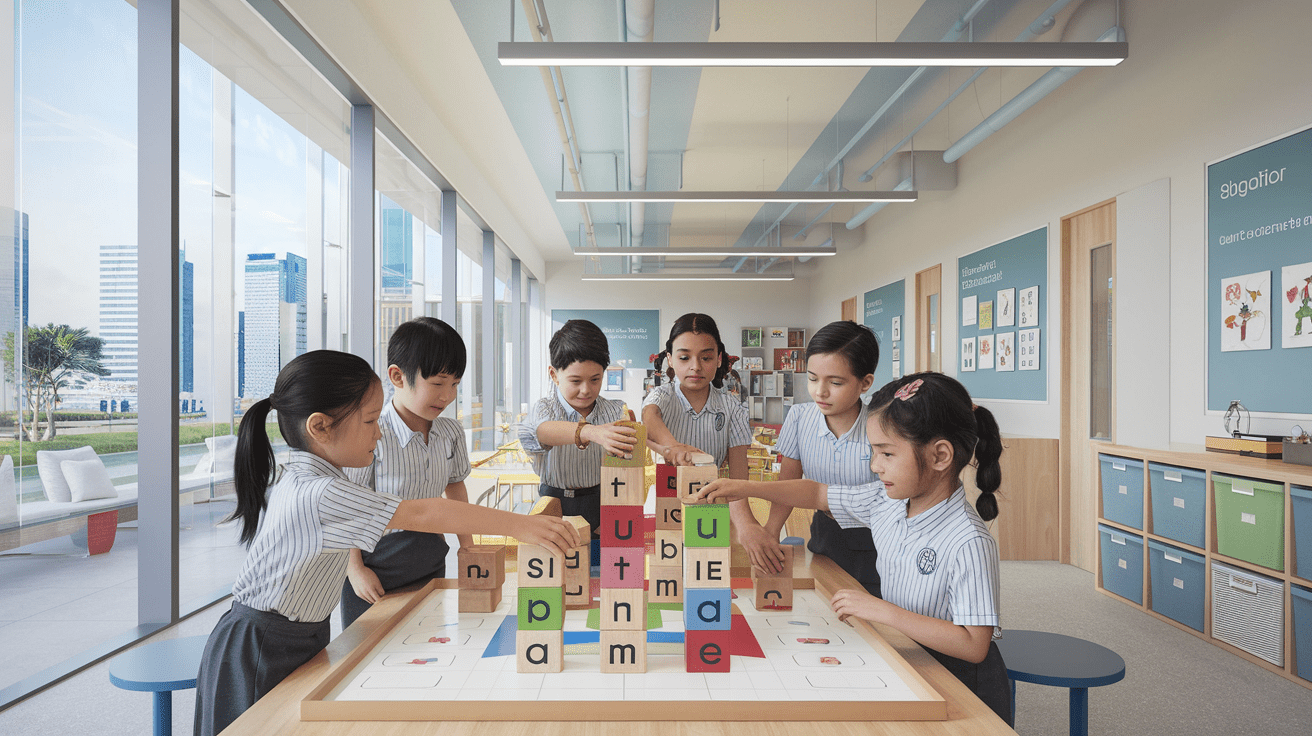
Table Of Contents
- Understanding Morphology: The Building Blocks of Language
- The Importance of Morphology in Vocabulary Development
- Engaging Morphology Games for Primary Students
- Implementing Morphology Games in the Classroom
- Extending Morphology Learning at Home
- Tracking Vocabulary Progress Through Morphology
- The EduFirst Approach to Vocabulary Building
Vocabulary development is a cornerstone of academic success for primary school students in Singapore. As children progress through their education journey, they encounter increasingly complex texts that demand a rich and flexible understanding of words. At EduFirst Learning Centre, we’ve discovered that one of the most powerful approaches to vocabulary building lies in understanding morphology – the study of word parts and how they combine to create meaning.
Rather than memorizing isolated words, morphological awareness equips students with the tools to decode unfamiliar vocabulary independently. By recognizing prefixes, suffixes, and root words, children develop a systematic approach to language that exponentially expands their word knowledge. This article explores practical, engaging morphology games that transform vocabulary learning from rote memorization into an exciting journey of discovery for primary school students.
From prefix detective activities to suffix construction zones, these tuition-based games have been implemented successfully across EduFirst’s 25 Singapore locations. Our small class sizes of 4-8 students create the perfect environment for these interactive vocabulary exercises, ensuring personalized guidance while fostering peer collaboration. Let’s dive into how morphology can revolutionize vocabulary acquisition for your primary school child.
Understanding Morphology: The Building Blocks of Language
Morphology may sound like a complex scientific term, but it’s simply the study of how words are formed and related to each other. For primary school students, understanding morphology means recognizing that words are made up of smaller, meaningful parts that can be combined and manipulated to create new words.
The three main morphological elements include:
- Prefixes: Word parts added to the beginning of a base word that change its meaning (un-, re-, dis-, pre-)
- Suffixes: Word parts added to the end of a base word that change its meaning or part of speech (-ful, -less, -tion, -ly)
- Root words: The core part of a word that carries the primary meaning (graph = write, scope = see, port = carry)
At EduFirst Learning Centre, we’ve observed that when primary students understand these building blocks, they gain a strategic advantage in language mastery. Rather than approaching each new word as an isolated item to memorize, students equipped with morphological knowledge can make educated guesses about unfamiliar words, significantly expanding their vocabulary acquisition rate.
The Importance of Morphology in Vocabulary Development
Research consistently demonstrates that morphological awareness is one of the strongest predictors of reading comprehension and vocabulary growth. For primary school students in Singapore’s competitive academic environment, this skill provides several distinct advantages:
First, morphological knowledge creates efficiency in vocabulary learning. Instead of learning one word at a time, students who understand the prefix ‘re-‘ (meaning again) can quickly grasp the meaning of numerous words like rewrite, rethink, and review. This pattern recognition accelerates vocabulary acquisition exponentially.
Second, morphology empowers students with word attack skills for reading comprehension. When encountering an unfamiliar word like ‘unpredictable,’ a student with morphological awareness can break it down: un- (not) + predict (to tell before) + able (capable of). Even without prior exposure to the complete word, they can approximate its meaning.
Finally, morphological skills enhance spelling accuracy. Understanding that the word ‘admission’ relates to ‘admit’ helps students avoid common spelling errors. Our tutors at EduFirst Learning Centre intentionally highlight these connections to strengthen both vocabulary and spelling simultaneously.
Engaging Morphology Games for Primary Students
Converting morphological learning into game-based activities transforms vocabulary building from a potentially tedious task into an engaging adventure. The small class sizes at EduFirst enable our tutors to implement these interactive games effectively, ensuring active participation from all students. Here are some of our most successful morphology-based vocabulary games:
Prefix Detective Games
The Prefix Detective is a popular game among our primary 3-6 students that sharpens awareness of how prefixes modify word meanings:
Prefix Pairs: Students are given cards with base words and must match them with prefix cards to create new words. They then explain how the prefix changed the word’s meaning. For example, matching ‘un-‘ with ‘happy’ creates ‘unhappy,’ changing the meaning to ‘not happy.’
Prefix Treasure Hunt: Hidden around the classroom are words beginning with various prefixes. Students must find words, identify the prefix, explain its meaning, and group words with the same prefix together. This kinesthetic activity particularly benefits active learners who struggle with traditional vocabulary drills.
Prefix Prediction: Students are presented with a new or unfamiliar word containing a known prefix. Before learning the actual definition, they make predictions based on the prefix and their existing vocabulary. This game develops critical thinking and contextual word analysis skills that extend beyond the classroom.
Suffix Construction Zone
The Suffix Construction Zone focuses on how suffixes can change both word meaning and grammatical function:
Word Family Buildings: Using a base word as the foundation (e.g., ‘care’), students add different suffixes to create a ‘word family building’ with words like careful, carefully, careless, caring. The taller their building grows, the more points they earn, encouraging creative word exploration.
Part of Speech Transformation: Students start with a base word like ‘create’ and transform it into different parts of speech using suffixes: creator (noun), creative (adjective), creatively (adverb), creation (noun). This game reinforces grammar concepts while expanding vocabulary.
Suffix Sorting Relay: In teams, students race to sort words into categories based on suffixes and their functions. Categories might include ‘person who does something’ (-er, -or, -ist), ‘state or quality’ (-ness, -ity), or ‘relating to’ (-al, -ical). This collaborative activity strengthens suffix recognition speed.
Root Word Exploration Activities
Root words, often derived from Latin and Greek, form the foundation of many English words. Our EduFirst tutors have developed these engaging activities to help primary students recognize these powerful word components:
Root Word Family Trees: Students create visual word trees showing how multiple words branch from a single root. For example, the root ‘port’ (to carry) produces transport, export, report, portable, and support. This visual mapping helps students see connections between seemingly unrelated words.
Root Word Detective: Students receive a list of words sharing a common root and must determine what connects them. After identifying the root, they brainstorm additional words containing the same root. This inductive reasoning approach helps students discover patterns independently.
Root Word Charades: Students act out words containing specific roots while teammates guess the word and identify the root. This game associates physical movement with abstract word parts, creating stronger memory connections particularly beneficial for kinesthetic learners.
Compound Word Creation Games
Compound words provide an accessible entry point to morphology for younger primary students:
Compound Word Match-Up: Students receive cards with single words and must find partners to create logical compound words (e.g., ‘sun’ + ‘flower’ = ‘sunflower’). This tactile activity introduces the concept that words can combine to create new meanings.
Compound Word Chain: Starting with a compound word like ‘basketball,’ the next student must create a new compound word beginning with ‘ball’ (like ‘ballgame’), and the chain continues. This fast-paced game encourages quick word retrieval and creative thinking.
Silly Compounds: Students intentionally create nonsensical compound words and must justify their meaning with creative definitions. For instance, a ‘bookdog’ might be ‘a dog that loves to read.’ This playful activity demonstrates how word parts contribute to meaning while encouraging linguistic creativity.
Implementing Morphology Games in the Classroom
At EduFirst Learning Centre, we integrate these morphology games strategically throughout our tuition sessions. Rather than treating vocabulary development as an isolated subject, our experienced tutors weave these activities into English, Science, and even Math lessons where appropriate.
For younger primary students (P1-P2), we focus primarily on compound words and simple prefixes like ‘un-‘ and ‘re-‘. As students progress to P3-P4, we introduce more complex prefixes and common suffixes. By P5-P6, students work extensively with Greek and Latin roots, preparing them for the advanced vocabulary they’ll encounter in secondary school.
Our small class size advantage means tutors can observe each student’s morphological development closely, providing targeted support when specific patterns prove challenging. This personalized approach ensures no student falls behind in this crucial language skill. Furthermore, our tutors maintain vocabulary journals for each student, tracking their growing word knowledge and morphological awareness.
Extending Morphology Learning at Home
The most effective vocabulary development occurs when classroom learning extends into the home environment. At EduFirst, we encourage parents to reinforce morphological awareness with these simple activities:
Word Part Scavenger Hunt: Challenge your child to find words with specific prefixes, suffixes, or roots in newspapers, food packaging, or advertisements during everyday activities. This trains them to notice word patterns in authentic contexts.
Dinner Table Morphology: Choose a prefix, suffix, or root as the ‘word part of the day’ and challenge family members to use words containing that element during dinner conversation. This makes morphology a natural part of daily language use.
Word Building Blocks: Use physical blocks or magnetic letters to build words by combining prefixes, roots, and suffixes. The tangible manipulation of word parts helps reinforce the concept that words have a logical internal structure.
Parents often report that these activities transform routine family interactions into valuable learning opportunities while strengthening their child’s confidence in approaching new vocabulary.
Tracking Vocabulary Progress Through Morphology
At EduFirst Learning Centre, we believe in measurable outcomes. When students develop strong morphological awareness, we observe several indicators of progress:
First, students demonstrate greater independence when encountering unfamiliar words in texts. Rather than immediately asking for definitions, they attempt to analyze word parts to determine meaning. This self-sufficiency is particularly valuable during examinations when external help isn’t available.
Second, we notice increased precision in word choice during writing assignments. Students with strong morphological awareness select the most appropriate word forms for their intended meaning, enhancing the clarity and impact of their compositions.
Finally, we track standardized test performance, where vocabulary often directly impacts reading comprehension scores. Our data consistently shows that students who participate in our morphology-based vocabulary program demonstrate above-average growth in comprehension measures compared to traditional vocabulary instruction methods.
Regular assessments allow our tutors to adjust instruction based on each student’s morphological development, ensuring continuous progress throughout the primary years.
The EduFirst Approach to Vocabulary Building
What distinguishes EduFirst Learning Centre’s approach to vocabulary development is our systematic integration of morphology across the primary curriculum. While many educational programs treat vocabulary as isolated word lists to memorize, our methodology empowers students with the linguistic tools to become independent word learners.
Our tutors undergo specialized training in morphological instruction, ensuring they can effectively guide students through the progressive stages of word analysis. With 25 locations across Singapore and over a decade of experience since our establishment in 2010, we’ve refined our vocabulary building techniques to align with the demanding requirements of Singapore’s education system.
Most importantly, our small class sizes of 4-8 students create the optimal environment for these interactive vocabulary activities. This setting allows for the personalized attention each student needs while maintaining the social dynamics that make these word games engaging and effective.
Parents frequently share that their children’s attitude toward vocabulary learning transforms after experiencing our morphology-based approach – from viewing it as tedious memorization to embracing it as an exciting exploration of language patterns. This shift in perspective creates lifelong word learners rather than temporary word memorizers.
Morphological awareness represents one of the most powerful tools we can provide to primary school students for ongoing vocabulary development. By understanding how words are built from prefixes, suffixes, and roots, children gain the ability to decode thousands of words independently, significantly accelerating their language acquisition.
The games and activities outlined in this article transform this complex linguistic concept into accessible, enjoyable learning experiences suitable for primary students at various developmental stages. Whether implemented in EduFirst’s tuition classrooms or adapted for home practice, these morphology-based approaches offer a sustainable alternative to rote vocabulary memorization.
As Singapore’s education landscape continues to emphasize critical thinking and independent learning, morphological awareness becomes increasingly valuable. Students equipped with these word-building skills approach new vocabulary with confidence rather than apprehension, setting the foundation for academic success throughout their educational journey.
At EduFirst Learning Centre, we remain committed to innovative, evidence-based vocabulary instruction that empowers students with the linguistic tools they need for lifelong learning. Through our carefully structured morphology curriculum and engaging word games, we transform vocabulary acquisition from a passive exercise into an active journey of language discovery.
Would you like to see how morphology-based vocabulary building can benefit your child? EduFirst Learning Centre offers personalized tuition programs that integrate these proven techniques within our small-group environment. Contact us today to schedule a consultation and learn more about our approach to vocabulary development. Our experienced tutors are ready to help your child unlock the secrets of words and develop a lifelong love of language.