- Feb 5, 2026
Singapore Tuition Fee Inflation: Comprehensive Data Analysis & Future Forecast

Table Of Contents
- Understanding Tuition Fee Inflation in Singapore
- Historical Data: Tuition Fee Trends (2018-2022)
- Current Landscape: 2023 Tuition Costs
- Forecast: Projections for 2024-2025
- Factors Driving Tuition Fee Inflation
- Impact on Singaporean Families
- Strategies to Manage Rising Tuition Costs
- The Value of Quality Education Amidst Rising Costs
- Conclusion
For Singaporean parents, education represents one of the most significant investments in their children’s future. As a nation that consistently ranks among the world’s top educational systems, Singapore places tremendous value on academic excellence. However, this commitment comes with a financial reality that many families face: the steadily rising cost of tuition.
In recent years, tuition fees across Singapore have experienced consistent inflation, outpacing general consumer price increases and putting additional pressure on household budgets. From primary school enrichment to secondary school subject-specific tuition, the financial commitment required to support a child’s educational journey continues to grow year after year.
This comprehensive analysis examines the trajectory of tuition fee inflation from 2018 through to projected costs in 2025. Drawing on historical data, current market conditions, and expert forecasts, we’ll provide parents with the insights needed to plan effectively for their children’s educational expenses. Beyond just numbers, we’ll explore the factors driving these increases, the real impact on families, and practical strategies to manage these rising costs while maintaining educational quality.
Understanding Tuition Fee Inflation in Singapore
Tuition fee inflation refers to the year-over-year percentage increase in the cost of supplementary education services. In Singapore’s context, this encompasses a wide range of educational support, from one-on-one private tutoring to group tuition centers and enrichment programs designed to complement mainstream schooling.
Singapore’s tuition industry has grown into a billion-dollar sector, reflecting the cultural emphasis on academic achievement and the competitive nature of the education system. According to the Department of Statistics Singapore, households spent approximately SGD $1.4 billion on tuition services in 2018, a figure that has continued to rise substantially in subsequent years.
Tuition fee inflation differs from general inflation in several key ways. While Singapore’s overall Consumer Price Index (CPI) has fluctuated between 0.5% and 2.5% annually from 2018-2022, tuition fees have consistently increased at higher rates, typically between 3.5% and 7% depending on the academic level and subject area.
This differential growth rate means that education costs have become an increasingly significant portion of household expenditures, especially for families with multiple school-age children. Understanding these trends is essential for parents to develop sustainable financial planning strategies for their children’s education.
Historical Data: Tuition Fee Trends (2018-2022)
Examining historical data provides valuable context for understanding the trajectory of tuition fee inflation. From 2018 to 2022, Singapore witnessed consistent increases across all educational levels and subjects, though with notable variations.
In 2018, the average monthly cost for primary school tuition was approximately SGD $155-$280 per subject, while secondary school tuition ranged from SGD $160-$360 per subject. By the end of 2022, these figures had risen to SGD $180-$340 for primary subjects and SGD $200-$420 for secondary subjects, representing cumulative increases of 16-21% over this five-year period.
Mathematics and Science subjects typically commanded premium rates, with average costs increasing by 5-7% annually during this period. Language subjects (English and Mother Tongue) saw slightly lower annual increases of 4-6%, while humanities subjects experienced the most modest inflation at 3-5% annually.
Group tuition centers generally raised their fees by 4-5% annually during this period, while private one-on-one tutoring saw more significant increases of 6-8% yearly, reflecting growing demand for personalized instruction and the limited supply of highly qualified tutors.
It’s worth noting that 2020-2021 represented an anomaly period due to the COVID-19 pandemic, with many tuition providers temporarily freezing fee increases as they transitioned to online delivery models. However, by 2022, most had resumed their pre-pandemic fee adjustment patterns, with some implementing larger-than-usual increases to compensate for the earlier freeze periods.
Current Landscape: 2023 Tuition Costs
The 2023 tuition landscape in Singapore reflects continued upward pressure on prices, influenced by both post-pandemic recovery factors and broader economic conditions. Current average monthly costs have reached SGD $190-$355 for primary subjects and SGD $210-$440 for secondary subjects, representing a year-over-year increase of approximately 5.5% from 2022 levels.
The highest rates of increase have been observed in specialized preparation courses for high-stakes examinations like the Primary School Leaving Examination (PSLE) and O-Level examinations. These intensive programs now command premium rates between SGD $450-$650 monthly for group settings, with one-on-one options frequently exceeding SGD $800 monthly.
Regional variations are also becoming more pronounced in 2023, with tuition centers in central districts and prestigious neighborhoods commanding 15-25% higher rates than equivalent services in outlying areas. This geographic premium reflects both higher operational costs and the perception of quality associated with centrally-located educational services.
Another notable trend in 2023 is the bifurcation of the market between premium and budget options. While high-end tuition centers with specialized curricula and highly-credentialed instructors continue to raise prices aggressively, a growing segment of more affordable options has emerged to serve price-sensitive families, often leveraging technology and larger class sizes to maintain lower fee structures.
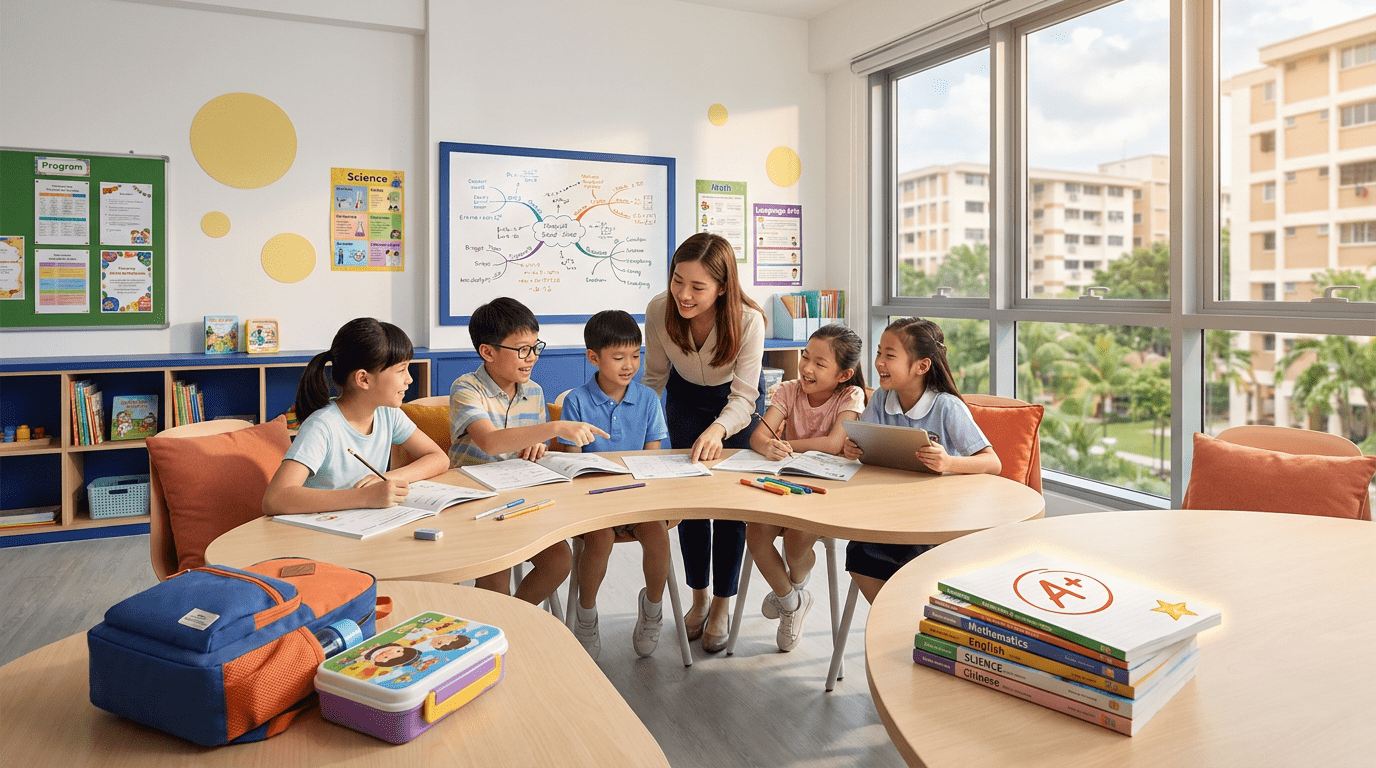
Small-group tuition models (4-8 students) have gained particular traction in 2023, offering a middle ground between the personalization of one-on-one tutoring and the cost-effectiveness of larger classes. At EduFirst Learning Centre, this approach has proven especially effective, delivering personalized attention while maintaining affordable rates compared to private tutoring.
Forecast: Projections for 2024-2025
Based on historical trends, current economic indicators, and industry developments, we can project Singapore’s tuition fee inflation for 2024-2025 with reasonable confidence. Our analysis suggests continued upward pressure on tuition fees, though with some moderation compared to the sharp increases observed in 2022-2023.
For 2024, we project average tuition fee increases of 4.5-5.5% across all educational levels, with primary school tuition reaching SGD $200-$375 per subject monthly and secondary school tuition ranging from SGD $220-$460. These increases reflect continuing inflationary pressures in the broader economy, rising operational costs for tuition providers, and ongoing strong demand for supplementary education.
Looking ahead to 2025, we anticipate a slight moderation in the rate of increase, with projected inflation of 4.0-5.0%. This would bring average monthly primary tuition costs to approximately SGD $210-$395 and secondary tuition to SGD $230-$485 per subject.
Several factors could influence these projections. Government policies aimed at addressing educational costs could potentially moderate increases, while technological disruption in educational delivery models might create more cost-effective alternatives. Conversely, continuing teacher shortages and rising commercial rental rates could exert additional upward pressure on fees.
The premium segment is expected to continue seeing the highest percentage increases, with exclusive tuition programs potentially implementing 6-8% annual increases through 2025. Meanwhile, the budget segment will likely keep increases closer to 3-4% to maintain market share and accessibility.
Factors Driving Tuition Fee Inflation
Economic Factors
Several economic forces contribute significantly to tuition fee inflation in Singapore. Rising commercial rental costs, especially in prime locations, directly impact tuition centers’ operational expenses. These increased costs are inevitably passed on to consumers through higher fees. Additionally, overall wage inflation in Singapore pushes tuition providers to offer competitive compensation to attract and retain qualified instructors.
The general inflation environment also plays a role, as educational materials, technology, and administrative costs increase alongside broader price trends. For the 2024-2025 period, economists project Singapore’s overall inflation to remain between 2.5-3.5%, creating a baseline pressure on all service costs, including education.
Market Dynamics
Singapore’s tuition market exhibits several distinctive characteristics that contribute to persistent fee inflation. Strong parental demand for academic support creates a market environment where price sensitivity is relatively low, especially for services perceived as high-quality or associated with proven examination results.
The industry also faces supply constraints, particularly for highly qualified tutors with proven track records. This imbalance between supply and demand creates natural upward pressure on prices, especially in specialized subjects and for advanced levels.
Another significant market factor is the increasing specialization of tuition services. As providers develop proprietary curricula, assessment methods, and learning technologies, they create differentiated offerings that command premium pricing. This trend toward specialization is expected to continue driving price segmentation in the market through 2025.
Educational Policy Changes
Changes in Singapore’s mainstream education system significantly influence tuition demand and pricing. The implementation of more challenging curricula or new assessment formats typically triggers increased demand for supplementary support, allowing providers to adjust prices upward.
The Ministry of Education’s ongoing emphasis on holistic development and critical thinking skills has paradoxically increased tuition demand, as these competencies require more sophisticated teaching approaches and often more individualized attention than traditional rote learning methods.
Additionally, any shifts in examination formats or grading systems create immediate market opportunities for specialized preparation courses, which typically command premium pricing due to their focused nature and perceived value in navigating educational transitions.
Impact on Singaporean Families
The continued inflation of tuition fees has significant implications for Singaporean households, affecting financial planning, lifestyle choices, and even family dynamics. For the average middle-income family with two school-age children, tuition expenses can now constitute 12-18% of monthly household expenditure, a percentage that has increased steadily since 2018.
Financial strain is particularly pronounced for families with children at critical examination stages simultaneously. A household with one child preparing for PSLE and another for O-Levels might face combined monthly tuition costs exceeding SGD $1,500, creating significant budgetary pressure and potentially necessitating compromises in other areas of family spending.
Beyond the direct financial impact, rising tuition costs also influence educational decisions. Some families report delaying tuition until later primary years to manage costs, potentially creating academic gaps that become more difficult to address. Others limit tuition to only core subjects, potentially disadvantaging students in a system that increasingly values breadth of knowledge and skills.
The psychological impact shouldn’t be overlooked either. Financial pressure related to educational expenses creates stress for both parents and children, sometimes manifesting as increased pressure on children to perform academically to justify the significant financial investment.
Strategies to Manage Rising Tuition Costs
Despite the challenging trend of tuition fee inflation, parents can employ several effective strategies to manage educational costs while still ensuring quality support for their children.
Prioritizing subjects based on individual student needs offers a targeted approach to tuition investment. Rather than enrolling in tuition for every subject, focus resources on areas where your child faces the greatest challenges or where specialized support would yield the most significant benefits. Regular reassessment of tuition needs can help ensure resources are allocated efficiently.
Small-group tuition represents an excellent value proposition, balancing personalized attention with cost-effectiveness. With class sizes of 4-8 students, providers like EduFirst Learning Centre offer an instructional environment where teachers can address individual learning needs while maintaining fees substantially below one-on-one tuition rates.
Long-term planning and budgeting specifically for educational expenses can also help families navigate tuition inflation more effectively. Setting aside dedicated education funds with annual increases that anticipate tuition inflation allows for more sustainable financial management without sudden budgetary shocks.
Additionally, exploring alternative support options like peer study groups, online learning resources, and school-based remedial programs can complement paid tuition services and potentially reduce the overall financial burden while still providing necessary academic support.
The Value of Quality Education Amidst Rising Costs
While managing costs is important, evaluating the value proposition of educational investments remains crucial. Quality tuition delivers benefits that extend beyond immediate academic improvement, potentially providing long-term advantages that justify the financial commitment.
The most effective tuition programs develop not just subject knowledge but also metacognitive skills, study techniques, and learning confidence that benefit students across all academic areas. These transferable skills often represent the most valuable aspect of quality tuition, creating educational returns that compound over time.
When assessing tuition options, parents should consider factors beyond just price. Teacher qualifications, teaching methodology, class size, track record, and alignment with the student’s learning style all contribute to the ultimate value received. A slightly higher investment in a program that genuinely addresses a child’s specific learning needs may provide substantially better value than a less expensive but less effective alternative.
At EduFirst Learning Centre, our approach emphasizes this quality-focused value proposition. By maintaining small class sizes of 4-8 students, we ensure each child receives personalized attention while keeping fees more affordable than one-on-one options. This balanced approach delivers strong academic outcomes without the premium pricing of private tutoring.
Conclusion
Singapore’s tuition fee inflation represents a significant and ongoing challenge for families committed to providing educational support for their children. Our analysis reveals that this trend will likely continue through 2025, with projected increases of 4-5.5% annually across most educational segments.
Historical data from 2018-2022 established a pattern of tuition fees consistently outpacing general inflation, while current 2023 figures confirm the continuation of this trend, particularly in premium and examination-focused educational services. Looking ahead to 2024-2025, economic factors, market dynamics, and educational policy changes will all contribute to sustained upward pressure on tuition costs.
For Singaporean families, navigating this landscape requires thoughtful planning, strategic prioritization, and careful evaluation of educational value. By focusing resources on areas of greatest need and seeking balanced solutions that combine quality instruction with reasonable costs, parents can continue to provide valuable educational support without unsustainable financial strain.
As tuition costs continue to rise, the importance of finding providers that offer genuine value becomes increasingly critical. Programs that deliver personalized attention, develop transferable skills, and demonstrate measurable outcomes will represent the wisest educational investments, even in an era of tuition fee inflation.
The data and forecasts presented in this analysis highlight the ongoing reality of tuition fee inflation in Singapore’s educational landscape. From 2018 through projected figures for 2025, the trend shows consistent increases that outpace general inflation, creating significant financial considerations for families invested in supplementary education.
Despite these rising costs, quality educational support remains a valuable investment in a child’s future. By adopting strategic approaches to tuition selection, prioritizing subjects based on individual needs, and seeking optimal value through small-group instruction models, parents can navigate this challenging landscape effectively.
As Singapore’s education system continues to evolve, so too will the supplementary education market. Staying informed about trends, being selective about tuition investments, and regularly reassessing educational needs will help families make wise decisions that balance financial sustainability with academic excellence.
At EduFirst Learning Centre, we understand the financial considerations that accompany educational decisions. Our small class sizes of 4-8 students offer the perfect balance of personalized attention and cost-effectiveness, delivering quality education without premium pricing.
To learn more about our programs and how we can support your child’s educational journey in a financially sustainable way, contact us today for a consultation.