- Apr 27, 2026
Primary School Ranking Singapore: How to Evaluate Schools the Right Way
Every year, as Primary 1 registration opens, thousands of Singapore parents find themselves deep in spreadsheets, parent forums, and online rankings, trying to decode which primary school will give their child the best start. The phrase primary school ranking Singapore generates enormous search traffic — and for good reason. Choosing the right school feels like one of the most consequential decisions a parent can make in their child’s early years.
But here’s the problem: most ranking lists tell only part of the story. A school’s position on an unofficial league table says little about whether your child will thrive there, feel supported, or develop a genuine love of learning. This guide cuts through the noise. You’ll learn how Singapore’s primary school system actually works, what criteria truly matter when evaluating schools, and how to make a well-rounded decision that goes far beyond exam results.
Why Primary School Rankings Matter (and Where They Fall Short)
It’s natural to look for a shortcut when evaluating more than 180 primary schools across Singapore. Unofficial rankings, often compiled from PSLE aggregate scores or perceived prestige, give parents a quick reference point. These lists circulate widely on platforms like KiasuParents and various parenting blogs, and they do reflect something real — schools at the top tend to have strong academic track records, experienced teachers, and well-resourced environments.
However, ranking tables have significant blind spots. They typically measure aggregate PSLE performance, which is a lagging indicator of school quality and doesn’t account for intake differences. A school with a lower average score may be doing exceptional work with a more diverse student population. Rankings also say nothing about school culture, student well-being, co-curricular opportunities, or how well a particular school suits your child’s learning style. Treating rankings as the sole decision-making tool is a bit like choosing a restaurant purely by its Michelin stars without considering whether you actually enjoy that type of cuisine.
Understanding Singapore’s Primary School System
Before evaluating individual schools, it helps to understand the framework all Singapore primary schools operate within. The Ministry of Education (MOE) sets a national curriculum for all government and government-aided schools, which means the core syllabus in English, Mathematics, Mother Tongue, and Science (from Primary 3) is largely standardised. This is an important point that many parents overlook — the curriculum content your child receives will not differ dramatically from school to school.
What does differ is the school’s culture, teaching approach, enrichment programmes, student development philosophy, and the community your child grows up in. Singapore primary schools are broadly categorised as government schools, government-aided schools (often with mission or clan backgrounds), and a small number of independent and specialised schools. Each category has slightly different characteristics in terms of ethos, traditions, and co-curricular offerings.
Key Criteria for Evaluating a Primary School
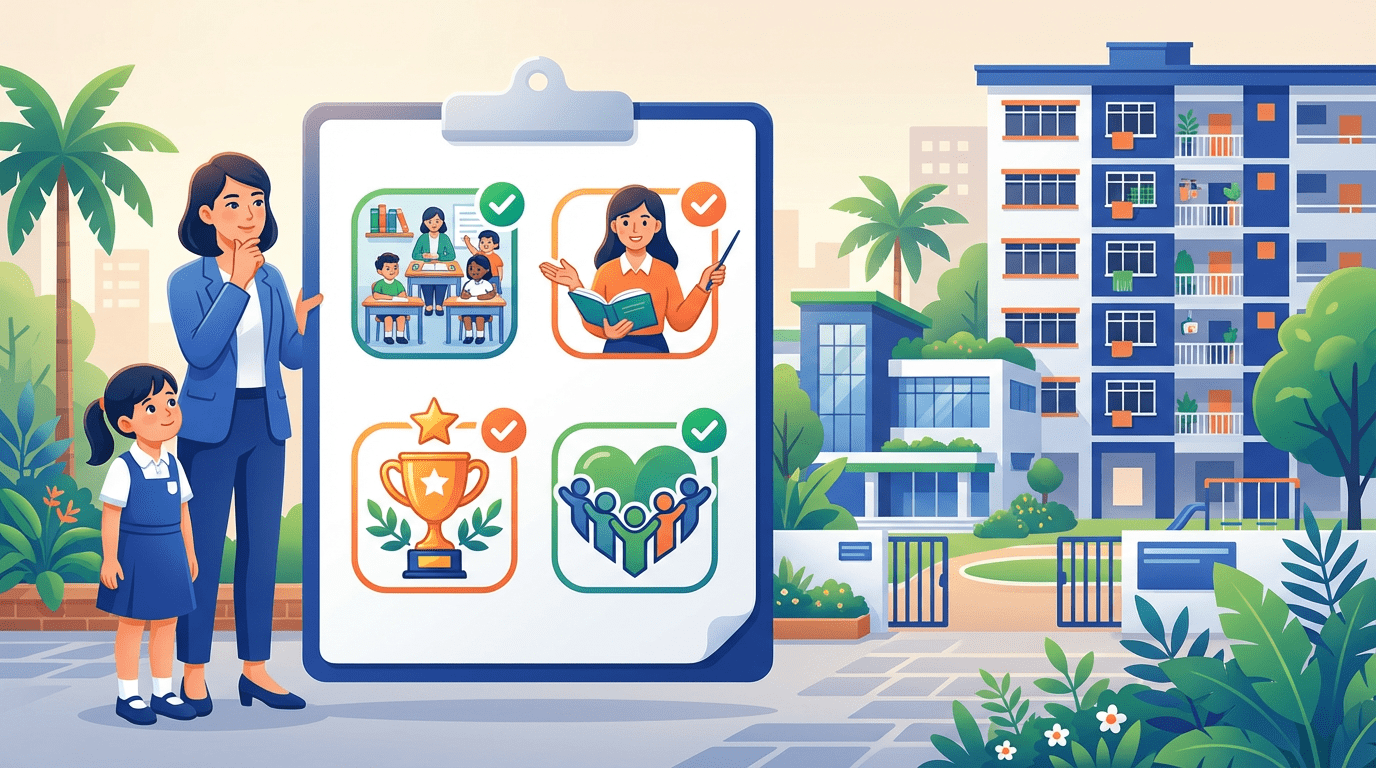
Rather than relying on a single ranking, experienced parents and educators recommend evaluating schools across multiple dimensions. Here are the factors that matter most:
- Academic performance and support structures: While not the only consideration, a school’s academic environment matters. Look for schools with structured learning support programmes, remedial classes, and a teaching staff that communicates proactively with parents.
- Class sizes and teacher-to-student ratios: Smaller, more attentive learning environments tend to produce better outcomes, especially for children who need additional support.
- Co-curricular activities (CCAs): A rich CCA programme — spanning sports, the arts, and community involvement — builds character, social skills, and interests that academics alone cannot.
- School values and culture: Is discipline firm but fair? Is the school culture competitive or collaborative? Does the school actively promote student well-being and mental health?
- Special programmes: Some schools offer the Gifted Education Programme (GEP), the Programme for Active Learning (PAL) at lower primary, or distinctive niche programmes in the arts or sports. If your child has a clear strength or interest, these merit consideration.
- Parent and community engagement: Schools with active Parent Support Groups (PSGs) and strong community ties often provide a more enriching environment for children and a more connected experience for families.
When you work through these criteria systematically, you’ll likely find that two or three schools stand out as genuinely good fits — regardless of where they fall on any informal ranking list.
Looking Beyond Academic Results
Singapore’s education landscape has evolved significantly over the past decade. MOE’s ongoing reforms — including the shift away from streaming, the introduction of subject-based banding, and the revised PSLE scoring system using Achievement Levels — reflect a broader national acknowledgement that academic scores alone do not define a child’s potential or success. This shift should inform how parents think about school rankings too.
Consider your child’s individual character and needs. A highly competitive school environment may motivate some children while causing others to feel anxious and disengaged. A school with a strong arts programme might be the ideal fit for a creative, expressive child, even if it doesn’t appear near the top of an academic ranking. Likewise, a child who thrives on structure and challenge may do well in a school known for rigorous academic preparation. The best school is not the highest-ranked school — it is the school best matched to your child’s personality, strengths, and learning style.
It is also worth noting that academic performance in primary school is heavily influenced by the support children receive at home and through supplementary education. Many Singapore families invest in quality tuition to ensure their children keep pace with the curriculum and build strong foundations in key subjects. EduFirst’s primary tuition programme is designed precisely for this — offering personalised, small-group coaching in English, Mathematics, and Science to complement what children learn in school, regardless of which primary school they attend.
Proximity, Balloting, and Phase Registration
A practical reality of Singapore’s primary school system is that gaining entry to a specific school is not simply a matter of preference — it is governed by MOE’s Phase registration process. Schools are oversubscribed based on demand, and proximity to home is one of the most important eligibility factors. Understanding the registration phases can significantly affect which schools are realistic options for your family.
The registration exercise is divided into phases, broadly prioritising children with alumni connections (through parents or siblings), volunteers, and community ties before moving to distance-based balloting. Families living within 1 km of a popular school have a clear advantage in later phases. This means that for many parents, the practical question is not just “which school is best?” but “which school is realistically accessible to us given our home address and registration eligibility?” Focusing shortlisting efforts on schools within Phase 2B and 2C reach — based on your family’s specific situation — is a smart approach that saves time and reduces disappointment.
How to Assess a School During Open Houses and Visits
Numbers and online reviews only go so far. There is no substitute for experiencing a school’s environment firsthand. Most Singapore primary schools hold open houses or school tours, particularly in the months leading up to the P1 registration exercise. These visits are genuinely valuable — not just for the information presented, but for the impressions you form by simply being in the space.
When visiting a school, observe how teachers and students interact. Is there warmth and respect in those exchanges? Pay attention to the physical environment — are classrooms and common areas stimulating and well-maintained? Speak to the principal or vice-principal if the opportunity arises and listen for their vision for student development. Ask questions about how the school handles learning differences, how it communicates with parents, and what support systems exist for students who are struggling. The answers — and the manner in which they are given — will tell you a great deal about the school’s culture and priorities.
It can also be helpful to speak candidly with parents whose children are currently enrolled. Parent communities on platforms like KiasuParents or school-specific WhatsApp groups often provide on-the-ground perspectives that no official ranking or school brochure will share.
Supporting Your Child After Enrolment
Once your child is enrolled, the school choice becomes secondary to the support structure you build around them. Primary school in Singapore is academically demanding, and children benefit enormously from consistent encouragement, a healthy study routine, and access to quality learning support when needed. The transition into Primary 1 can be especially challenging — it marks a significant shift from the more play-based learning of kindergarten to a structured academic environment.
Parents who want to give their children a strong foundation from the start often explore structured supplementary learning. EduFirst’s primary tuition programmes offer small classes of just 4 to 8 students, ensuring every child receives individualised attention and support. With 25 centres across Singapore and experienced tutors who understand the national curriculum deeply, EduFirst helps primary school students build confidence and competency in core subjects — from the foundational years right through to PSLE preparation.
Beyond academic tuition, supporting your child emotionally and socially during their primary school years is equally important. Celebrate their non-academic achievements, stay involved in their school life, and foster open conversations about their experiences. A child who feels secure and supported at home will navigate the demands of primary school — whatever the school’s ranking — with far greater resilience and enthusiasm.
Making a Decision You Can Feel Confident About
Primary school rankings in Singapore are a useful starting point, but they should never be the end of your evaluation process. The most important factors — school culture, alignment with your child’s personality, proximity and registration eligibility, and the quality of pastoral and academic support — cannot be captured in any league table. By taking a holistic, criteria-driven approach and visiting schools in person, you put yourself in a far better position to make a choice that genuinely serves your child’s growth and happiness.
Remember too that the school environment is just one piece of the puzzle. The encouragement you provide at home, the routines you establish, and the learning support you access outside school hours all play a significant role in your child’s success. Whether your child attends a top-ranked school or a neighbourhood school that perfectly matches their needs, what matters most is that they feel confident, motivated, and well-supported throughout their primary school journey.
Give Your Child a Strong Primary School Foundation
At EduFirst Learning Centre, our small-group primary tuition classes (4–8 students) are designed to build confidence and mastery in English, Mathematics, and Science — complementing whatever primary school your child attends. With 25 centres islandwide and experienced tutors who know the Singapore curriculum inside out, we’re here to support your child every step of the way.