- May 1, 2026
Higher Chinese at O-Level: Is It Worth the Extra Effort?
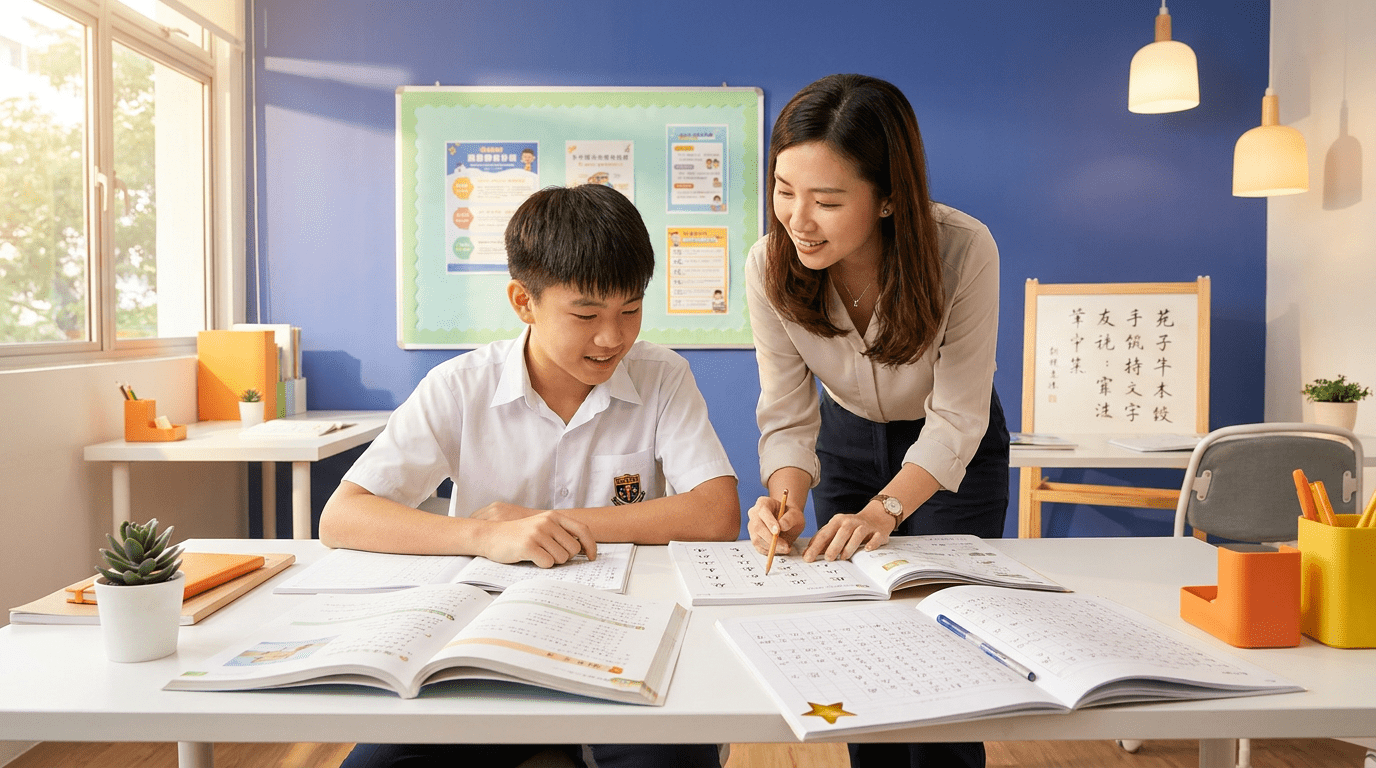
Every year, thousands of Secondary 3 students across Singapore face a deceptively simple question: should I take Higher Chinese at O-Level? On the surface, it looks like a straightforward choice between sticking with standard Chinese or adding a more demanding subject to an already full plate. But beneath that question lies a web of strategic considerations, from how the subject affects your L1R5 aggregate to long-term benefits for university admissions and even scholarship applications.
If your child performed well in Chinese at the PSLE and has been offered a place in Higher Chinese Language (HCL) at secondary school, this decision deserves careful thought rather than a quick yes or no. In this article, we break down everything you need to know about Higher Chinese at O-Level, including its scoring benefits, academic demands, and whether the extra effort genuinely pays off in the long run.
What Is Higher Chinese at O-Level?
Higher Chinese Language (HCL) is an elective Mother Tongue subject offered at the secondary level in Singapore. It is designed for students who demonstrated strong Chinese language ability at the PSLE, typically those who scored an A or above for Chinese. Unlike standard O-Level Chinese, HCL goes deeper into literary texts, classical Chinese prose, and more sophisticated compositional writing. It is assessed separately from regular Chinese and, crucially, it is treated differently in how it contributes to your final O-Level aggregate score.
Students who take HCL sit for both the standard O-Level Mother Tongue exam and the Higher Chinese exam. This means they are assessed twice for the language, which can feel daunting. However, the way the results are used in scoring gives students a meaningful safety net and a genuine competitive edge, as we will explain in the next section.
The Scoring Advantage: How HCL Affects Your L1R5
One of the most compelling reasons to take Higher Chinese is the bonus point system tied to the O-Level aggregate. Singapore’s Joint Admissions Exercise (JAE) uses the L1R5 score to determine Junior College (JC) eligibility and course placement. The lower your L1R5, the better your chances of securing a place in your preferred JC or course.
Here is how the HCL bonus works in practice:
- If a student scores a Distinction (D1 or D2) in Higher Chinese, they receive a 2-point reduction from their L1R5 aggregate.
- If a student scores a Merit (D3 to C6) in Higher Chinese, they receive a 1-point reduction from their L1R5 aggregate.
- The standard O-Level Chinese grade still counts as the L1 (first language) component in the aggregate, so students are not penalised if they perform better in the standard paper.
What makes this especially valuable is that these bonus points can be the deciding factor between getting into a top JC and missing the cut-off by a single point. In Singapore’s highly competitive admissions landscape, even a one or two point difference can open or close doors to programmes in medicine, law, or engineering. The bonus is automatically applied, so there is nothing additional to do other than achieve the qualifying grade.
University and Polytechnic Admission Benefits
Beyond the immediate L1R5 advantage, Higher Chinese carries weight in other parts of a student’s educational journey. Some universities and scholarship bodies view HCL as a signal of academic rigour and bilingual ability, particularly for courses with strong ties to China-related industries, business, or communications. Students who have completed HCL and performed well often stand out in interviews and applications where bilingualism is a valued attribute.
For Polytechnic admissions via the Early Admissions Exercise (EAE) or standard intake, the benefits are less direct but still present. Polytechnics do consider O-Level results holistically, and a strong HCL result demonstrates language discipline and a commitment to taking on challenges, qualities that appeal to admissions officers reviewing applicants for competitive diploma courses.
There is also a longer-term consideration worth mentioning. In a globalised economy where Singapore maintains deep economic ties with China, strong Mandarin proficiency is a genuine career asset. Students who pushed through Higher Chinese often report that their written and spoken Chinese improved significantly beyond what standard Chinese classes would have achieved, giving them a practical edge in the workplace years later.
What Higher Chinese Actually Involves
It is important for students and parents to go in with clear expectations about what HCL demands. The syllabus is notably more challenging than standard Chinese, and the jump in difficulty from PSLE Chinese to Secondary-level HCL can catch students off guard if they are not prepared.
The HCL curriculum typically covers the following areas:
- Classical Chinese texts (文言文): Students are expected to read, analyse, and translate classical passages, which requires a strong foundation in vocabulary and grammatical structures that differ significantly from modern Mandarin.
- Comprehension and summary: Passages are longer and thematically more complex than those in standard Chinese, demanding stronger inference and analytical skills.
- Composition writing (作文): Students write extended essays on a broader range of topics, with greater emphasis on nuanced expression, persuasive writing, and stylistic quality.
- Oral and listening components: Similar in format to standard Chinese but assessed at a higher benchmark of fluency and precision.
The time commitment is real. HCL lessons are typically held in addition to regular school hours, and students will need to set aside consistent study time each week to keep up with the volume of reading and writing required. That said, many students find that the skills developed in HCL, particularly the discipline of working through complex texts, transfer positively to other humanities subjects like English Literature and Social Studies.
Who Should Consider Taking Higher Chinese?
Higher Chinese is not the right choice for every student, and being honest about this is important. Here are the profiles of students who tend to thrive in HCL and benefit most from taking it:
- Students who genuinely enjoy the Chinese language and find reading or writing in Mandarin engaging rather than burdensome.
- Students with a strong foundation from primary school, particularly those who scored A or A* for Chinese at PSLE and found the subject manageable.
- Students targeting competitive JC programmes where every L1R5 point matters and where a 1 to 2 point bonus could make a real difference.
- Students who are academically well-organised and can manage a heavier subject load without significant impact on their other core subjects.
- Students interested in careers connected to China, bilingual communications, or culturally rich fields like media, diplomacy, or business.
Conversely, students who are already struggling with their standard Mother Tongue subject, or who are carrying a heavy load of elective subjects, should think carefully before committing. The goal is to use HCL as a strategic advantage, not to add pressure that undermines performance across the board.
The Real Challenges of Higher Chinese
Being realistic about the difficulties of HCL is just as important as highlighting its benefits. The most common challenge students face is the steep learning curve of classical Chinese. Many students find 文言文 particularly difficult because it requires memorising a vocabulary set that feels entirely separate from the Mandarin they use in daily conversation. Without consistent revision, classical texts can feel like a different language entirely.
Another challenge is time management. Secondary 3 and 4 are already intense years, with students juggling core subjects like Mathematics, Sciences, and English alongside their chosen electives. Adding HCL to the mix means fewer free periods, more homework, and a tighter schedule overall. Students who thrive are typically those who seek help early when they encounter difficulties rather than letting gaps accumulate over time.
There is also an emotional and motivational component to consider. Not every student who was strong in primary school Chinese will find the transition to HCL smooth. The increased complexity can be discouraging for some, particularly if they do not have adequate support at home or in school. This is where having access to a dedicated tutor or a structured tuition class can make a significant difference, helping students stay on track and build confidence before key assessments.
Tips for Succeeding in Higher Chinese
For students who decide to take on Higher Chinese, the following strategies can help make the experience productive and rewarding rather than overwhelming.
- Start revising classical texts early. Do not wait until the exam period to tackle 文言文. Build a vocabulary bank progressively from Secondary 3, dedicating a small amount of time each week to reviewing characters, phrases, and common grammatical patterns.
- Read widely in Chinese. Whether it is news articles, short stories, or even social media content in Mandarin, regular exposure to the written language builds familiarity and vocabulary depth that pays dividends during exams.
- Practice timed compositions regularly. Writing quality improves with repetition and feedback. Ask teachers or tutors to review your essays and focus on areas like sentence variety, coherent argument structure, and vocabulary precision.
- Do not neglect the standard Chinese paper. Since the standard O-Level Chinese result still counts as your L1 component, it is important to perform well in both papers. Treat them as complementary rather than competing priorities.
- Seek structured support when needed. If school lessons are not enough, consider enrolling in a tuition class that specialises in secondary Chinese. Small group settings allow for more personalised feedback and the chance to learn from peers facing the same challenges.
At EduFirst Learning Centre, our secondary tuition programmes are designed to support students navigating exactly these kinds of academic challenges. With class sizes of just 4 to 8 students, our tutors can give each child the focused attention they need to build genuine language confidence, whether they are working through classical texts or refining their essay writing technique.
The Verdict: Is Higher Chinese Worth It?
For the right student, Higher Chinese at O-Level is absolutely worth the extra effort. The combination of a potential 1 to 2 point bonus on the L1R5, stronger bilingual proficiency, and the signal it sends to universities and employers makes it a strategically valuable addition to a student’s academic profile. In a system where margins are tight and competition is real, those bonus points can genuinely change outcomes.
However, it is not a decision to make lightly or simply because a student did well in primary school Chinese. The subject demands consistent effort, good time management, and a genuine willingness to engage with the language at a deeper level. Parents and students should have an honest conversation about workload, motivation, and long-term goals before committing.
If your child is on the fence, it may help to speak with their school’s Chinese teacher, review their Secondary 1 and 2 Chinese performance, and consider what kind of support structure is available to them. With the right preparation and guidance, Higher Chinese can be one of the most rewarding choices a secondary school student makes.
Deciding whether to take Higher Chinese at O-Level comes down to a careful balance of ambition, ability, and strategy. The academic benefits are real and well-documented, from L1R5 bonus points to deeper language proficiency that serves students well beyond secondary school. But success in HCL depends on more than just eligibility. It requires commitment, structured study habits, and ideally, access to teachers who can provide personalised feedback and encouragement along the way.
At EduFirst Learning Centre, we have been supporting Singapore students since 2010 across more than 25 locations islandwide. Our secondary school tuition classes are kept intentionally small, between 4 and 8 students, so every child gets the individual attention they deserve. Whether your child needs help with Higher Chinese comprehension, classical text analysis, or composition writing, we are here to make the journey manageable and the results meaningful.
Ready to Give Your Child the Best Chance at O-Level Success?
Speak with our experienced team at EduFirst Learning Centre to find out how our personalised secondary tuition classes can help your child thrive in Higher Chinese and beyond.