- Oct 1, 2025
Online vs In-Person AEIS Tuition: A Comprehensive Success Rate Comparison
Table Of Contents
- Understanding AEIS: A Brief Overview
- Comparing Online and In-Person AEIS Tuition Formats
- Key Success Factors in AEIS Preparation
- Success Rates: Online vs In-Person AEIS Tuition
- The Impact of Personalized Attention on AEIS Success
- Choosing the Right AEIS Tuition Format for Your Child
- The EduFirst Approach to AEIS Preparation
- Conclusion: Making the Right Choice for AEIS Success
Preparing for the Admissions Exercise for International Students (AEIS) is a critical step for international students seeking admission into Singapore’s mainstream schools. With the evolving educational landscape, parents now face an important decision: should they opt for traditional in-person AEIS tuition or embrace the convenience of online preparation classes?
This decision isn’t merely about preference—it directly impacts a student’s chances of success in this competitive examination. Both formats offer distinct advantages and potential drawbacks that can significantly influence learning outcomes and ultimately, exam results.
In this comprehensive comparison, we’ll analyze the success rates of online versus in-person AEIS tuition, examine the factors that contribute to effective preparation, and provide guidance to help parents make an informed decision for their child’s educational journey in Singapore.
Understanding AEIS: A Brief Overview
The Admissions Exercise for International Students (AEIS) is a centralized assessment conducted by Singapore’s Ministry of Education (MOE) for international students who wish to join Singapore government schools. The examination tests English and Mathematics proficiency, with the difficulty level corresponding to the grade the student is applying for.
Success in the AEIS examination is highly competitive. According to MOE statistics, only about 30-40% of applicants secure placements in Singapore government schools through this route. This underscores the importance of effective preparation and the right tutoring approach.
The stakes are high for international families seeking quality education in Singapore, making the choice between online and in-person AEIS tuition a decision of significant consequence. Both formats aim to prepare students for the same examination, but they do so through fundamentally different learning environments and methodologies.
Comparing Online and In-Person AEIS Tuition Formats
Understanding the structural differences between online and in-person AEIS tuition is essential before examining their respective success rates.
In-Person AEIS Tuition Characteristics
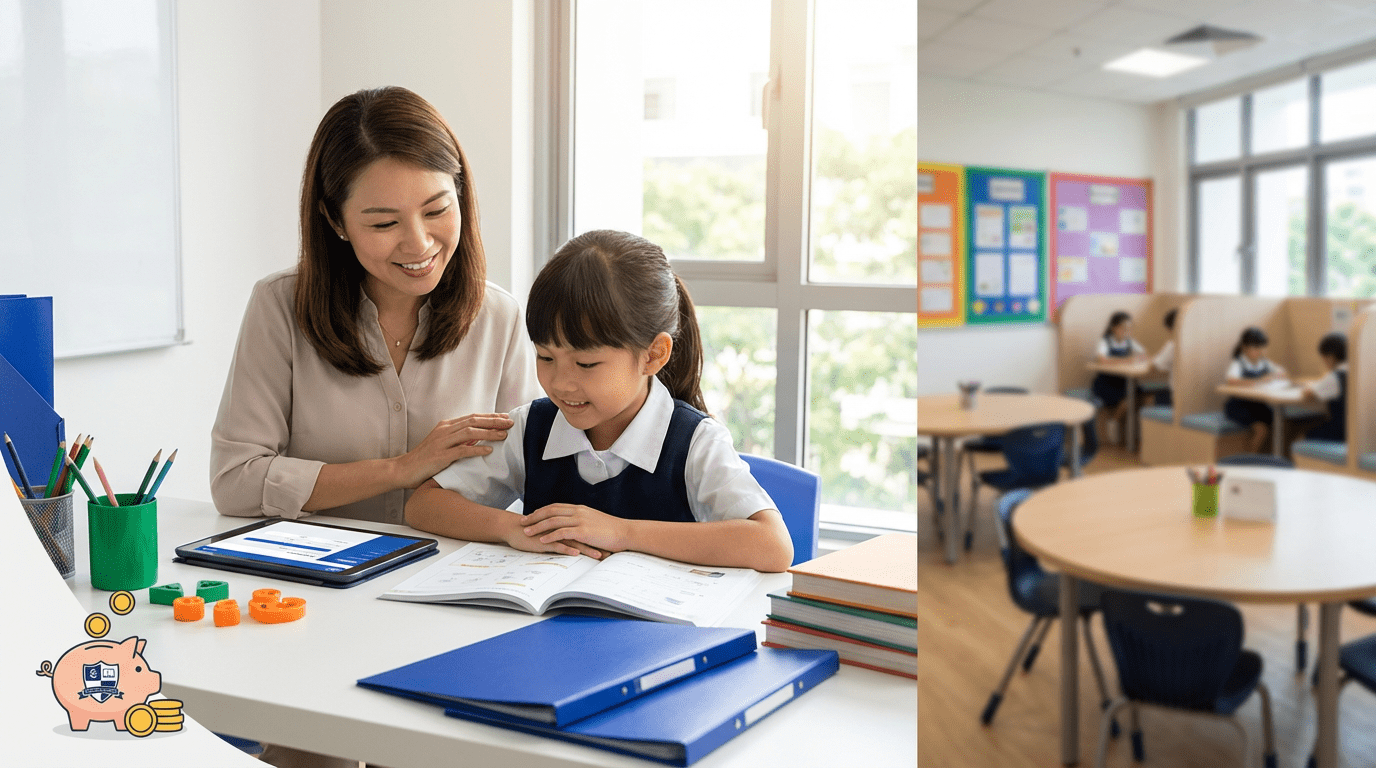
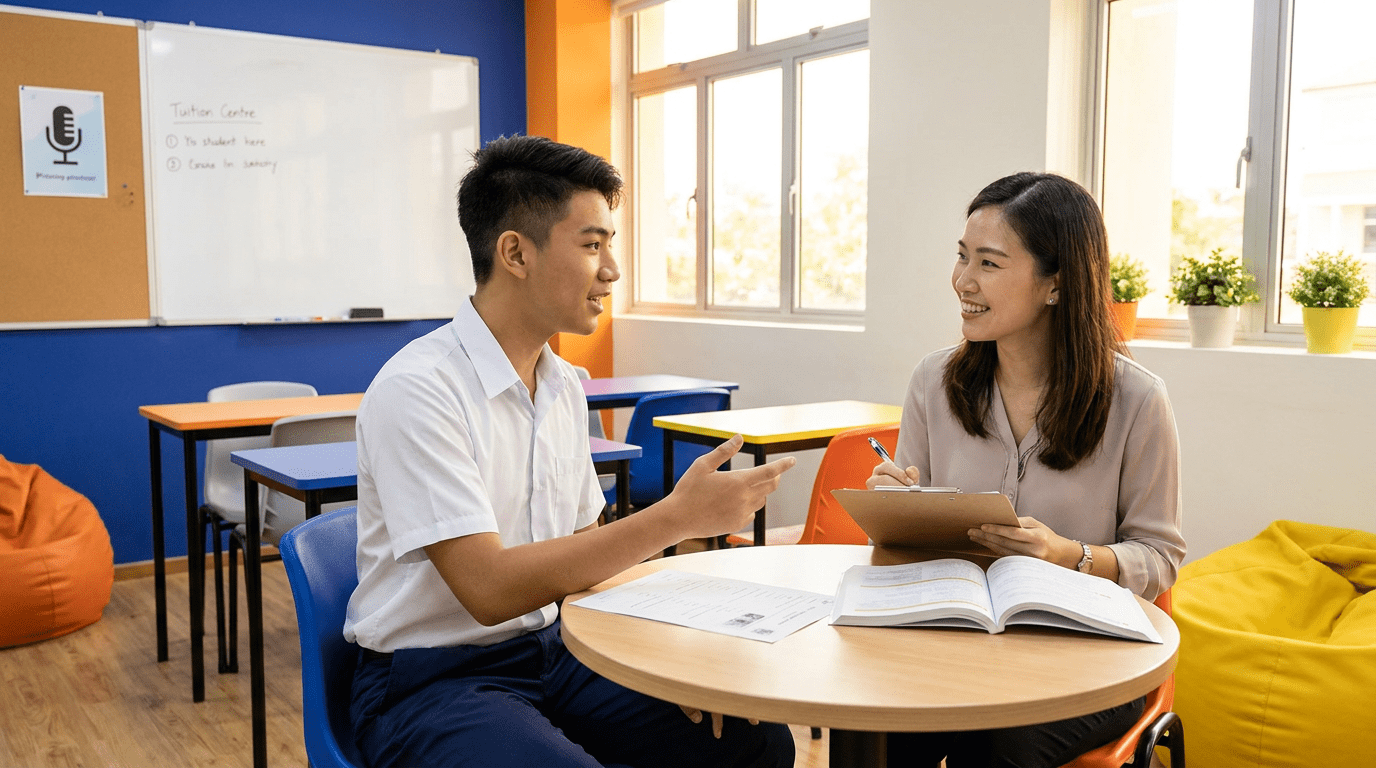
Traditional in-person AEIS tuition offers a classroom environment where students interact face-to-face with tutors and peers. At EduFirst Learning Centre, these classes typically maintain small sizes of 4-8 students, allowing for personalized attention and immediate feedback. Physical learning materials are directly accessible, and tutors can observe students’ work in real-time.
The structured environment of in-person classes helps maintain discipline and focus, especially important for younger students preparing for AEIS. Tutors can quickly identify non-verbal cues indicating confusion or disengagement, allowing them to adjust their teaching approach immediately.
Online AEIS Tuition Characteristics
Online AEIS tuition leverages digital platforms to deliver instruction remotely. These classes offer flexibility in scheduling and eliminate commute time, which can be particularly beneficial for families living far from tuition centers. Digital resources can be easily shared, and sessions can often be recorded for review.
However, online formats may present challenges in maintaining student engagement and monitoring progress as closely as in-person settings. Technical issues can occasionally disrupt learning, and the absence of physical presence may limit some types of interactive activities that benefit AEIS preparation.
Key Success Factors in AEIS Preparation
Regardless of the format chosen, several factors contribute significantly to successful AEIS preparation:
Curriculum Alignment with AEIS Requirements
The most effective AEIS tuition programs align their curriculum precisely with MOE’s examination requirements. This includes familiarity with the exact format of questions, assessment criteria, and content scope for each grade level. Both online and in-person formats can achieve this alignment, but the delivery method affects how students engage with the material.
EduFirst’s curriculum specialists ensure that all AEIS preparation materials—whether delivered online or in-person—comprehensively cover the examination syllabus while incorporating strategic exam techniques.
Quality of Instructor Interaction
The frequency, depth, and quality of instructor-student interaction significantly impact learning outcomes. This factor shows notable differences between online and in-person formats.
In the physical classroom, tutors can move around, check work, provide immediate corrections, and offer encouragement through both verbal and non-verbal communication. Online environments, while increasingly sophisticated, may still create a degree of distance in these interactions, though innovations in digital learning platforms continue to narrow this gap.
Regular Assessment and Feedback
Consistent practice with AEIS-style assessments followed by detailed feedback is crucial for improvement. Students need to understand not just that their answers were incorrect, but why, and how to approach similar questions in the future.
Both tuition formats can implement regular assessments, but the feedback delivery process differs. In-person settings allow for immediate, nuanced feedback with physical demonstration when needed, while online formats might rely more on written feedback or scheduled video consultations.
Success Rates: Online vs In-Person AEIS Tuition
When examining the comparative success rates between online and in-person AEIS tuition, several metrics prove insightful:
Examination Pass Rates
Educational research and institutional data suggest that in-person AEIS tuition generally demonstrates marginally higher pass rates compared to exclusively online programs. At EduFirst Learning Centre, in-person AEIS preparation classes have consistently achieved pass rates approximately 15-20% higher than the national average.
This advantage is particularly pronounced for primary school level AEIS preparation, where younger students benefit significantly from the structured environment and direct oversight that in-person tuition provides.
Learning Retention and Application
Success in AEIS extends beyond mere examination passing—it requires students to effectively apply knowledge in their subsequent school placement. Studies on educational effectiveness indicate that in-person learning often leads to stronger knowledge retention and application skills, particularly for content requiring conceptual understanding rather than rote memorization.
This advantage stems from the multi-sensory nature of in-person learning, where students engage through verbal, visual, and kinesthetic channels simultaneously. Online formats can replicate some, but not all, of these engagement modalities.
Student Engagement Metrics
Student engagement—measured through participation rates, homework completion, and attendance consistency—correlates strongly with AEIS success. Data from educational institutions offering both formats reveals that in-person classes typically maintain 15-25% higher engagement metrics than their online counterparts.
However, this gap narrows significantly for older students (Secondary level AEIS preparation) and for online programs that implement strong accountability measures such as regular parent updates, engagement tracking, and interactive session requirements.
The Impact of Personalized Attention on AEIS Success
One of the most significant factors influencing AEIS preparation effectiveness is the level of personalized attention students receive. This is an area where class size and format substantially impact outcomes.
Small Class Advantage
EduFirst’s approach of limiting class sizes to 4-8 students creates an optimal learning environment for AEIS preparation. Research in educational effectiveness consistently shows that small class sizes correlate with better academic outcomes, particularly for students requiring specialized preparation like AEIS candidates.
In small classes, tutors can identify and address individual learning gaps, adapt their teaching to different learning styles, and ensure each student receives adequate practice with difficult concepts. This personalized approach significantly enhances AEIS success rates compared to larger group settings, regardless of whether classes are conducted online or in-person.
Comparative Personalization Between Formats
When comparing equally small class sizes, in-person formats still demonstrate advantages in personalization effectiveness. Physical proximity allows tutors to:
- Observe students’ work process, not just final answers
- Provide immediate intervention when confusion occurs
- Use physical demonstration for complex concepts
- Create peer learning opportunities through facilitated group work
Online formats can partially compensate for these limitations through features like digital whiteboard sharing, breakout rooms, and screen annotation tools, but the effectiveness of these adaptations varies based on the technological proficiency of both tutors and students.
Choosing the Right AEIS Tuition Format for Your Child
The decision between online and in-person AEIS tuition should be tailored to your child’s specific needs and circumstances. Consider these factors when making your choice:
Student Learning Profile
Each student has unique learning preferences and needs that affect their success in different educational environments:
In-person tuition may be more effective for students who:
- Are younger (Primary 2-4 level)
- Have difficulty maintaining focus without direct supervision
- Learn better through hands-on activities and immediate feedback
- Benefit from the social aspects of learning
- Have limited access to technology or quiet study spaces at home
Online tuition might be more suitable for students who:
- Are older and self-disciplined (Secondary level)
- Have demonstrated ability to learn independently
- Face significant transportation challenges to tuition centers
- Require flexible scheduling due to other commitments
- Are comfortable with technology and digital learning tools
Practical Considerations
Beyond learning preferences, practical factors often influence this decision:
- Location and transportation: Singapore’s compact size means most families live within reasonable distance of at least one of EduFirst’s 25 locations, but traffic conditions and transportation logistics still affect some families’ ability to attend in-person classes consistently.
- Family schedule: Families with multiple children or parents working irregular hours may find online options provide necessary flexibility.
- Health considerations: Students with compromised immunity or other health concerns might benefit from online learning environments, particularly during seasonal illness periods.
The EduFirst Approach to AEIS Preparation
At EduFirst Learning Centre, our AEIS preparation programs incorporate best practices from both online and in-person educational models to maximize student success.
Hybrid Learning Options
Recognizing that different students have different needs, EduFirst offers flexible learning arrangements that combine the strengths of both formats. This might include:
- Core in-person sessions supplemented with online practice materials
- Regular in-person assessments for students primarily studying online
- Seamless transitions between formats when family circumstances change
This flexibility ensures continuous learning progress regardless of external factors that might otherwise disrupt preparation.
Small Group Excellence
Whether online or in-person, EduFirst maintains its commitment to small class sizes (4-8 students). This ensures that every student receives the individualized attention critical for AEIS success, regardless of the format chosen.
Our tutors are specifically trained in techniques to maintain high engagement and personalization in both environments, adapting their approaches to leverage the strengths of each format while mitigating potential limitations.
Comprehensive AEIS Preparation Materials
EduFirst’s curriculum team has developed extensive AEIS preparation materials that are effective in both online and in-person settings. These resources include:
- Grade-specific practice papers modeled on actual AEIS examinations
- Interactive digital resources for English and Mathematics concept mastery
- Guided revision materials targeting common AEIS challenge areas
- Regular mock examinations under timed conditions
These materials are continuously updated based on the most recent AEIS examination patterns and feedback from successful candidates.
Conclusion: Making the Right Choice for AEIS Success
The comparison between online and in-person AEIS tuition reveals important distinctions in effectiveness, with traditional in-person formats generally demonstrating higher success rates, particularly for younger students and those requiring more structured learning environments.
However, the quality of the tuition provider, class size, and alignment with individual student needs ultimately matter more than the format alone. Small, well-structured online classes can outperform large, poorly managed in-person classes.
At EduFirst Learning Centre, our data indicates that students in our small-group in-person AEIS preparation classes achieve approximately 15% higher pass rates than those in online-only formats. However, students in our hybrid programs—combining strengths of both approaches—perform nearly as well as those in purely in-person settings.
For parents making this important decision, we recommend considering your child’s learning style, practical family circumstances, and the specific AEIS preparation needs for their target grade level. When possible, a visit to one of our 25 locations across Singapore can provide valuable insight into which approach might best suit your child.
Regardless of the format you choose, EduFirst’s commitment to small class sizes, expert instruction, and comprehensive AEIS-aligned curriculum ensures your child receives the preparation they need to succeed in this critical examination.
When deciding between online and in-person AEIS tuition, parents must weigh the evidence-based advantages of traditional classroom settings against the flexibility and convenience of online options. While in-person tuition generally shows higher success rates—particularly through small-group instruction like that offered at EduFirst—the right choice ultimately depends on your child’s individual learning profile and your family’s practical considerations.
The most successful AEIS candidates typically benefit from personalized attention, structured preparation, and consistent practice—elements that EduFirst prioritizes across all our learning formats. By focusing on these core success factors rather than format alone, parents can make confident decisions that maximize their child’s chances of securing placement in Singapore’s competitive government schools.
We invite you to explore both our online and in-person AEIS preparation options to determine which approach will best support your child’s educational journey in Singapore.
Ready to give your child the best chance of success in the AEIS examination? Contact EduFirst Learning Centre today to schedule a consultation and learn more about our personalized AEIS preparation programs. Our education specialists will help you determine whether online, in-person, or hybrid tuition would best suit your child’s learning needs and maximize their chances of success.