- Aug 4, 2025 - 5 min read
What is Claim, Evidence, Reasoning (CER)?: A Student’s Guide to Writing Better Science Answers
What is CER (Claim, Evidence, Reasoning)?
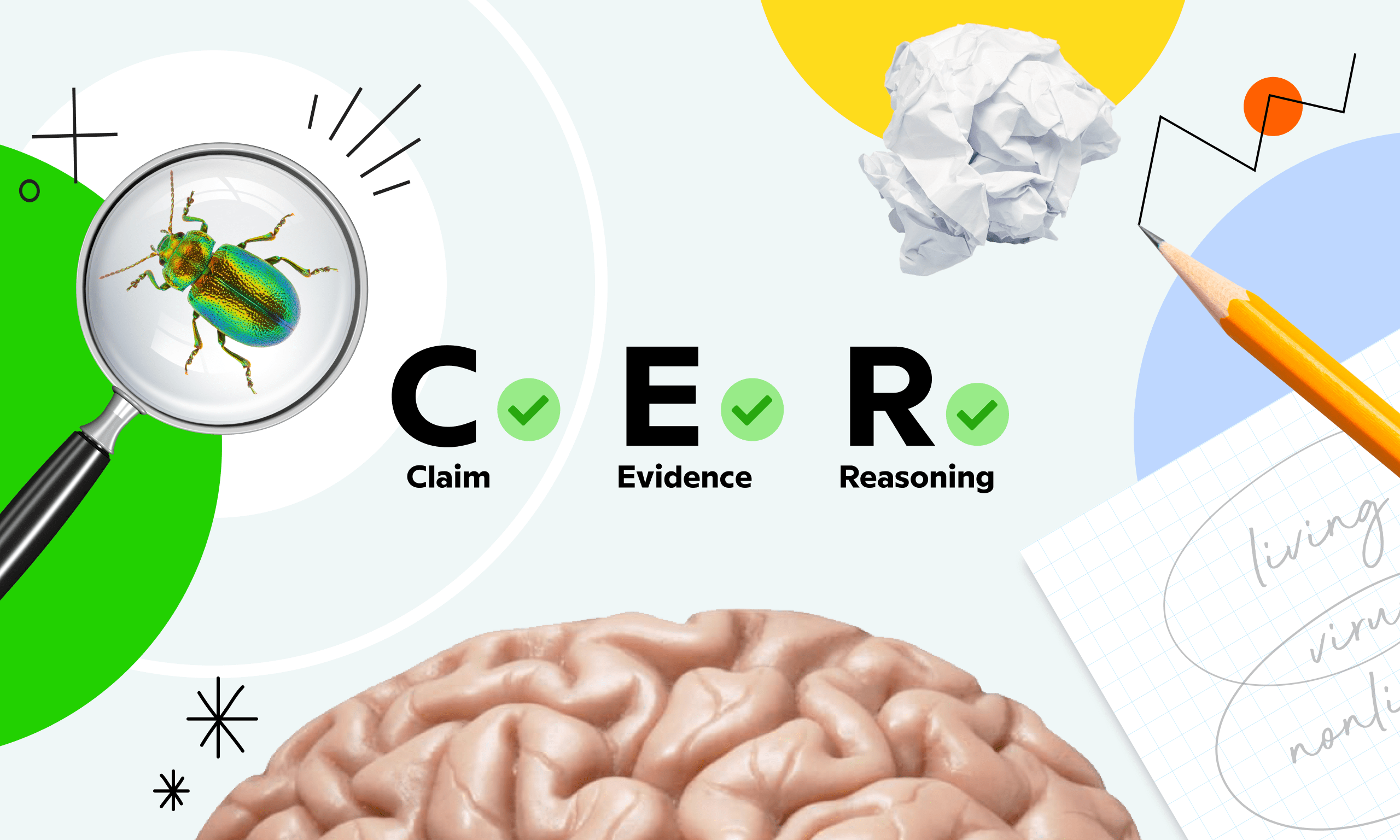
CER stands for Claim, Evidence, and Reasoning. It is a writing strategy used to help students explain their answers clearly and logically.
- Claim – This is your answer to the question or your main point.
- Evidence – This includes the data, facts, or observations that support your claim.
Reasoning – This explains why your evidence supports your claim. It often includes scientific principles, logic, or theories.
Why is CER Important in Science and Beyond?
Using the CER framework trains students to:
- Think critically
- Use data and observations effectively
- Structure answers logically
- Write better science lab reports and comprehension answers
- Prepare for exams like PSLE and O-Level Science
In Singapore’s MOE syllabus, students are often expected to justify their answers with scientific reasoning. That’s why mastering CER can make a real difference in scoring well.
How to Write a Strong CER Response (with Example)
Here’s a step-by-step breakdown of how to use CER to answer a question:
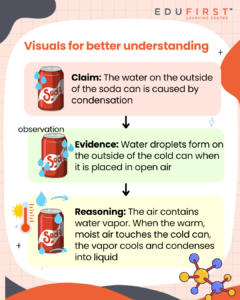
Question: Why does a cold can of soda become wet on the outside after being taken out of the fridge?
✅ Claim:
The water on the outside of the soda can is caused by condensation.
🔎 Evidence:
When the cold can is placed in the open air, water droplets form on the outside of the can.
💡 Reasoning:
The air around the can contains water vapor. When warm, moist air touches the cold surface of the can, the water vapor cools down and condenses into liquid water. This is a process called condensation.
👉 Pro Tip: Always connect your evidence to your reasoning. Don’t just describe what happened—explain why it happened using scientific concepts.
CER in Exam Questions and Lab Reports
Whether you’re writing a response to a science experiment, an open-ended question, or a data-based analysis, using the CER format helps structure your thoughts. Here are some places where CER writing is commonly used:
- Science lab reports
- Comprehension questions in Chemistry, Physics, Biology
- Data-based questions in Geography or Social Studies
- Argumentative essays (modified CER)
Tips to Master the CER Strategy
- Underline the question keywords – Know what you’re being asked.
- Start with a direct claim – No need to repeat the question.
- Use specific and relevant evidence – Avoid vague statements.
- Include scientific vocabulary – Use key terms from the syllabus.
Practice with different subjects – Try CER in English, Math, and Humanities too!
Final Thoughts: Why CER is a Must-Know for All Students
Learning to write using the Claim Evidence Reasoning format gives students a solid foundation in structured thinking. Whether you’re preparing for school exams, national assessments, or even real-life problem solving, CER helps students become more confident and logical thinkers.
At EduFirst Learning Centre, we regularly teach students how to apply CER in science and other subjects. With guided practice and the right strategies, anyone can master this writing technique.