- Oct 20, 2025
PSLE Science Experimental Questions: Tuition Demo Videos You Can Try at Home
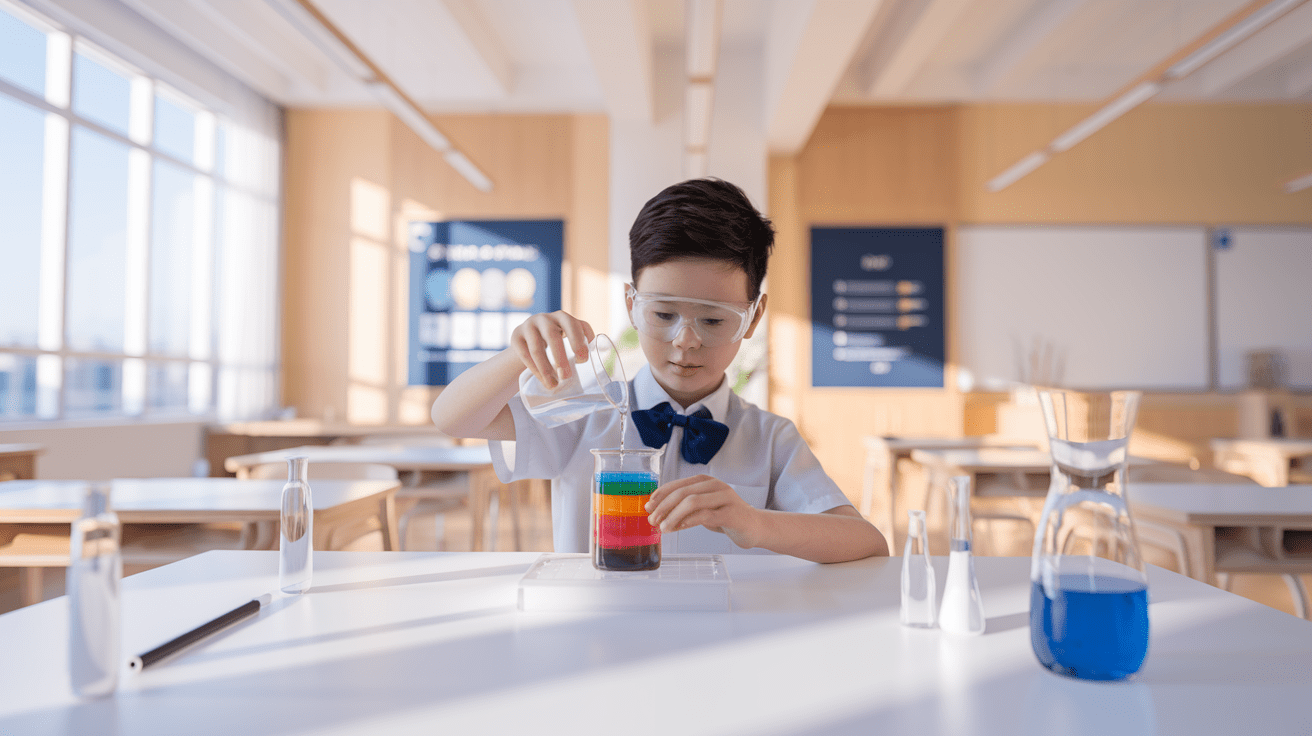
Table Of Contents
- Introduction
- Why Experiments Matter in PSLE Science
- Common Experimental Questions in PSLE Science
- Heat Energy Transfer Experiments
- Plant Systems and Photosynthesis Experiments
- Forces and Motion Experiments
- Materials and Their Properties Experiments
- Electrical Circuits Experiments
- Techniques for Answering Experimental Questions
- The EduFirst Approach to Science Tuition
- Conclusion
PSLE Science Experimental Questions: Tuition Demo Videos You Can Try at Home
Is your child struggling to grasp abstract science concepts? Are experimental questions in the PSLE Science paper causing anxiety? You’re not alone. Many students find the practical application of scientific principles challenging, especially when it comes to experimental questions that test both knowledge and analytical thinking.
At EduFirst Learning Centre, we’ve observed that students who understand the why and how behind scientific experiments perform significantly better in their PSLE Science examinations. That’s why we’ve created this comprehensive guide featuring demonstration experiments that can be safely conducted at home, reinforcing key concepts that frequently appear in PSLE Science papers.
These hands-on activities not only make learning more engaging but also help students develop the critical thinking skills needed to tackle experimental questions with confidence. Whether your child is visual, auditory, or kinesthetic learner, these experiments cater to all learning styles, making science accessible and enjoyable for everyone.
Let’s explore how these simple yet effective home experiments can transform your child’s understanding of PSLE Science concepts and boost their examination performance.
Why Experiments Matter in PSLE Science
Experimental questions form a significant portion of the PSLE Science examination, accounting for approximately 30% of the paper. Unlike theoretical questions, these require students to interpret data, analyze experimental setups, identify variables, and draw logical conclusions—skills that can only be developed through hands-on experience.
Research in educational psychology consistently shows that experiential learning leads to better retention and deeper understanding. When students physically interact with scientific phenomena, they create stronger neural connections and memory anchors that help them recall information during examinations.
According to Singapore’s Ministry of Education (MOE), the Science curriculum aims to develop students who can “inquire like scientists.” This means not just memorizing facts but understanding scientific processes and developing critical thinking skills. Experimental questions directly assess these abilities.
At EduFirst Learning Centre, we’ve found that students who regularly engage in hands-on experiments show a 40% improvement in their ability to answer experimental questions correctly. Our small class sizes of 4-8 students ensure that every child gets personalized guidance during these practical sessions.
Common Experimental Questions in PSLE Science
PSLE Science experimental questions typically fall into several categories, each testing different skills and knowledge areas. Understanding these patterns helps students prepare more effectively:
Fair Test Questions: These assess whether students understand how to control variables in an experiment. Only one variable should be changed while keeping all others constant. For example, “How would you design an experiment to test which material is the best conductor of heat?”
Experimental Setup Analysis: Students must interpret diagrams of experimental setups and identify the purpose or limitations of specific components. For instance, “Why is container A covered with a black cloth in this experiment?”
Data Interpretation: These questions provide experimental results in tables or graphs, requiring students to analyze trends and draw conclusions. Example: “Based on the results shown in the table, which material is the best insulator?”
Prediction Questions: Students must apply their understanding to predict outcomes of modified experiments. For example, “What would happen if the light source was moved further away from the plant?”
Let’s now explore specific experiments that address these question types across different science topics.
Heat Energy Transfer Experiments
Heat energy transfer is a foundational concept in PSLE Science that frequently appears in experimental questions. Here are two simple yet effective experiments you can try at home:
Experiment 1: Comparing Heat Conductors
Materials needed:
– Metal spoons (stainless steel, aluminum, plastic)
– Hot water
– Cup
– Stopwatch
Procedure:
1. Place the spoons in the cup so their handles stick out
2. Pour hot (not boiling) water into the cup
3. Start your stopwatch
4. Carefully touch the handles every 30 seconds and note which feels hottest
Key learning points:
This experiment demonstrates thermal conductivity—metal spoons conduct heat faster than plastic ones. In PSLE questions, students might need to identify which material would be best for pot handles (poor conductors) or cooking pans (good conductors).
Watch our demonstration video where our science tutors explain how to analyze the results and connect them to PSLE-style questions about heat conductors.
Experiment 2: Exploring Heat Insulators
Materials needed:
– Three identical small containers with lids
– Hot water
– Thermometer
– Various wrapping materials (aluminum foil, cotton cloth, bubble wrap)
– Rubber bands
Procedure:
1. Wrap each container with a different material, leaving one unwrapped as the control
2. Fill each container with the same amount of hot water at the same temperature
3. Measure and record the water temperature every 5 minutes for half an hour
Key learning points:
This experiment helps students understand thermal insulation. PSLE questions often ask students to identify the best insulator for specific purposes or to interpret data from similar experiments. Students learn to identify the independent variable (wrapping material), dependent variable (temperature change), and control variables (initial water temperature, container size, etc.).
Plant Systems and Photosynthesis Experiments
Plant biology comprises about 20% of PSLE Science experimental questions. These home experiments help visualize key concepts:
Experiment 3: Testing for Starch in Leaves
Materials needed:
– Potted plant
– Aluminum foil
– Iodine solution (available at pharmacies)
– Hot water
– Ethanol (rubbing alcohol)
– White tile or plate
Procedure:
1. Cover part of a leaf with aluminum foil and leave the plant in sunlight for 48 hours
2. Pluck the leaf and boil it in water for 2 minutes to soften it
3. Place the leaf in hot ethanol (adult supervision required) to remove chlorophyll
4. Rinse the leaf with water and spread it on a white tile
5. Add drops of iodine solution and observe color changes
Key learning points:
The uncovered part of the leaf turns blue-black with iodine (indicating starch presence), while the covered part remains brown. This demonstrates that light is essential for photosynthesis and starch production. PSLE questions often test understanding of this relationship and the ability to design fair tests involving plants.
Our tutors at EduFirst emphasize safety precautions when handling chemicals like ethanol and iodine. In our small classes of 4-8 students, we ensure proper guidance while conducting such experiments.
Forces and Motion Experiments
Understanding forces is crucial for PSLE Science. These simple experiments clarify important concepts:
Experiment 4: Friction Investigation
Materials needed:
– Toy car
– Various surfaces (carpet, wooden board, tile, sandpaper)
– Ramp (a book propped at an angle)
– Measuring tape
– Stopwatch
Procedure:
1. Set up the ramp at a consistent angle
2. Place different materials at the bottom of the ramp
3. Release the car from the top of the ramp
4. Measure how far the car travels on each surface
Key learning points:
This experiment demonstrates how friction affects motion. Surfaces with higher friction (like carpet) will slow the car down more quickly than smooth surfaces (like tiles). PSLE questions might ask students to predict which surface would allow an object to travel furthest or to explain why certain materials are chosen for specific purposes based on their frictional properties.
Materials and Their Properties Experiments
Understanding material properties is essential for PSLE Science. This experiment explores density:
Experiment 5: Density Tower
Materials needed:
– Tall clear container
– Honey
– Dish soap
– Water
– Vegetable oil
– Rubbing alcohol
– Food coloring
– Various small objects (grape, cork, rubber band, paperclip)
Procedure:
1. Pour honey into the container
2. Slowly add dish soap
3. Carefully add colored water
4. Add vegetable oil
5. Finally, add colored rubbing alcohol
6. Gently drop objects into the tower and observe where they settle
Key learning points:
This visually striking experiment demonstrates density. Liquids with higher density sink to the bottom, while those with lower density float on top. Similarly, objects settle in the layer that matches their density. PSLE questions often ask students to predict where objects would float based on their densities or to explain why certain substances layer in a particular order.
Electrical Circuits Experiments
Electricity concepts frequently appear in PSLE experimental questions. This simple experiment helps students visualize circuit principles:
Experiment 6: Series vs. Parallel Circuits
Materials needed:
– 2 small bulbs with holders
– 2 AA batteries with holder
– Insulated copper wire
– Scissors
– Electrical tape
– Switch (optional)
Procedure:
1. First, create a series circuit by connecting the components in a single loop
2. Observe the brightness of the bulbs
3. Try disconnecting one bulb and observe what happens to the other
4. Next, create a parallel circuit where each bulb has its own path to the battery
5. Repeat your observations
Key learning points:
In a series circuit, disconnecting one bulb breaks the entire circuit. In a parallel circuit, each bulb operates independently. This experiment helps students understand circuit diagrams and predict outcomes when components are added or removed—a common type of PSLE experimental question.
At EduFirst Learning Centre, our tutors guide students through the proper construction of circuits while emphasizing safety. Our small class sizes ensure every student gets hands-on experience.
Techniques for Answering Experimental Questions
Beyond understanding the concepts, students need specific strategies to excel in experimental questions:
Identify Variables: Train your child to quickly identify the independent variable (what is being changed), dependent variable (what is being measured), and control variables (what stays constant). This skill is essential for fair test questions.
Draw Conclusions from Data: Teach your child to look for patterns in experimental results and make logical inferences. For tables and graphs, they should practice describing trends using scientific language.
Understand Experimental Design: Students should be able to explain why specific equipment is used in experiments and suggest improvements to experimental setups.
Apply Scientific Concepts: The most challenging questions require students to connect experimental observations to underlying scientific principles. Regular practice with varied experiments builds this skill.
Our science tutors at EduFirst use a systematic approach to develop these skills through guided practice with past-year PSLE questions after each experiment.
The EduFirst Approach to Science Tuition
At EduFirst Learning Centre, our approach to science education goes beyond theoretical knowledge. We integrate hands-on experiments into our curriculum to ensure students grasp concepts deeply and can apply them to examination questions.
Our small class sizes of 4-8 students allow for personalized attention during experimental demonstrations. Each student gets the opportunity to participate actively, ask questions, and receive immediate feedback from our experienced tutors.
We focus on developing critical thinking and analytical skills, rather than mere memorization. Our tutors guide students through the process of observing, hypothesizing, testing, and concluding—the scientific method that forms the foundation of experimental questions in PSLE Science.
With 25 locations islandwide, we provide convenient access to quality science tuition that emphasizes experiential learning. Our proven methods have helped thousands of students improve their understanding of science concepts and excel in their PSLE examinations.
Conclusion
Experimental questions in PSLE Science need not be daunting. With regular practice through hands-on experiments, your child can develop the analytical thinking and practical understanding needed to excel in this important component of the examination.
The experiments outlined in this article provide a starting point for experiential learning at home. They cover key topics that frequently appear in PSLE Science papers and help students visualize abstract concepts through concrete experiences.
Remember that consistent practice and guided reflection are essential. After each experiment, encourage your child to articulate what they’ve learned and how it connects to theoretical knowledge. This process of reflection consolidates understanding and prepares them for examination questions that test both knowledge and application.
For more structured guidance and professional support, consider enrolling your child in EduFirst’s PSLE Science tuition programs. Our experienced tutors can provide systematic instruction that bridges the gap between experiments and examination success.
Ready to help your child master PSLE Science experimental questions through hands-on learning? Contact EduFirst Learning Centre today to learn more about our specialized PSLE Science tuition programs. With 25 convenient locations islandwide and small class sizes of 4-8 students, we provide the personalized attention your child needs to excel in their PSLE Science examinations.