- May 5, 2026
Preparing Your Child for Primary 1: A Readiness Checklist
The transition to Primary 1 is one of the biggest milestones in a child’s life — and in yours as a parent. One day they are in the familiar rhythm of preschool; the next, they are navigating a structured school timetable, new subjects, unfamiliar classmates, and the very real expectations of Singapore’s primary education system. It is completely natural to feel a mix of excitement and worry. The good news is that readiness is not something children simply have or don’t have. It is something you can actively build, one skill and one habit at a time.
This guide is designed to walk you through every dimension of Primary 1 readiness — academic, social, emotional, and practical — so you can approach the transition with a clear plan rather than a vague sense of anxiety. Whether your child is starting school in a few months or you are getting a head start well in advance, this checklist will help you identify where they are thriving and where a little extra support could make a meaningful difference.
Preparing Your Child for Primary 1
A Complete Readiness Checklist for Parents
Readiness is not something children simply have or don’t have — it’s something you can actively build. This checklist covers every dimension: academic, social, emotional, and practical.
4 Pillars of Primary 1 Readiness
Academic
English, Maths & Mother Tongue foundations for Day 1 confidence
Social & Emotional
Peer skills, frustration management & classroom behaviour
Independence
Self-care, personal tasks & communicating needs to adults
Routine
Early wake-ups, structured mornings & consistent bedtimes
Complete Readiness Checklist
📖 Academic Readiness
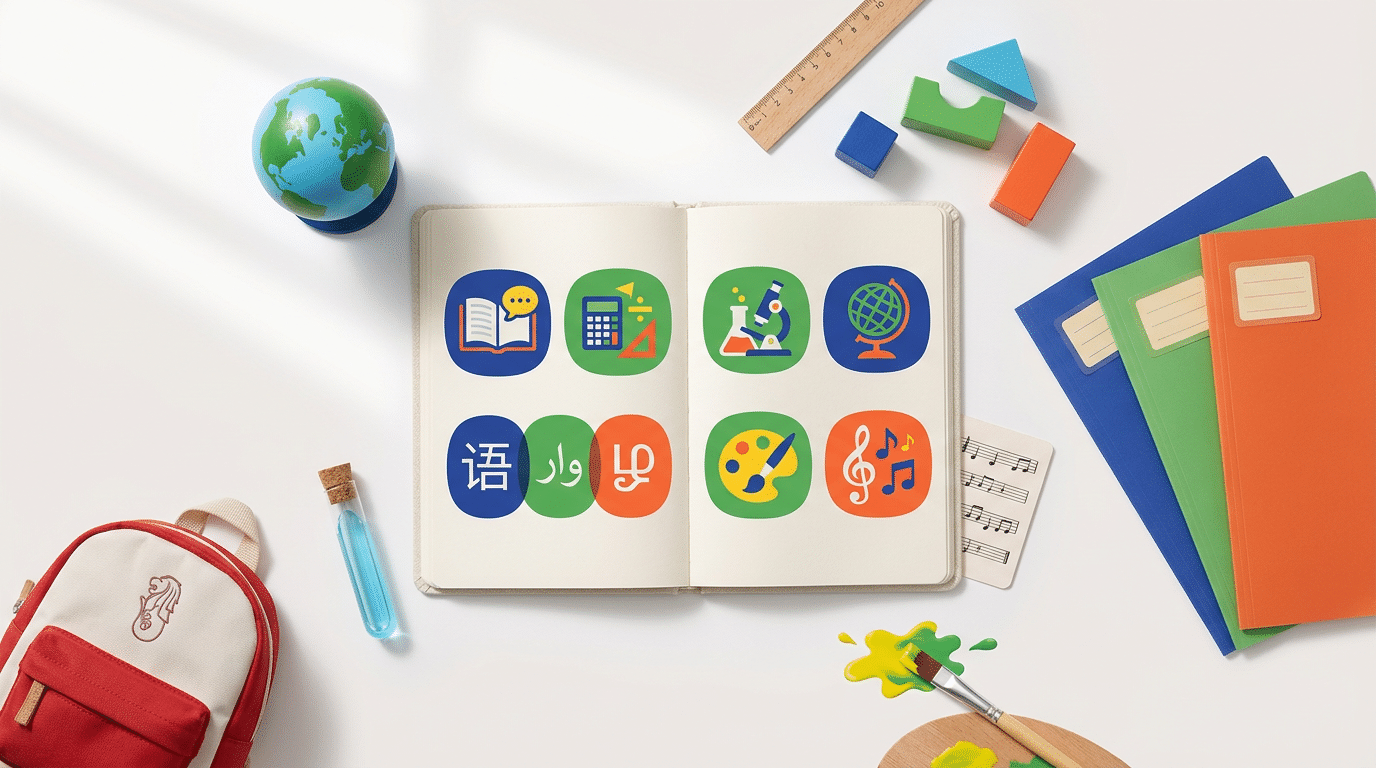
Recognises & writes all 26 letters
Reads simple CVC words (cat, dog, sun)
Communicates in full sentences
Counts to 20, recognises digits 0–9
Basic addition & subtraction within 10
Exposed to Mother Tongue vocabulary
🤝 Social & Emotional Readiness
Separates from parent without distress
Takes turns & shares in group play
Manages frustration, asks for help
Follows classroom-style rules
🎒 Independence & Self-Care
Uses toilet independently
Opens lunchbox & bottle unaided
Packs & unpacks schoolbag
Puts on & removes shoes alone
Knows name, address & parent’s number
Routine Habits to Build Now
Wake Up by 6:30 a.m.
Gradually shift bedtime earlier so mornings are calm, not chaotic
Structured Morning Routine
Wake → wash → dress → breakfast → pack bag — make it automatic
15–20 Min Daily Reading
Builds vocabulary, comprehension and a love of learning
20–30 Min Focused Seat Work
Puzzles, colouring, or simple tasks — mirrors classroom attention span
Key Facts at a Glance
The Most Important Insight
Children who adapt most successfully to Primary 1 are ready on multiple fronts — not just academically. A child with strong independence and emotional resilience will often settle in faster than one with superior academics but poor self-management skills.
Give Your Child the Best Possible Head Start
EduFirst’s pre-school and primary programmes offer personalised small-group learning across 25 Singapore locations — and flexible e-learning options too.
Why Primary 1 Readiness Matters More Than You Think
Many parents assume that school readiness is purely about academics — whether a child can read simple sentences or count to 100. But teachers and education specialists consistently highlight that the children who adapt most successfully to Primary 1 are those who are ready on multiple fronts: academically, socially, emotionally, and practically. A child who can solve simple sums but dissolves into tears when separated from a parent, or who struggles to unpack their own schoolbag, may find the first few weeks of school far more difficult than a child with slightly weaker literacy but strong independence and confidence.
Singapore’s Primary 1 curriculum moves at a meaningful pace. By the end of the first year, children are expected to have solid foundations in English Language, Mother Tongue, and Mathematics. Starting school already comfortable with basic concepts — and with the self-management skills to sit, listen, and follow instructions — gives children the breathing room to enjoy learning rather than simply survive it. Investing time in readiness before the school year begins is one of the most impactful things you can do for your child’s long-term confidence and love of learning.
Academic Readiness: Building the Right Foundation
Academic readiness does not mean drilling your child with worksheets until they can complete exam-style questions before they have even sat their first school lesson. It means ensuring they have the foundational skills that allow them to access and engage with the Primary 1 curriculum without feeling lost from day one. Think of it as building the scaffolding before the construction begins.
English Language
By the time your child enters Primary 1, it helps enormously if they can recognise and write the letters of the alphabet, understand that words are made up of sounds (phonemic awareness), and read simple three-letter words (CVC words like “cat,” “dog,” and “sun”). Equally important is their ability to communicate in complete sentences, follow multi-step verbal instructions, and listen attentively to a short story or passage. If your child is still developing these skills, structured preschool programmes or early literacy support can bridge the gap effectively. EduFirst’s pre-school programme is specifically designed to build exactly these foundations in a warm, small-group setting.
Mathematics
For numeracy, children entering Primary 1 should ideally be comfortable counting to at least 20, recognising single-digit numbers, understanding basic concepts like “more” and “less,” and beginning to add and subtract within 10 using concrete objects. The Primary 1 Maths syllabus introduces numbers up to 100, addition and subtraction, simple shapes, and basic measurement — so children who already have number sense and enjoy puzzles and pattern games tend to settle into Maths lessons with much less stress.
Mother Tongue
For many families, Mother Tongue (Chinese, Malay, or Tamil) can be a source of anxiety, especially in households where the language is not spoken daily. Even basic exposure — simple vocabulary, nursery rhymes, short conversations — makes a significant difference to how quickly a child picks up the language in a school setting. If your child needs more targeted support here, early enrolment in a structured Mother Tongue programme can give them a running start well before the school year begins.
Social and Emotional Readiness: The Skills Schools Don’t Always Test
Ask any experienced Primary 1 teacher what separates children who thrive in their first year from those who struggle, and social-emotional readiness will almost always feature prominently in the answer. A child who can regulate their emotions, get along with peers, manage small disappointments, and ask for help when they need it is already equipped with some of the most important tools for school success — tools that no worksheet can measure.
Here are the key social and emotional skills to nurture before school begins:
- Separation comfort: Your child should be able to separate from you without significant distress. Practice with short separations during preschool or enrichment activities to build this confidence gradually.
- Turn-taking and sharing: Classroom activities require children to wait their turn, share resources, and work cooperatively with others. Board games, group play, and team activities at home all help reinforce this.
- Managing frustration: Learning involves making mistakes. Children who can pause, take a breath, and try again — rather than shutting down — will find the academic demands of Primary 1 far more manageable.
- Asking for help: Many young children are hesitant to raise their hand and admit they do not understand something. Role-playing scenarios at home where your child asks a “teacher” for help can normalise this behaviour.
- Following classroom rules: Sitting still, listening without interrupting, and transitioning between activities on a teacher’s signal are all social behaviours that some children need deliberate practice to develop.
Social-emotional readiness is not about having a perfectly well-behaved child. It is about ensuring your child has enough emotional vocabulary and coping strategies to navigate the inevitable ups and downs of a school day with growing independence.
Independence and Self-Care: Can Your Child Manage on Their Own?
Primary school teachers manage classes of 30 to 40 students. Unlike preschool, where caregivers are often close at hand and ratios are much smaller, a Primary 1 teacher simply cannot assist every child with every personal task throughout the day. This makes practical independence one of the most underrated — and most important — areas of school readiness to address before the first day of school.
Work through this practical self-care checklist with your child in the months before school begins:
- Can they use the toilet independently, including managing their own clothing and washing their hands thoroughly?
- Can they open their own lunchbox and drink bottle without help?
- Can they pack and unpack their schoolbag when given a list or visual guide?
- Can they put on and take off their school shoes independently?
- Can they tidy up after themselves — returning items to the correct place after use?
- Do they know their full name, parents’ contact number, and home address?
- Can they communicate basic needs clearly to an unfamiliar adult?
If several of these feel like a stretch right now, do not panic. These are learned skills, and consistent practice at home over a few months makes a remarkable difference. The key is to resist doing things for your child that they are capable of doing for themselves — even when it feels faster and easier to step in.
Routine Readiness: Setting Up Good Habits Before School Starts
One of the most practical gifts you can give your child before Primary 1 begins is a stable daily routine that mirrors the rhythm of a school day. Children who are accustomed to waking up early, having a proper breakfast, sitting down to focus on a task, and following a predictable sequence of activities transition into school life with far less friction than those whose preschool years involved a more relaxed and flexible schedule.
In the weeks leading up to school, consider implementing the following habits:
- Early wake-up time: Gradually shift bedtime and wake-up time so that your child is consistently up by 6:30 a.m. without significant protest.
- Structured morning routine: Practice the full school morning sequence — waking, washing up, dressing in uniform, eating breakfast, and packing the bag — so it becomes automatic rather than chaotic.
- Daily reading time: Even 15 to 20 minutes of shared reading each day builds vocabulary, comprehension, and a positive relationship with books that will serve your child throughout their primary school years.
- Focused seated activity: Practice sitting still and completing a simple task — colouring, puzzles, simple worksheets — for at least 20 to 30 minutes without getting up or seeking distraction. This mirrors the attention span expected during a primary school lesson.
- Consistent bedtime: A child who is well-rested learns better, regulates emotions more effectively, and is far more resilient in the face of the inevitable challenges of a new school environment.
Routine is not about rigidity — it is about removing unnecessary stress from the morning and giving your child a sense of security through predictability. When children know what to expect, they can direct their mental energy toward learning rather than managing anxiety about what comes next.
How EduFirst Can Help Your Child Transition Smoothly
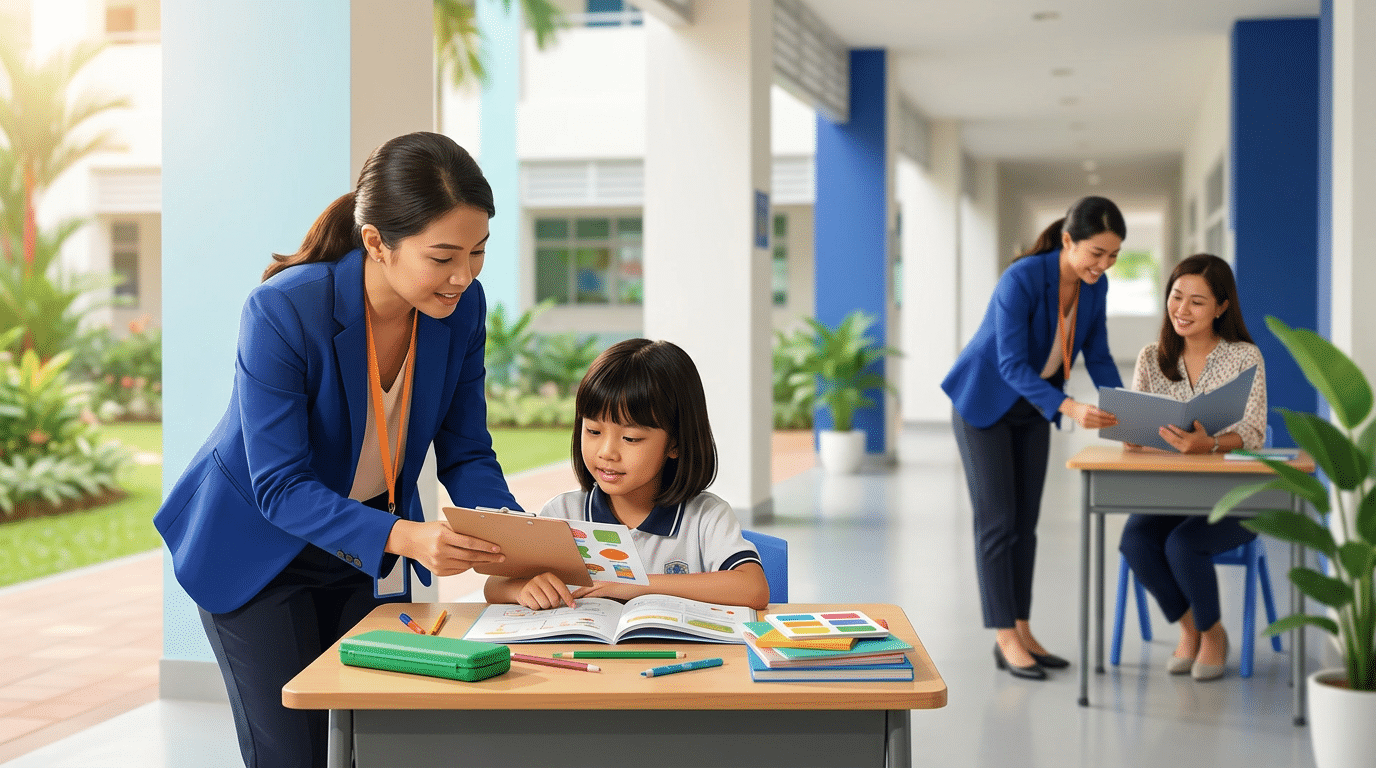
Even with the best preparation at home, some children benefit enormously from structured academic support in a small, nurturing group setting before and during the transition to Primary 1. At EduFirst Learning Centre, we have been supporting Singapore families since 2010 across 25 locations islandwide, and we understand exactly what the Primary 1 transition looks and feels like for both children and parents.
Our pre-school programme is designed specifically to build the academic foundations your child needs before starting primary school, covering early literacy, numeracy, and learning habits in small classes of just 4 to 8 students. That small class size is not incidental — it means your child receives genuine individual attention, their specific gaps are identified and addressed, and they build the kind of classroom confidence that makes a real difference when they walk into their first Primary 1 lesson.
Once your child has started primary school, our primary tuition programme continues that personalised support across English, Mathematics, and Mother Tongue — helping children who need to catch up as well as those who want to stay ahead. For families who prefer the flexibility of home-based learning, our e-lessons bring the same quality of instruction directly to your child’s screen.
Your Complete Primary 1 Readiness Checklist at a Glance
Use this summary checklist to do a quick readiness review in the months before school begins. Tick off what your child has already mastered, and use the gaps as your preparation roadmap.
Academic Readiness
- Recognises and writes all 26 letters of the alphabet
- Can read simple three-letter (CVC) words
- Communicates in complete sentences
- Counts to at least 20 and recognises single-digit numbers
- Understands basic addition and subtraction within 10
- Has some exposure to Mother Tongue vocabulary and conversation
Social and Emotional Readiness
- Can separate from parent without significant distress
- Takes turns and shares in group play
- Manages frustration without shutting down
- Asks adults for help when needed
- Follows simple classroom-style rules and transitions
Independence and Self-Care
- Uses the toilet independently
- Opens lunchbox and drink bottle unaided
- Packs and unpacks schoolbag with guidance
- Puts on and removes shoes independently
- Knows full name, home address, and a parent’s contact number
Routine Readiness
- Wakes up consistently by 6:30 a.m.
- Completes a structured morning routine independently
- Reads (or is read to) for at least 15 minutes daily
- Can sit and focus on a task for 20 to 30 minutes
- Has a consistent, age-appropriate bedtime
Start Strong, Stay Confident
Preparing your child for Primary 1 is not about creating a miniature academic achiever before school even begins. It is about giving them the confidence, skills, and habits that will help them walk through those school gates feeling capable and excited rather than overwhelmed. Every child develops at a different pace, and no checklist will be perfectly complete on day one — and that is entirely okay. What matters is that you are paying attention, filling gaps deliberately, and setting your child up to experience school as something positive and empowering from the very start.
The transition to Primary 1 is a team effort. With the right preparation at home and the right support alongside it, your child can begin this new chapter with a strong, confident foundation that serves them well throughout their entire primary school journey and beyond.
Give Your Child the Best Possible Head Start
At EduFirst Learning Centre, our experienced educators work with children in small groups of just 4 to 8 students, ensuring every child gets the personalised attention they need to build strong foundations before and during Primary 1. With 25 locations across Singapore and flexible e-learning options, quality support has never been more accessible.