- Apr 8, 2026
How Is the PSLE AL Score Calculated? Step-by-Step Explanation
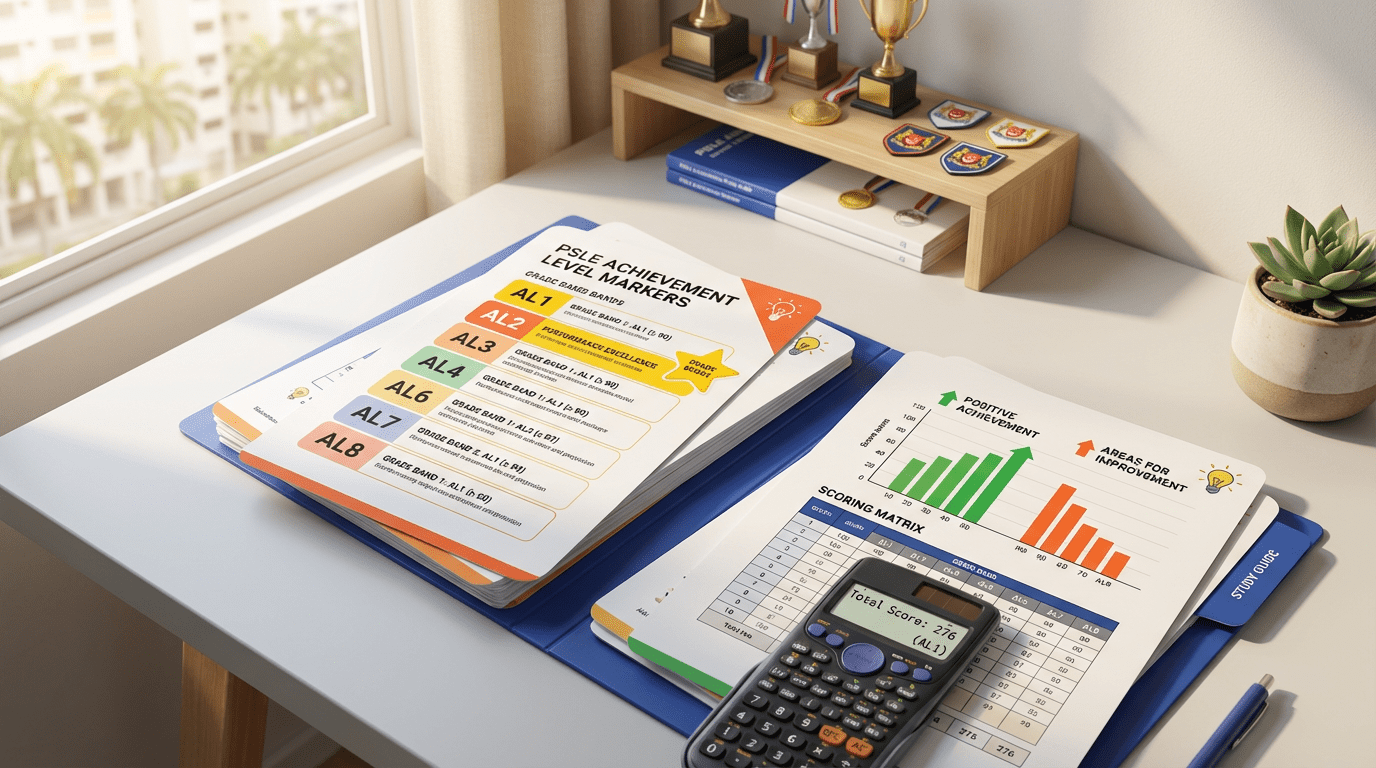
Table Of Contents
- What Is the PSLE AL Score?
- Understanding Achievement Levels: The Basics
- How Is the PSLE AL Score Calculated? Step-by-Step
- Step 1: Raw Marks Are Converted to Achievement Levels
- Step 2: Achievement Levels Across Four Subjects
- Step 3: Total PSLE Score Calculation
- PSLE AL Score Bands Explained
- Practical Calculation Examples
- Key Differences from the Old T-Score System
- How AL Scores Affect Secondary School Posting
- How to Help Your Child Achieve Better AL Scores
The Primary School Leaving Examination (PSLE) is a significant milestone in every Singaporean student’s educational journey. Since 2021, the Ministry of Education (MOE) has implemented the Achievement Level (AL) scoring system, replacing the decades-old T-score system. This change has left many parents wondering: how exactly is the PSLE AL score calculated?
Understanding the AL scoring system is crucial for parents who want to support their children effectively during this critical period. Unlike the previous system that compared students against their peers, the AL system focuses on individual achievement against established standards. This shift encourages students to focus on personal improvement rather than intense competition.
In this comprehensive guide, we’ll break down the PSLE AL score calculation process step-by-step. You’ll learn how raw marks translate into Achievement Levels, how the four subject scores combine to create the final PSLE score, and what these numbers mean for your child’s secondary school options. Whether you’re preparing your Primary 5 student for next year or supporting a Primary 6 child through their PSLE journey, this guide will demystify the scoring system and help you better understand your child’s results.
What Is the PSLE AL Score?
The PSLE Achievement Level (AL) score is a standards-referenced grading system that measures students’ mastery of subject content. Rather than comparing students against each other, the AL system evaluates how well each student has achieved the learning objectives set out in the primary school curriculum.
Each of the four PSLE subjects (English Language, Mother Tongue Language, Mathematics, and Science) is graded on a scale of AL1 to AL8, with AL1 being the highest level of achievement. These individual subject grades are then added together to produce a total PSLE score ranging from 4 (best possible) to 32 (lowest possible). This fundamental shift in assessment philosophy aims to reduce the excessive focus on academic competition and encourage a healthier approach to learning.
The AL scoring system provides parents with clearer information about their child’s understanding of specific subjects. Instead of a single aggregate score that obscures individual strengths and weaknesses, you can now see precisely which subjects your child excels in and which areas might need additional support from resources like quality primary tuition.
Understanding Achievement Levels: The Basics
Achievement Levels represent distinct bands of performance that show how well students have mastered the primary school curriculum. The eight levels are designed to recognize different degrees of understanding, from exceptional mastery to basic competency. This banded approach acknowledges that small differences in raw marks don’t necessarily reflect meaningful differences in understanding.
Each Achievement Level corresponds to a specific range of marks, though these ranges are not fixed percentages. The MOE determines these ranges based on national performance standards and curriculum expectations. This standards-based approach means that theoretically, all students could achieve AL1 if they demonstrate excellent mastery, unlike competitive systems where only a fixed percentage can score at the top.
The eight Achievement Levels serve multiple purposes. They provide feedback on student learning, guide instructional decisions for teachers, inform parents about their child’s progress, and ultimately determine eligibility for different secondary school options. Understanding what each level represents helps parents set realistic expectations and identify when additional academic support might benefit their child.
How Is the PSLE AL Score Calculated? Step-by-Step
The calculation of PSLE AL scores follows a straightforward three-step process. Understanding each step helps demystify how your child’s examination performance translates into their final PSLE score. Let’s break down this process in detail.
Step 1: Raw Marks Are Converted to Achievement Levels
After your child completes each PSLE subject examination, their answers are marked and they receive a raw score out of the total marks available for that paper. These raw marks are then converted into Achievement Levels based on predetermined mark ranges. The conversion ensures that similar levels of achievement receive the same AL grade, regardless of which examination cohort the student belongs to.
The mark ranges for each Achievement Level are determined by considering the difficulty of the examination papers and national performance standards. This process, called standard setting, involves subject experts and experienced educators who analyze the papers and establish appropriate cut-off points for each AL grade. While the specific mark ranges may vary slightly from year to year depending on paper difficulty, the standards for what constitutes each Achievement Level remain consistent.
For example, if the Mathematics paper in a particular year is deemed more challenging than usual, the mark ranges might be adjusted slightly lower to ensure that students achieving a certain level of mastery still receive the appropriate AL grade. This adjustment process ensures fairness across different examination cohorts and maintains the integrity of the standards-based system.
Step 2: Achievement Levels Across Four Subjects
Your child receives an individual Achievement Level grade for each of the four PSLE subjects. These four subjects are equally weighted in the calculation process, meaning that no single subject carries more importance than another in determining the final PSLE score. This equal weighting reflects the educational philosophy that balanced development across all core subjects is important for students’ overall academic foundation.
The four subjects assessed are English Language, Mother Tongue Language (such as Chinese, Malay, or Tamil), Mathematics, and Science. Each subject receives its own AL grade from 1 to 8 based on the student’s performance. A student might achieve AL2 in English, AL3 in Chinese, AL1 in Mathematics, and AL2 in Science, for instance. These individual grades provide valuable diagnostic information about the student’s specific strengths and areas for improvement.
Parents should pay attention to the individual subject Achievement Levels, not just the total score. If your child consistently achieves higher AL grades in certain subjects, this might indicate areas where additional support through specialized primary tuition programs could help strengthen foundational knowledge before secondary school.
Step 3: Total PSLE Score Calculation
The final step in calculating the PSLE AL score is remarkably straightforward: simply add the four individual Achievement Level grades together. This sum becomes the student’s total PSLE score. Since each subject can receive an AL grade from 1 to 8, the total PSLE score ranges from 4 (if the student achieves AL1 in all four subjects) to 32 (if the student receives AL8 in all subjects).
Lower PSLE scores are better in this system, which can initially confuse parents accustomed to the previous T-score system where higher scores were more desirable. Under the AL system, a student with a PSLE score of 8 (perhaps consisting of two AL1s and two AL2s) has performed better than a student with a PSLE score of 15. This reversed scale is an important concept to understand when interpreting your child’s results.
The total PSLE score determines a student’s eligibility for different secondary school options. Students with lower scores generally have access to a wider range of school choices, while those with higher scores may have more limited options. However, the MOE has deliberately kept the scoring system broad (with only eight Achievement Levels per subject) to reduce the hyper-competition that characterized the previous system and to recognize that small mark differences don’t always represent meaningful learning differences.
PSLE AL Score Bands Explained
Each Achievement Level corresponds to a specific band of marks that students must achieve in their subject examinations. Understanding these bands helps parents gauge what level of mastery different AL grades represent. The mark ranges are carefully calibrated to reflect meaningful differences in subject understanding and competency.
AL1 represents excellent achievement and thorough understanding of the subject. Students at this level demonstrate comprehensive mastery of concepts and can apply their knowledge confidently to solve complex problems. Typically, AL1 requires marks in the range of approximately 90 and above, though exact cut-offs vary based on paper difficulty.
AL2 indicates very good achievement with strong understanding of most concepts. Students performing at this level show solid mastery with only minor gaps in knowledge or occasional errors. The mark range generally falls between approximately 85-89, representing high-quality performance just below the exceptional standard of AL1.
AL3 and AL4 represent good and adequate levels of achievement respectively. Students at these levels demonstrate sound understanding of fundamental concepts with reasonable application skills. AL3 typically corresponds to marks around 80-84, while AL4 usually represents performance in the 75-79 range. These levels indicate that students have grasped essential learning objectives and are prepared for secondary school content.
AL5 and AL6 indicate basic to marginal achievement. Students at these levels have acquired foundational knowledge but may struggle with more complex applications or show gaps in understanding. AL5 generally corresponds to marks around 65-74, while AL6 represents performance in the 45-64 range. Students achieving these levels may benefit from additional academic support to strengthen their foundation before secondary school, particularly through structured primary tuition that addresses specific learning gaps.
AL7 and AL8 represent limited achievement where students have not yet demonstrated sufficient mastery of essential concepts. AL7 typically corresponds to marks around 20-44, while AL8 indicates performance below 20. Students at these levels require significant intervention and support to develop the foundational skills necessary for continued academic progress.
Practical Calculation Examples
Seeing real examples of how PSLE AL scores are calculated helps clarify the process. Let’s walk through several student scenarios to illustrate how individual subject Achievement Levels combine to produce total PSLE scores.
Example 1: High-Achieving Student
Sarah’s PSLE results show AL1 in English, AL1 in Chinese, AL2 in Mathematics, and AL1 in Science. Her total PSLE score is calculated as: 1 + 1 + 2 + 1 = 5. This excellent score of 5 would position Sarah competitively for admission to popular secondary schools offering her preferred subject combinations.
Example 2: Well-Rounded Student
Marcus achieves AL3 in English, AL2 in Malay, AL3 in Mathematics, and AL3 in Science. His total PSLE score is: 3 + 2 + 3 + 3 = 11. This solid score of 11 demonstrates good overall achievement and provides Marcus with a reasonable range of secondary school options aligned with his interests and strengths.
Example 3: Student with Varied Performance
Li Ming’s results show AL2 in English, AL5 in Chinese, AL2 in Mathematics, and AL3 in Science. Her total PSLE score is: 2 + 5 + 2 + 3 = 12. While Li Ming demonstrates strong performance in three subjects, the AL5 in Chinese significantly impacts her total score. This pattern suggests that focused support in Mother Tongue language, possibly through specialized tuition, could substantially improve her overall PSLE outcome.
Example 4: Student Needing Support
Rajesh’s PSLE results indicate AL4 in English, AL4 in Tamil, AL5 in Mathematics, and AL5 in Science. His total PSLE score is: 4 + 4 + 5 + 5 = 18. With this score, Rajesh has demonstrated adequate to basic achievement across subjects. His family might consider engaging comprehensive academic support through programs like those at EduFirst Learning Centre to strengthen his foundations before transitioning to secondary school, where content complexity increases significantly.
Key Differences from the Old T-Score System
Parents who experienced the previous T-score system themselves or have older children who took PSLE before 2021 will notice several fundamental differences in the AL scoring approach. Understanding these distinctions helps contextualize what your child’s AL scores represent and why this system was implemented.
The T-score system was norm-referenced, meaning students were graded relative to their cohort’s performance. A student’s T-score reflected how they performed compared to all other students taking PSLE that year. This created intense competition since improving one’s score required outperforming peers, not just mastering content. The aggregate score ranged from approximately 40 to over 280, with very fine gradations that could distinguish between students with minimal actual differences in understanding.
In contrast, the AL system is standards-referenced or criterion-referenced. Students are graded against fixed learning standards rather than against each other. Theoretically, all students could achieve AL1 in a subject if they all demonstrate excellent mastery, or all could receive AL8 if none meet the standards. This removes the zero-sum competitive element where one student’s success comes at another’s expense.
The AL system uses only eight broad bands per subject, resulting in just 29 possible total PSLE scores (4 through 32). This is dramatically coarser than the T-score system, which could produce hundreds of distinct aggregate scores. The broader bands mean that students with similar levels of understanding receive the same grade, reducing stress over small mark differences that don’t reflect meaningful learning distinctions. This change acknowledges that a two-mark difference on an examination doesn’t necessarily indicate different levels of subject mastery.
Additionally, the AL system eliminates several controversial features of the T-score system, such as bonus points and foundation subject distinctions that added complexity to score calculations. Every student now receives one of eight possible grades per subject, keeping the system transparent and equitable.
How AL Scores Affect Secondary School Posting
Your child’s total PSLE score directly determines their eligibility for different secondary schools and course options. Understanding how AL scores influence secondary school posting helps families make informed decisions during the school choice period following PSLE results release.
Secondary schools in Singapore offer different courses: Integrated Programme (IP), Express, Normal (Academic), and Normal (Technical). Each course has different entry requirements based on PSLE scores. Generally, students with lower PSLE AL scores (indicating better performance) qualify for more academically demanding courses, while those with higher scores are directed toward courses with more practical components or modified academic rigor.
The secondary school posting process uses a choice-based system where students submit a ranked list of school and course combinations they’re interested in. The system then matches students to schools based on their PSLE scores and preferences, along with other factors like citizenship status and school affiliation. Students are posted to the highest-ranked choice for which they qualify based on the school’s cut-off point for that year.
Cut-off points for popular secondary schools vary each year depending on the demand and the PSLE scores of applicants. A school that had a cut-off point of 8 last year might have a cut-off of 10 this year if fewer high-scoring students apply, or it might tighten to 6 if many top performers select it. These fluctuations mean that understanding your child’s options requires looking at historical trends rather than assuming cut-offs remain constant.
Beyond the numerical score, parents should consider the broader picture of secondary school selection. The “best” school isn’t necessarily the one with the lowest entry requirements, but rather the one that matches your child’s learning style, interests, strengths, and areas for growth. A student who receives a PSLE score of 15 might thrive in a supportive environment that matches their needs better than they would struggling in a highly competitive school they barely qualified for.
Students preparing for their transition to secondary education can benefit from early preparation that familiarizes them with the increased academic demands, regardless of which specific school they ultimately attend. Building strong study habits and addressing knowledge gaps during the post-PSLE period sets students up for success in their new academic environment.
How to Help Your Child Achieve Better AL Scores
Supporting your child’s journey toward achieving their best possible PSLE AL scores involves more than just monitoring examination results. Effective preparation combines academic support, emotional encouragement, and strategic planning throughout the primary school years, with particular focus during Primary 5 and 6.
Start early with strong foundations. The PSLE assesses cumulative learning from primary school, not just Primary 6 content. Students who develop solid foundational skills in lower primary find upper primary content more accessible. Regular practice, addressing misconceptions promptly, and ensuring genuine understanding rather than rote memorization builds the strong foundation necessary for PSLE success. Programs like quality pre-school education can establish positive learning attitudes from the earliest years.
Identify and address specific learning gaps. The AL system’s subject-by-subject reporting makes it easier to pinpoint which areas need additional attention. If your child consistently struggles with specific topics or subjects, targeted intervention through quality tuition can make a substantial difference. Small group settings with specialized primary tuition allow for personalized attention that addresses individual learning gaps more effectively than large classroom environments.
Develop consistent study routines and effective exam techniques. Success in standards-based assessment requires thorough content mastery and the ability to demonstrate that knowledge under examination conditions. Regular practice with past papers, timed exercises, and proper revision techniques helps students perform at their true ability level during the actual PSLE. Teaching your child to manage their time during examinations, check their work systematically, and approach different question types strategically can significantly impact their Achievement Levels.
Maintain balanced expectations and emotional support. While academic achievement matters, the AL system was specifically designed to reduce unhealthy academic pressure. Your child’s worth extends far beyond their PSLE score, and their educational journey continues long past Primary 6. Supporting their emotional wellbeing, encouraging their best effort rather than demanding perfection, and maintaining perspective about the examination’s place in their overall development creates a healthier preparation environment that often leads to better outcomes than high-pressure approaches.
Leverage multiple learning resources and support systems. Today’s students have access to diverse learning resources beyond traditional textbooks. Online platforms like e-lessons provide flexible learning opportunities that complement classroom instruction. Combining school lessons with supplementary resources, regular practice, and professional guidance when needed creates a comprehensive support system that addresses different learning needs and styles.
Focus on understanding, not just memorization. The AL system assesses genuine understanding and application ability, not just recall of facts. Encourage your child to ask “why” questions, make connections between concepts, and apply their knowledge to solve problems in different contexts. This deeper learning approach not only improves PSLE performance but also prepares students for the more conceptual demands of secondary school content.
Understanding how the PSLE AL score is calculated empowers you as a parent to better support your child’s educational journey. The Achievement Level system represents a significant shift toward standards-based assessment that focuses on individual mastery rather than relative ranking. By converting raw marks into one of eight Achievement Levels for each subject, then summing these levels for a total PSLE score ranging from 4 to 32, the system provides clearer feedback about your child’s specific strengths and areas for improvement.
The AL scoring system’s transparency and reduced granularity aim to create a healthier learning environment where students focus on genuine understanding rather than competing for fractional advantages over their peers. As a parent, you can support this philosophy by emphasizing personal growth, celebrating effort and improvement, and ensuring your child receives appropriate support when needed to master challenging concepts.
Whether your child is just beginning their primary school journey or approaching the PSLE examination, remember that the score they achieve is just one measure of their capabilities. The skills they develop, the learning attitudes they cultivate, and the resilience they build throughout primary school matter just as much as their final Achievement Levels. With the right support, clear understanding of expectations, and balanced perspective, your child can approach their PSLE with confidence and achieve results that reflect their true abilities.
Help Your Child Excel in Their PSLE Journey
At EduFirst Learning Centre, we understand that every child’s learning journey is unique. Our personalized approach, with small class sizes of just 4-8 students, ensures your child receives the individual attention they need to master PSLE concepts and achieve their best possible Achievement Levels. With 25 locations across Singapore and experienced educators who understand the AL scoring system inside out, we’re here to support your child every step of the way.