- Feb 2, 2026
Physics Tuition Toolkit: Using Everyday Objects to Teach Moments in Physics
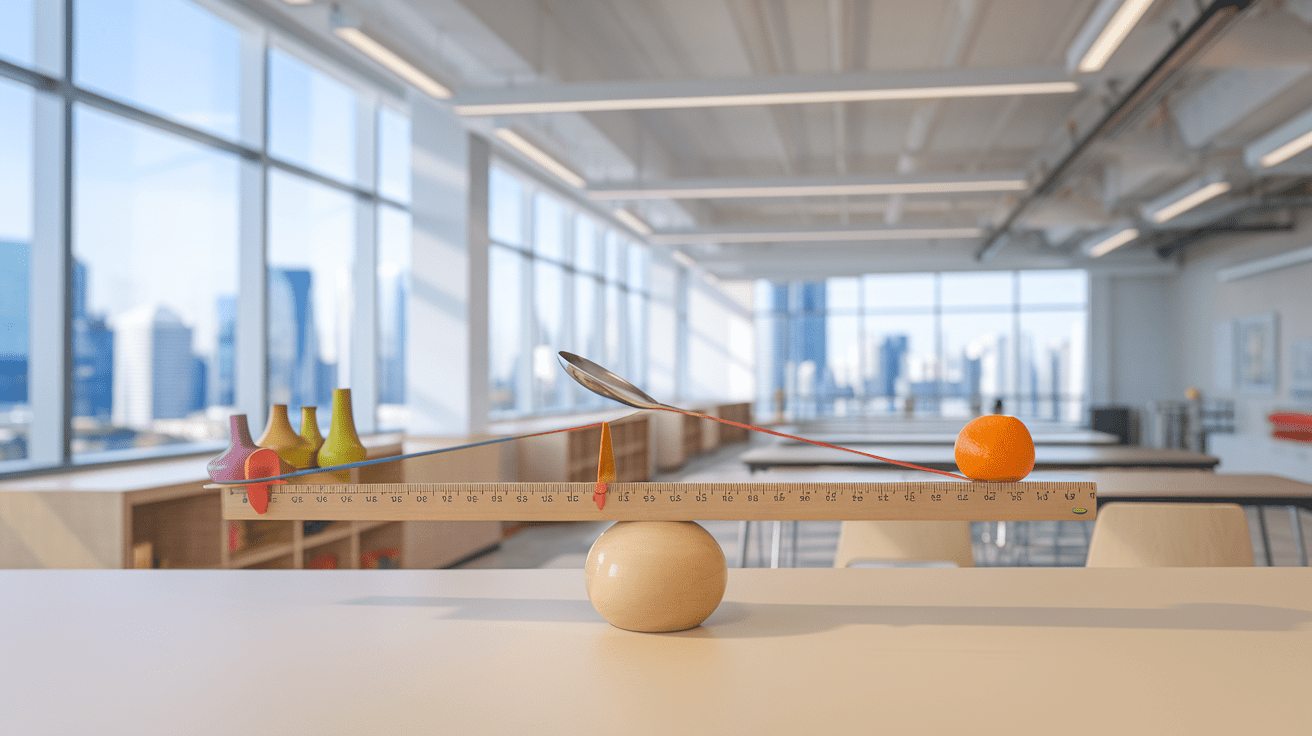
Table Of Contents
- Understanding Moments in Physics
- Everyday Objects for Teaching Moments
- Designing Hands-On Moment Experiments
- Connecting Theory to Practical Applications
- Assessment Strategies
- Common Misconceptions About Moments
- Conclusion
Physics can often seem abstract and challenging for secondary school students, particularly when it comes to concepts like moments and torque. At EduFirst Learning Centre, we’ve discovered that using familiar everyday objects as teaching tools can transform these abstract concepts into tangible, understandable principles. This approach not only clarifies difficult topics but also helps students develop a deeper appreciation for how physics operates in the world around them.
Moments in physics—the turning effect of a force—is a fundamental concept that appears in O-Level and A-Level physics curricula. Instead of relying solely on textbook diagrams and equations, incorporating household items into your physics tuition sessions can provide students with memorable, hands-on experiences that reinforce their understanding. This article explores practical strategies for using everyday objects to demonstrate moments, creating a more engaging and effective learning environment for your physics students.
Whether you’re a tutor looking to enhance your teaching toolkit or a parent supporting your child’s physics education, these practical approaches can help transform abstract concepts into concrete understanding.
Understanding Moments in Physics
Before diving into teaching tools, let’s establish a clear understanding of what moments are in physics. A moment is the turning effect of a force, measured as the product of the force and the perpendicular distance from the line of action of the force to the pivot (or fulcrum). The formula is simply:
Moment = Force × Perpendicular distance from pivot
The SI unit for moment is the newton-meter (Nm). A key principle to understand is that for an object to be in rotational equilibrium, the sum of clockwise moments must equal the sum of anticlockwise moments about any pivot.
Students often struggle with moments because they involve visualizing forces acting at different positions and calculating their rotational effects. This is precisely why hands-on demonstrations using familiar objects can be so effective—they make the invisible visible.
Everyday Objects for Teaching Moments
The beauty of teaching moments in physics is that demonstration materials are all around us. Here are some everyday objects that serve as excellent teaching tools:
Door Handles and Levers
Doors provide an immediate, tangible example of moments that students interact with daily. Have your students try the following:
Push a door open near its hinges, then at the edge farthest from the hinges. The difference in effort required illustrates how the same force produces different moments depending on the distance from the pivot (the hinges). This demonstrates why door handles are placed far from hinges—to maximize the moment and minimize the force needed.
This simple demonstration helps students understand that the moment increases proportionally with the perpendicular distance from the pivot, even when the applied force remains constant.
See-Saws and Balancing Acts
A ruler balanced on a triangular eraser or pencil creates a miniature see-saw that perfectly demonstrates the principle of moments. Place different weighted objects (like coins or small erasers) on either side of the pivot and ask students to predict where the objects should be placed to achieve balance.
This activity reinforces the principle that in rotational equilibrium, clockwise moments equal anticlockwise moments. If a heavier object is on one side, it must be closer to the pivot than a lighter object on the other side to maintain balance.
Wrenches and Screwdrivers
Tools like wrenches demonstrate moments in a practical context. If available, show students different sized wrenches and explain why longer wrenches require less force to tighten or loosen bolts—the longer lever arm creates a greater moment with the same applied force.
Similarly, screwdrivers with thicker handles allow users to apply greater turning force (torque). This connects classroom learning to real-world tool design and engineering principles.
Kitchen Tools
Common kitchen implements offer excellent examples:
Scissors demonstrate two levers working together, with the pivot at the connecting bolt. Nutcrackers show how force applied at the handles creates a magnified force at the shorter end where the nut sits. Bottle openers use leverage to pry caps off with relatively little effort.
These kitchen tools provide relatable examples of how moments and mechanical advantage are applied in everyday life, making the concepts more concrete for students.
Designing Hands-On Moment Experiments
At EduFirst Learning Centre, we believe in learning by doing. Here are three structured experiments using everyday objects that tutors can implement in small group sessions of 4-8 students:
Experiment 1: Ruler Balance
Materials needed:
- 30cm ruler
- Triangular eraser or pencil as fulcrum
- Various coins (1-cent, 5-cent, 10-cent, etc.)
- Small weights or erasers
Procedure:
- Balance the ruler on the fulcrum at its center of mass (typically at the 15cm mark).
- Place a 10-cent coin at the 25cm mark.
- Ask students to calculate where a 5-cent coin should be placed on the opposite side to achieve balance.
- Verify their calculations by testing if the ruler balances.
- Repeat with different combinations of coins and positions.
This experiment allows students to apply the moment equation directly and see immediate results, reinforcing the mathematical relationship between weight and distance in balancing moments.
Experiment 2: Door Force Measurement
Materials needed:
- Classroom door
- Spring balance or force meter
- Measuring tape
- Sticky notes for marking positions
Procedure:
- Measure and mark several distances from the door’s hinges along the edge of the door.
- Use the spring balance to pull the door perpendicular to its edge at each marked point, noting the force required to hold the door slightly open (at a constant angle).
- Record the force measurements and distances from the hinges.
- Plot a graph of force vs. distance and observe the relationship.
This experiment demonstrates how the required force decreases as distance from the pivot increases, illustrating the inverse relationship between force and distance for a constant moment.
Experiment 3: Wheelbarrow Physics
If outdoor space is available, a wheelbarrow provides an excellent large-scale demonstration of moments.
Materials needed:
- Wheelbarrow
- Various weights (books, rocks, etc.)
- Bathroom scale
- Measuring tape
Procedure:
- Measure the distance from the wheel (pivot) to the handles and to the center of the load area.
- Place a measured weight in the wheelbarrow.
- Use the bathroom scale to measure the force needed to lift the handles.
- Calculate the expected force using the principle of moments and compare with the measured value.
- Move the weight to different positions and observe how the lifting force changes.
This larger-scale demonstration helps students connect classroom concepts to practical applications and engineering design principles.
Connecting Theory to Practical Applications
To deepen understanding, help students connect moments to real-world applications beyond the examples already discussed:
Construction and engineering: Cranes, levers, and pulleys all operate based on the principle of moments. Photos or videos of construction equipment can illustrate how these principles scale to industrial applications.
Human body biomechanics: Our muscles and bones form lever systems. For example, when lifting weights, the elbow joint acts as a pivot, with muscles providing force and the weight creating an opposing moment. This connects physics to biology and sports science.
Transportation: The steering wheel in vehicles provides mechanical advantage through moments—a small force applied to the rim of the steering wheel creates enough moment to turn the wheels.
By explicitly connecting these examples to the experiments performed in class, students develop a coherent understanding of how moments operate across different contexts and scales.
Assessment Strategies
To evaluate student understanding of moments after using these everyday teaching tools, consider these assessment approaches:
Predict and explain: Present a new scenario involving moments and ask students to predict what will happen and explain why. For example, show an unbalanced see-saw and ask where a specific weight should be placed to balance it.
Design challenge: Have students design a simple machine that utilizes the principle of moments to accomplish a specific task, such as lifting a small object with minimal force.
Concept mapping: Ask students to create a concept map connecting moments to various everyday applications and the key principles involved.
Calculation problems with context: Present calculation questions embedded in realistic scenarios involving the everyday objects they’ve worked with, rather than abstract problems.
At EduFirst Learning Centre, our small class sizes of 4-8 students allow tutors to carefully observe each student’s engagement with these activities and provide personalized feedback, ensuring all students develop a solid understanding of the concepts.
Common Misconceptions About Moments
When teaching moments using everyday objects, be alert to these common misconceptions:
Confusing weight and mass: Students often use these terms interchangeably when calculating moments. Clarify that weight (in newtons) is the force used in moment calculations, not mass (in kilograms).
Ignoring the perpendicular distance: Many students measure the direct distance from the pivot rather than the perpendicular distance from the line of action of the force to the pivot. Use visual aids and physical demonstrations to clarify this concept.
Assuming the pivot must be at the end: Students sometimes think the pivot or fulcrum must be at the end of a lever. Show examples where the pivot is in the middle (like scissors) or elsewhere along a lever.
Overlooking the principle of transmissibility: Students may not understand that a force has the same effect regardless of where along its line of action it is applied. Demonstrate this by pushing a door at different points along the same radius from the hinge.
Addressing these misconceptions directly while using hands-on demonstrations helps students develop accurate conceptual understanding alongside mathematical fluency.
Conclusion
Teaching physics concepts like moments doesn’t require expensive laboratory equipment—the world around us is filled with perfect teaching tools. By incorporating everyday objects into your physics tuition sessions, you create memorable learning experiences that help students connect abstract principles to tangible reality.
This approach aligns perfectly with EduFirst Learning Centre’s commitment to personalized, effective learning. Our small class sizes of 4-8 students create the ideal environment for these hands-on activities, allowing tutors to guide each student’s exploration and ensure everyone develops both conceptual understanding and mathematical competence.
Remember that effective physics education goes beyond preparing students for examinations—it’s about developing their ability to see and understand the physics that underlies everything in their daily lives. When a student realizes that they’ve been interacting with moments every time they open a door or use a seesaw, physics transforms from a challenging school subject into an accessible explanation of how their world works.
By building this physics tuition toolkit of everyday objects for teaching moments, you’re not just helping students master a curriculum topic—you’re helping them develop the physicist’s perspective that will serve them well in future studies and everyday life.
Want to learn more about how EduFirst Learning Centre can help your child excel in Physics and other subjects? Our experienced tutors specialize in making complex concepts accessible through personalized attention and innovative teaching methods. Contact us today to schedule a consultation or to learn more about our small-group tuition programs across our 25 locations islandwide.