- May 10, 2026
School Fees in Singapore: What Parents Pay Across School Types
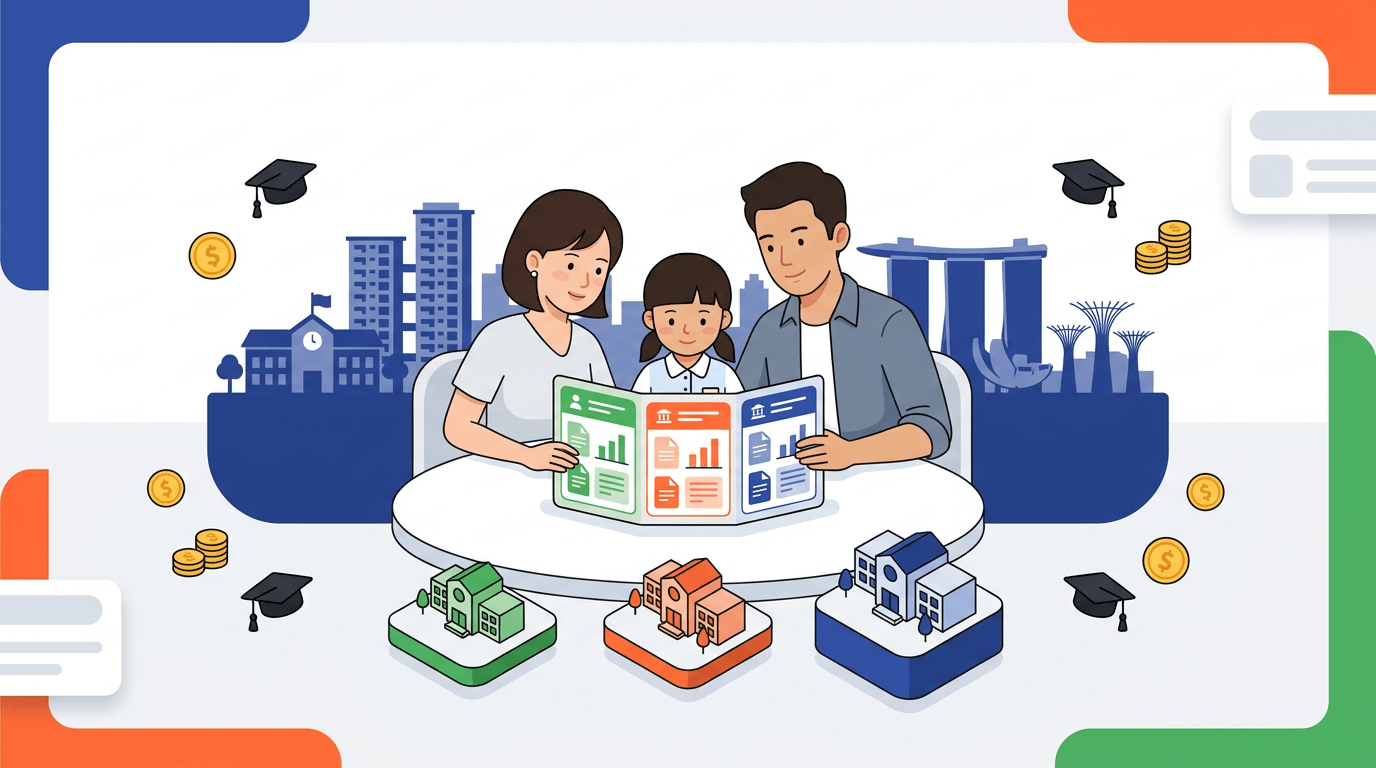
Planning your child’s education in Singapore is one of the most important financial decisions a family will make — and school fees are just the starting point. Whether you’re enrolling your child in a neighbourhood primary school or considering an international school, the range of costs across Singapore’s diverse school landscape can be surprisingly wide. For Singapore citizens, government school fees are heavily subsidised and among the lowest in the world. But once you factor in miscellaneous fees, enrichment activities, uniforms, and supplementary tuition, the total picture looks considerably different.
This guide breaks down what parents actually pay at each stage of schooling — from preschool through secondary — covering government, government-aided, independent, and international schools. Whether you’re budgeting for the first time or reassessing your family’s education spending, understanding these figures is the first step to planning with confidence.
School Fees in Singapore:
What Parents Actually Pay
From preschool to secondary — a clear breakdown across all school types
Government primary school fees for citizens are essentially zero — MOE absorbs tuition costs entirely
International school fees can reach SGD $55,000+ per year — up to 10,000× more than government schools
Hidden costs — uniforms, textbooks, CCAs, tuition — can add $400–$900/year even at government schools
Independent schools (e.g. Hwa Chong, Raffles) charge $200–$350/month — but bursaries are often available
MOE’s Financial Assistance Scheme (FAS) covers full fee waivers, textbooks & meals for qualifying families
Govt Primary School
Singapore citizens · Misc fee only
~$6.50–$13/mth
Govt Secondary School
Singapore citizens · Tuition + misc
~$20–$30/mth
Independent Secondary School
e.g. Hwa Chong, Raffles · Citizens
$200–$350/mth
MOE / Anchor Op Preschool
Before subsidies · Citizens
~$160–$220/mth
Private / Premium Preschool
Mid-range to premium international
$700–$2,500+/mth
International School
IB / British / American curriculum
$1,700–$4,500+/mth
Uniforms
$50–$150 per set
Textbooks
$100–$200 per year
Overseas Trips
$500–$2,000+ per trip
Daily Meals
$3–$7 per school day
Devices (PDLP)
Subsidised, some OOP cost
Assessment Books
$100–$300 per year
Government Subsidies & Financial Assistance
- MOE FAS — Free textbooks, attire, full fee waiver & daily meal allowance for qualifying families
- ECDA Preschool Subsidy — Up to several hundred dollars/month for eligible families at anchor & partner centres
- Working Mother support — Additional childcare subsidies and Working Mother’s Child Relief available
- School bursaries — Independent and international schools maintain their own funds; always ask!
Need Support Beyond the Classroom?
EduFirst Learning Centre helps primary & secondary students across Singapore achieve their academic best — with small classes of just 4–8 students.
Understanding the Singapore School Fee Landscape
Singapore’s education system is structured in a way that keeps mainstream schooling highly affordable for citizens, while offering premium options for those who seek a different curriculum or environment. The Ministry of Education (MOE) funds the vast majority of costs in government and government-aided schools, meaning the monthly fees parents pay directly are often nominal. However, the school type, citizenship status of the child, and whether additional programmes are offered all influence what families ultimately spend.
Singapore schools generally fall into several categories: government schools, government-aided schools, independent schools, autonomous schools, specialised schools, and private or international schools. Each tier carries a different fee structure, level of autonomy, and educational focus. Understanding where each school sits helps parents compare not just price, but value and fit for their child.
Preschool and Kindergarten Fees
Preschool is the first formal educational expense most Singapore families encounter, and it can also be one of the most variable. MOE kindergartens, which are government-run and operate within primary school premises, charge among the lowest fees available — typically around $160 to $220 per month for Singapore citizens before subsidies. Anchor operators and partner operators under the Early Childhood Development Agency (ECDA) framework are required to cap fees to keep them affordable for families.
Private preschools, on the other hand, span a broad spectrum. Mid-range private kindergartens may charge between $700 and $1,500 per month, while premium or international-curriculum preschools can exceed $2,500 per month. The Anchor Operator Subsidy and means-tested government subsidies can significantly reduce costs for qualifying families at eligible centres. Parents exploring early childhood options should also consider whether the centre’s curriculum aligns with their child’s later schooling path.
For families looking to give their youngest learners a strong academic foundation alongside preschool, EduFirst’s preschool programmes offer structured learning support that complements formal kindergarten education.
Primary School Fees
For Singapore citizens attending government primary schools, monthly school fees are essentially zero — MOE absorbs the full tuition cost. What parents do pay is a monthly miscellaneous fee, which typically ranges from $6.50 to $13.00 depending on the school. This fee covers administrative and operational expenses such as the use of school facilities and basic activity costs.
Government-aided primary schools, which are affiliated with religious or clan organisations, follow a very similar structure. Fees remain minimal for citizens, with the miscellaneous fee in the same low range. The distinction between a government school and a government-aided school is largely administrative from a fees perspective at the primary level.
Where costs start to accumulate is in ancillary spending. Parents should budget for:
- School uniforms and PE attire (a one-time or occasional purchase, typically $50 to $150 per set)
- Textbooks and workbooks (approximately $100 to $200 per year depending on level)
- CCA-related expenses, excursions, and enrichment programmes
- School-based after-care or student care services if needed
These additional costs mean the true annual spend at a government primary school for a citizen family can realistically range from $400 to $900 per year, even before supplementary tuition is considered.
Secondary School Fees
At the secondary level, government school fees remain modest but are no longer entirely waived. Singapore citizens attending government secondary schools pay a monthly tuition fee of approximately $5, while the miscellaneous fee brings the total monthly cost to around $20 to $30. Citizens at government-aided secondary schools pay a slightly higher tuition fee of around $18 to $20 per month, with miscellaneous fees on top of that.
Permanent residents and international students face significantly higher fees at government secondary schools — PR students may pay around $520 to $1,050 per month, and international students even more depending on the country of origin. This tiered structure is a deliberate policy to prioritise citizens while still welcoming international enrolment.
Beyond fees, secondary school brings its own set of costs. Elective subjects, subject-specific materials, overseas learning journeys, and CCA activities can add up considerably across four or five years. Families should also consider the academic pressure that intensifies at this stage — which is where structured tuition support often becomes a consideration. EduFirst’s secondary tuition programmes are designed to help students navigate this demanding phase with confidence, particularly in core subjects like English, Mathematics, and Science.
Independent and Autonomous School Fees
Independent schools in Singapore, such as Hwa Chong Institution, Raffles Institution, and the School of the Arts (SOTA), have greater autonomy over their programmes and consequently charge higher fees. For Singapore citizens, monthly fees at independent secondary schools typically range from $200 to $350 per month, which is notably higher than standard government schools but still significantly subsidised compared to international alternatives.
Autonomous schools occupy a middle ground — they follow the national curriculum but have more flexibility in their programmes and school culture. Fees at autonomous schools are marginally higher than standard government schools, usually by a small increment, and still fall well within the affordable range for most families.
It’s worth noting that independent schools often offer bursaries, fee assistance, and scholarship programmes for students who qualify based on financial need or academic merit. Parents should inquire directly with the school’s administration to understand what financial support is available before ruling out these institutions on cost alone.
International School Fees
International schools represent the most expensive schooling option in Singapore, and the range is substantial. Annual fees across the international school segment typically run from SGD $20,000 to over SGD $55,000 per year, depending on the school’s reputation, curriculum (IB, British, American, Australian, etc.), and facilities. Monthly fees can therefore range from roughly $1,700 to well above $4,500.
Schools such as the Singapore American School, Tanglin Trust School, and Dulwich College are among the most sought-after — and most expensive. Beyond tuition, international schools often charge capital levies, registration fees, and additional costs for extra-curricular activities, making the total annual commitment even higher.
International schools are typically attended by expatriate families or Singaporean families who prefer a foreign curriculum for specific reasons, such as university pathways abroad. Singapore citizens and PRs can attend international schools in Singapore, though some schools have enrolment restrictions for citizens and PR students to ensure space for the expatriate community they primarily serve.
Beyond Tuition: Other School-Related Costs to Budget For
Across all school types, the listed tuition fee is rarely the full picture. Singapore parents consistently report that ancillary costs form a significant portion of their annual education spend. Some of the commonly overlooked expenses include:
- School canteen spending: Daily pocket money for meals adds up, with many parents budgeting $3 to $7 per school day per child.
- Overseas programmes: Learning journeys abroad or Overseas Community Involvement Programmes (OCIPs) can cost $500 to $2,000 or more per trip.
- Digital devices: The national Personalised Digital Learning Programme (PDLP) has introduced device requirements, with government subsidies available but some out-of-pocket cost still possible.
- Assessment books and stationery: A consistent annual expenditure for most families, often $100 to $300 per year depending on how proactively parents supplement school materials.
- School insurance and miscellaneous levies: Small but recurring costs collected at the start of each school year.
Building these line items into your annual budget — rather than treating them as surprises — helps families manage education spending more effectively across the long term.
Government Subsidies and Financial Assistance
Singapore’s government offers a robust set of financial assistance schemes to ensure that no child is disadvantaged by their family’s financial circumstances. The MOE Financial Assistance Scheme (FAS) is the primary mechanism for supporting lower-income families at government and government-aided schools. Eligible families receive free textbooks, school attire, and full fee waivers, along with a daily meal allowance for qualifying students.
At the preschool level, ECDA administers the Preschool Subsidy framework, which includes means-tested subsidies of up to several hundred dollars per month for eligible families at anchor and partner operator centres. Working mothers receive additional support through the Working Mother’s Child Relief and childcare subsidies. The government has also made consistent efforts to expand the number of affordable preschool places through the anchor operator scheme.
For families navigating financial pressures, it’s worth speaking directly with the school’s administration about available support. Many independent and international schools also maintain their own bursary funds, and these are not always well-publicised.
Supplementary Education Costs
One of the most significant education-related expenditures for Singapore families sits outside the school system entirely: supplementary tuition. A large proportion of Singapore students attend tuition classes, enrichment programmes, or both — particularly as they approach major national examinations like the PSLE and O-Levels. According to various surveys and media reports, Singapore families collectively spend billions of dollars annually on private tuition alone.
Tuition costs vary widely depending on the format. Home tuition with a private tutor typically commands higher rates, especially for experienced tutors or those with MOE teaching backgrounds. Tuition centres offer more structured and often more cost-effective alternatives, particularly those using small group settings that allow for personalised attention at scale.
For primary school students working toward the PSLE, EduFirst’s primary tuition programmes offer targeted academic support in an intimate small group environment of just 4 to 8 students, ensuring every child receives the attention they need. For families who prefer the flexibility of online learning, EduFirst’s e-lessons bring the same quality of instruction to students from the comfort of home.
When factoring tuition into the family budget, parents should consider not just the monthly fee but also the value delivered: does the programme offer regular feedback, progress tracking, and alignment with the school curriculum? These factors matter as much as price when evaluating return on educational investment.
Making the Most of Your Education Budget
School fees in Singapore span an enormous range — from the near-zero cost of a government primary school for citizens to tens of thousands of dollars per year at elite international schools. For most families, the mainstream government school system remains genuinely affordable at the headline level. The real financial planning challenge lies in the accumulating layer of supplementary costs: materials, activities, and tuition support that many families consider essential to keeping pace with Singapore’s competitive academic environment.
The key is to approach education spending with a clear-eyed budget that accounts for both direct fees and indirect costs, and to make deliberate choices about where additional investment will have the greatest impact on your child’s learning journey. Understanding the full fee landscape across school types is the foundation of that planning process — and with the right support systems in place, every child can thrive, regardless of which school they attend.
Looking for Quality Tuition Support for Your Child?
At EduFirst Learning Centre, we’ve been helping primary and secondary students across Singapore achieve their academic best since 2010. With small class sizes of just 4 to 8 students and 25 locations islandwide, personalised attention is at the heart of everything we do.