- Apr 19, 2026
Screen Time and Learning: What the Research Actually Says for Parents
Screen time is one of the most debated topics among parents today. Whether it’s a preschooler glued to a tablet, a primary schooler doing homework on a laptop, or a teenager scrolling through social media late into the night, screens are now woven into every stage of childhood. And with the rise of digital learning tools, it’s no longer as simple as saying “less is more.”
The question Singapore parents are increasingly asking isn’t just how much screen time their child is getting — it’s what kind, and what effect it’s having on their child’s ability to learn, focus, and thrive academically. The good news is that researchers have been asking the same questions for years, and the findings offer a nuanced, practical picture that every parent should understand.
In this article, we break down what the latest research says about screen time and children’s learning, how different types of screen use affect cognitive development, and what Singapore parents can do to make sure their child’s relationship with technology supports — rather than undermines — their academic growth.
What Counts as Screen Time?
Before diving into the research, it’s worth clarifying what we mean by “screen time.” The term covers an enormous range of activities: watching cartoons, playing video games, video calling grandparents, completing online homework, using educational apps, browsing social media, and everything in between. Lumping all of these together is a bit like saying all food is equally nutritious — context and content matter enormously.
Researchers and health organisations now typically distinguish between passive screen time (consuming content without interaction, such as watching videos) and active screen time (engaging with content, such as coding games, video calls, or guided learning apps). They also differentiate between educational and recreational screen use. Understanding these distinctions is the starting point for any honest conversation about screens and learning.
What Does the Research Actually Say?
The body of research on screen time and children’s development has grown significantly over the past decade, and the picture is more layered than early headlines suggested. Several major studies have found associations between high volumes of recreational screen time and lower academic performance, reduced attention span, and delayed language development — particularly in younger children. A widely cited 2019 study published in JAMA Pediatrics found that one-year-olds who had more screen time showed lower developmental scores in communication and problem-solving by age three.
However, research also makes clear that not all screen time is harmful. A review by the American Psychological Association found that interactive educational media, when age-appropriate and used in moderation, can support vocabulary, numeracy, and early literacy skills. The key variables are the type of content, the amount of time, and crucially, the presence of a caregiver who can mediate and discuss what the child is watching or doing.
Neuroscience adds another layer to the picture. The developing brain — particularly in children under ten — is highly plastic and sensitive to environmental input. Excessive passive screen time during critical developmental windows can crowd out activities like reading, imaginative play, and face-to-face interaction, all of which are essential for building the cognitive foundations needed for academic success. It’s less that screens are inherently damaging, and more that they can displace more beneficial activities when used without boundaries.
Screen Time Guidelines by Age Group
Major health bodies including the World Health Organization (WHO) and the American Academy of Pediatrics (AAP) have published guidelines to help parents navigate screen use at different developmental stages. These are not rigid rules but evidence-informed benchmarks worth knowing:
- Under 18 months: Avoid screen use other than video calls. The brain at this stage learns best through direct interaction with people and the physical environment.
- 18–24 months: If parents choose to introduce screens, opt for high-quality educational content and watch it together with your child to help them understand what they’re seeing.
- 2–5 years: Limit recreational screen time to one hour per day of high-quality programming. Co-viewing is strongly encouraged.
- 6–12 years (Primary school age): No specific hour limit is set, but consistent limits should be in place to ensure screens don’t interfere with sleep, physical activity, homework, and face-to-face time.
- Teenagers: Focus on content quality and ensure screens are not disrupting sleep or replacing real-world social interaction and study time.
It’s worth noting that these guidelines primarily address recreational screen time. Educational screen use for homework or guided learning programmes is generally treated separately by researchers and health bodies. For Singapore students navigating a demanding curriculum, this distinction is especially relevant.
Passive vs. Active Screen Time: Why the Difference Matters
One of the most consistent findings in screen time research is that how a child engages with a screen matters as much as how long they’re on it. Passive consumption — watching YouTube videos, streaming shows, or scrolling — places the child in a largely receptive state. There is little cognitive challenge, limited need for memory retrieval, and often no opportunity to apply or discuss what’s been watched. Over time, large amounts of passive viewing can habituate the brain to receiving stimulation without effort, which can make the sustained attention required for reading or study feel frustratingly slow by comparison.
Active screen time, on the other hand, can be genuinely enriching. Video calls with family members support language development and social skills. Age-appropriate coding games build logical thinking. Well-designed educational platforms that require children to answer questions, make choices, and receive feedback can reinforce concepts learned in school. The critical factor is whether the screen activity demands something from the child’s brain — or simply delivers stimulation without any return effort required.
When Too Much Screen Time Becomes a Problem
While moderate and well-managed screen time is not cause for alarm, research does identify clear warning signs that usage has crossed into problematic territory. Parents should be alert to the following patterns:
- Sleep disruption: Screens in the bedroom, particularly before bed, suppress melatonin production due to blue light exposure. Poor sleep has a direct and well-documented negative impact on memory consolidation, attention, and academic performance.
- Declining interest in non-screen activities: If a child becomes consistently reluctant to read, play, exercise, or socialise without screens, it may indicate that digital stimulation has become the default and is crowding out other developmental experiences.
- Shorter attention spans: Children who spend large amounts of time on fast-paced, highly stimulating content may find it harder to sustain attention during slower-paced activities like reading or classroom instruction.
- Academic performance dips: Research consistently links heavy recreational screen use (particularly gaming and social media) with lower grades and reduced homework completion in school-age children.
- Emotional dysregulation around screen removal: Strong negative reactions when screens are taken away can signal that usage has moved beyond healthy recreation.
These signs don’t mean that screens have caused irreversible harm, but they do indicate that a reset of screen habits may be needed — ideally in combination with strengthening other routines around study, sleep, and physical activity.
Can Screen Time Support Learning?
The answer, backed by research, is yes — when used intentionally. A growing body of evidence supports the use of technology as a supplement to traditional learning, particularly for children who benefit from visual or interactive instruction styles. Digital tools that allow children to revisit concepts at their own pace, receive immediate feedback, and access a wider range of materials than a single textbook can genuinely extend learning opportunities.
For older primary and secondary students, online learning platforms and e-lessons have become a recognised part of the educational landscape. The effectiveness of these tools, however, depends heavily on structure, accountability, and the quality of the programme. Unguided internet browsing is not the same as a well-designed online lesson with clear objectives and teacher interaction. The presence of an engaged educator — whether in person or through a structured digital format — remains one of the strongest predictors of learning outcomes.
EduFirst Learning Centre’s e-lessons are designed with exactly this in mind, offering students the flexibility of digital learning without sacrificing the structured, teacher-guided engagement that drives real academic progress.
The Singapore Context: Digital Learning and Academic Pressure
Singapore’s education system is among the most rigorous in the world, and in recent years, digital tools have become increasingly embedded in the school curriculum. The Ministry of Education’s push towards blended learning means that primary and secondary students are regularly using devices for schoolwork — sometimes for hours at a day. This creates a unique challenge for Singapore parents: the line between necessary educational screen time and excessive overall screen exposure is harder to draw than ever.
The concern isn’t the technology itself, but whether children are developing the self-regulation and study skills to use it effectively. A student who spends three hours on a device — two of which involve structured learning and one of which involves passive entertainment — is in a very different position from a student who spends all three hours gaming. Helping children make this distinction, and building habits around purposeful screen use, is one of the most valuable things parents and educators can do in today’s environment.
For students in primary school and secondary school, structured supplementary learning — whether in person or online — can help anchor good study habits and provide the human interaction that makes learning stick in ways that solo screen-based study often cannot.
Practical Tips for Parents: Managing Screen Time at Home
Managing screen time effectively isn’t about enforcing a strict daily minute count. It’s about building a family culture where screens serve clear purposes and exist alongside a rich variety of other activities. Here are evidence-based strategies that can make a real difference:
- Create screen-free zones and times. Mealtimes and bedrooms are good starting points. Screens off at least an hour before bed supports better sleep quality for children of all ages.
- Prioritise content over duration. Ask not just “how long have they been on?” but “what are they doing and is it age-appropriate?” A 45-minute educational session is more valuable than 20 minutes of mindless scrolling.
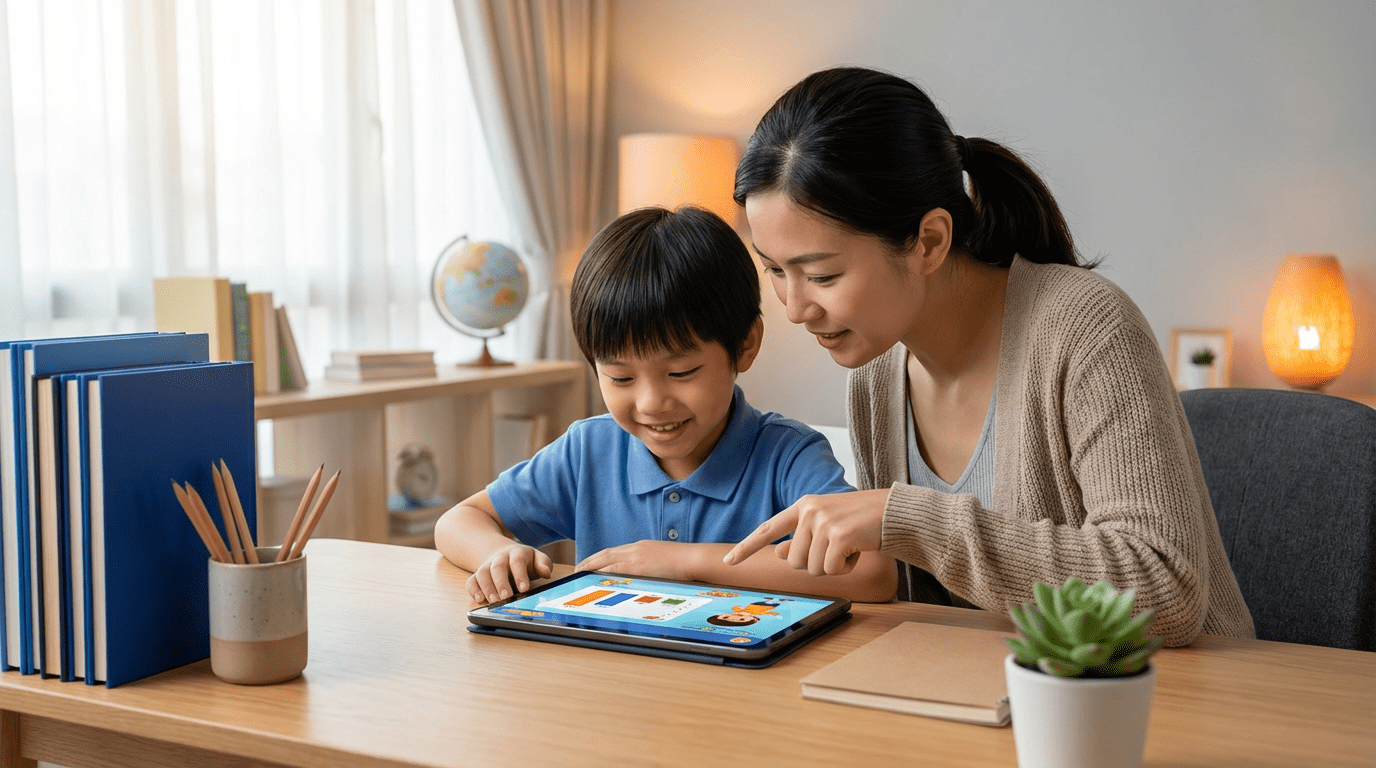
- Watch and engage with your child. Co-viewing educational content — especially for younger children — dramatically improves comprehension and retention. Your commentary and questions activate deeper thinking.
- Use technology purposefully. Help children understand the difference between using a device for a specific task and using it to fill time. This is a habit that will serve them well into adulthood.
- Model healthy screen habits yourself. Children are acutely observant. Parents who are frequently on their own devices while telling children to put theirs down send a mixed message that undermines the rule.
- Keep the conversation open. Rather than making screens a forbidden and therefore desirable thing, talk with your child about what they’re watching, playing, or learning. This builds media literacy alongside trust.
How Structured Learning Supports Healthy Screen Habits
One of the most practical ways to help your child develop a healthy relationship with screens is to ensure their learning time is genuinely productive — which means giving them the academic support and engagement they need so they’re not turning to unstructured screen time to fill knowledge gaps or manage boredom that comes from falling behind.
When children feel confident and capable in school, they are naturally more motivated to engage in purposeful activities. Conversely, when they’re struggling and disengaged academically, screens become an easy escape. Structured supplementary learning — in small groups where every student receives real attention — builds the academic confidence that makes a child more willing to put the screen down and engage with the world around them.
For preschoolers building foundational skills, EduFirst’s preschool programme nurtures early literacy and numeracy in an engaging, developmentally appropriate environment. For older students managing the demands of Singapore’s primary and secondary curricula, personalised tuition that keeps class sizes between four and eight students means no child gets lost in the crowd — and every lesson counts.
The Bottom Line
The research on screen time and learning is clear on one important point: it’s not screens themselves that help or harm children’s development, but how those screens are used, by whom, for how long, and what they displace in the process. For Singapore parents navigating a digital-first education environment, the goal isn’t to eliminate screens but to ensure that screen use is intentional, age-appropriate, and always balanced against the irreplaceable value of real human interaction, physical play, good sleep, and structured learning.
Children who thrive academically tend to have routines that anchor them — consistent study habits, engaged educators, and home environments where learning is valued and supported. Screen time, when it fits into that framework rather than dominating it, can genuinely be part of a rich educational experience. The key is giving children the structure, support, and skills they need to make the most of every learning opportunity — digital or otherwise.
Give Your Child the Academic Foundation They Deserve
At EduFirst Learning Centre, we believe that strong learning outcomes come from personalised attention, expert guidance, and the right balance of structured support. With small classes of just 4 to 8 students across 25 locations islandwide — and flexible e-lessons available — we help primary and secondary students build real confidence in their studies.