- Apr 20, 2026
How Many Subjects Should a Child Have Tuition For?
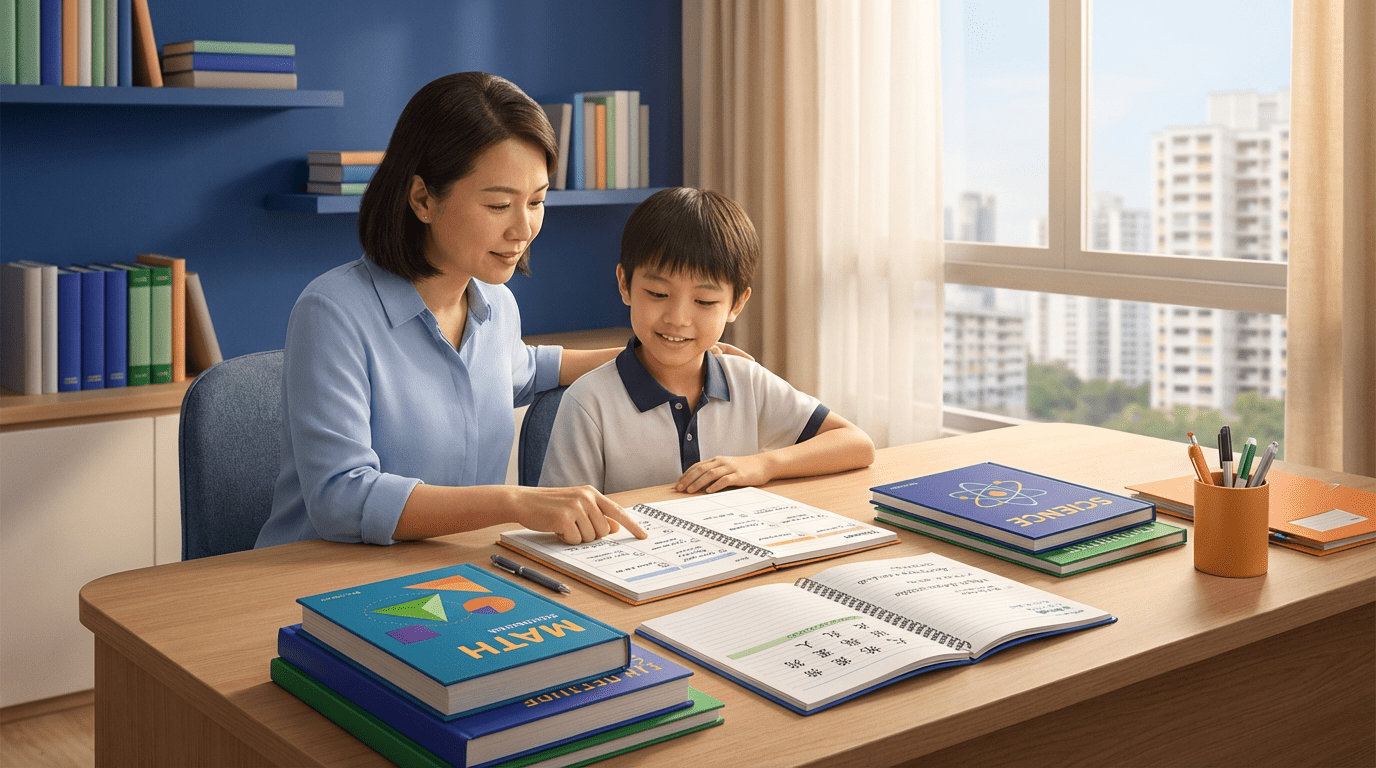
It’s a question almost every Singapore parent wrestles with at some point: how many subjects should a child have tuition for? With academic expectations running high and the pressure of major examinations like the PSLE and O-Levels looming large, it can feel tempting to sign your child up for tuition in every subject, just to be safe. But more tuition does not always mean better results, and the wrong approach can leave your child exhausted, disengaged, and less motivated to learn. This article breaks down the key considerations parents should weigh before deciding on tuition subjects, what the right number looks like at different school levels, and how to make tuition work effectively without overwhelming your child.
Why This Question Matters More Than You Think
In Singapore’s competitive education landscape, tuition has become almost a default for many families. According to data from the Department of Statistics Singapore, households spend hundreds of millions of dollars on private tuition annually, and it is not uncommon to meet primary school students attending tuition for three or four subjects every week. While there is nothing inherently wrong with supplementary education, the decision to enrol a child in tuition should be deliberate and needs-based, not driven by anxiety or peer comparison.
The real risk of over-tutoring lies not just in financial cost but in the toll it takes on a child’s time, energy, and love of learning. Children need unstructured time to rest, play, and pursue interests outside the classroom. When every afternoon is consumed by tuition sessions, there is little room for the kind of exploration and self-motivation that builds long-term academic resilience. Asking “how many subjects?” is really asking a deeper question: what does my child truly need right now?
Key Factors to Consider Before Adding Tuition Subjects
There is no universal answer to the right number of tuition subjects because every child is different. Before making any decisions, parents should honestly assess several factors that directly influence whether tuition is necessary and beneficial.
- Academic performance: Is your child struggling to keep up in school, or are they performing at or above expectations? Tuition should generally address a genuine gap, not simply aim to push an already-capable student to the top percentile at all costs.
- Learning style and pace: Some children grasp concepts quickly in a classroom setting but need more time to consolidate understanding. Others may find the school environment distracting and benefit from the focused attention of a smaller group.
- Current weekly schedule: Take stock of how many hours per week are already committed to co-curricular activities, homework, and family time. Adding tuition should not tip the balance into unsustainable territory.
- The child’s own motivation: A student who is already anxious about academics may become more stressed rather than more confident if tuition feels like an additional burden rather than genuine support.
- Upcoming milestones: The proximity of key examinations like PSLE or O-Levels may justify temporary increases in academic support, but this should be a short-term strategy with a clear end point.
Weighing these factors honestly will give parents a much clearer picture of which subjects actually require external support and which are being managed well enough through school alone.
Tuition by School Level: What Makes Sense at Each Stage
Pre-School and Kindergarten
At the pre-school stage, the priority is nurturing curiosity, building foundational language and numeracy skills, and developing social confidence rather than academic drilling. Formal tuition in multiple subjects is generally unnecessary at this age. If you are looking for structured early enrichment, a quality pre-school programme that emphasises play-based learning and foundational literacy is far more valuable than replicating a school-like tuition environment at home.
Primary School (Primary 1 to Primary 6)
Primary school is where many parents first consider tuition seriously, and for good reason. The curriculum covers English, Mother Tongue, Mathematics, and Science (from Primary 3), and the PSLE at the end of Primary 6 carries significant weight in determining secondary school placement. For most students, one to two subjects is a reasonable starting point. English and Mathematics are the most commonly supported subjects because they underpin performance across the curriculum. If your child is also finding Science or Mother Tongue challenging, a third subject may be worth considering closer to Primary 5 and 6. Enrolling a Primary 1 student in tuition for four subjects simultaneously, however, risks burning out a child who has barely started their formal schooling journey.
EduFirst’s primary tuition programmes are structured around small class sizes of four to eight students, which means your child receives genuine individual attention rather than being lost in a crowd. This approach often means that well-targeted support in one or two subjects delivers stronger results than scattering attention across many.
Secondary School (Secondary 1 to Secondary 4/5)
The subject range expands considerably in secondary school, with students taking between seven and nine subjects for their O-Level or N-Level examinations. It may seem logical to add tuition for every subject, but this is rarely practical or effective. A more strategic approach is to identify the two or three subjects where your child is weakest or where the stakes are highest for their intended post-secondary pathway, and focus tuition support there. For students aiming for science-heavy tertiary courses, prioritising Additional Mathematics, Physics, or Chemistry may make more sense than spreading resources thinly across all subjects.
EduFirst’s secondary tuition programmes are designed to bridge the gap between classroom teaching and examination performance, with experienced tutors who understand the nuances of the MOE syllabus at this level.
Signs Your Child Genuinely Needs Tuition in a Subject
Rather than deciding based on general anxiety, look for specific, observable signals that indicate tuition would make a meaningful difference in a particular subject.
- Consistently scoring below class average despite completing homework and attending school regularly
- Expressing confusion about core concepts even after teacher explanations
- Dreading a specific subject or showing a sudden drop in confidence related to it
- Struggling to complete tests within the allotted time due to weak foundational understanding
- Feedback from the class teacher suggesting the child needs more guided practice
When these signs appear in one or two subjects, targeted tuition can be genuinely transformative. When a child is managing adequately across the board, adding tuition may solve a problem that does not yet exist while creating new ones around time and stress.
The Hidden Risks of Signing Up for Too Many Subjects
It is worth being direct about the downsides of over-tutoring, because they are often underestimated. When children attend tuition sessions for four or five subjects each week on top of a full school day, fatigue becomes a genuine academic obstacle. A tired child retains less, participates less, and is more prone to careless mistakes during examinations. The cognitive bandwidth needed for deep learning is finite, and overscheduling works against it.
There is also a motivational cost. Children who feel they have no free time, no say in their schedule, and no space to simply be kids often develop a negative association with learning that can persist well into adulthood. Autonomy and downtime are not luxuries; they are conditions that support healthy intellectual development. Parents who scale back on tuition subjects and focus on quality support in targeted areas frequently report that their children become more engaged, not less.
Finding the Right Number: A Practical Framework for Parents
While every child’s situation is unique, the following framework offers a sensible starting point for most families navigating this decision.
- Start with one or two subjects – Begin with the subject your child finds most challenging or the one with the most immediate examination pressure. Assess the impact over one to two school terms before adding more.
- Review progress regularly – Tuition should produce measurable improvement in understanding and results. If progress is evident after a term, consider whether a second subject is now warranted. If there is little improvement, investigate whether the tuition approach itself needs to change before expanding the number of subjects.
- Cap at three subjects for most students – For the majority of primary and secondary students, tuition in more than three subjects simultaneously tends to yield diminishing returns. Three subjects is not a hard rule, but it is a threshold worth pausing at before going further.
- Scale up strategically before key examinations – In the year leading up to PSLE or O-Levels, it may be appropriate to temporarily add a fourth subject for intensive revision. This should be time-limited and planned with the child’s full awareness and buy-in.
- Involve your child in the decision – Older children especially benefit from having some agency in determining where they need help. A student who chooses to attend tuition in a particular subject is far more likely to engage with it meaningfully than one who feels it has been imposed on them.
This step-by-step approach keeps tuition purposeful, avoids the trap of reflexive over-enrolment, and ensures that each subject receiving tuition support is genuinely benefiting from it.
Why Quality of Tuition Matters More Than Quantity of Subjects
Perhaps the most important insight for parents to take away is that the quality of tuition in a subject far outweighs the number of subjects covered. A child who attends one well-structured, attentive tuition session per week in Mathematics will almost certainly benefit more than a child who attends three rushed, overcrowded sessions across three subjects. The learning environment, the class size, and the tutor’s ability to identify and address each student’s individual gaps are what determine whether tuition actually moves the needle.
This is why EduFirst structures all its programmes around small classes of four to eight students, ensuring that every child receives the kind of focused, responsive teaching that makes tuition genuinely effective. Whether accessed in person across 25 locations across Singapore or through flexible e-lessons, the emphasis is always on learning outcomes rather than hours logged. When tuition is this purposeful, parents often find that two well-chosen subjects deliver better results than four loosely managed ones.
Making the Right Tuition Decision for Your Child
There is no single right answer to how many subjects a child should have tuition for, but there is a right process for arriving at your answer. Start by honestly assessing where your child genuinely struggles, consider how much time and energy they have alongside their school commitments, and resist the pressure to match what other families are doing. For most students, one to three well-chosen subjects supported by high-quality, attentive tuition is far more effective than an exhausting schedule spread across the entire curriculum.
The goal of tuition should always be to build your child’s confidence, close genuine knowledge gaps, and foster an attitude toward learning that will serve them long after any single examination is over. Choosing fewer subjects but better tuition is almost always the smarter investment.
Not Sure Which Subjects Your Child Needs Support In?
Our experienced educators at EduFirst Learning Centre are happy to help you identify the right subjects and find a programme that fits your child’s learning needs. With small classes of just 4–8 students and centres across 25 locations islandwide, we make personalised learning accessible and effective.