- Oct 11, 2026
Preschool Fees in Singapore: What Parents Pay Across Provider Types
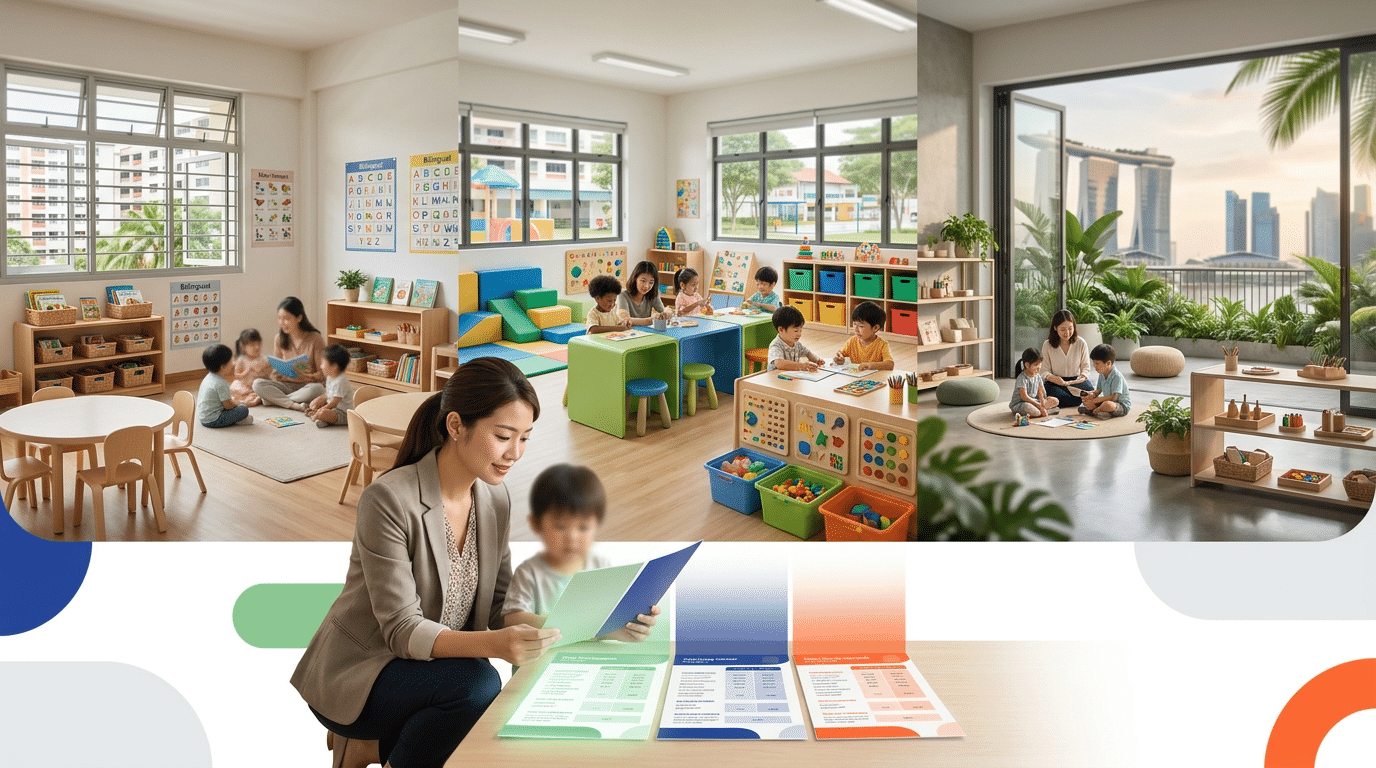
Choosing a preschool in Singapore involves far more than picking the prettiest classroom. The single biggest variable most parents encounter is cost — and with monthly fees ranging from $160 at an MOE Kindergarten to well over $3,500 at an international preschool, the gap between the cheapest and most expensive options is staggering. What drives that difference? Provider type. Singapore’s early childhood sector is structured across five distinct categories, each with its own fee logic, government funding status, and educational positioning.
This guide breaks down exactly what parents pay across every provider type, explains how government subsidies can bring fees down significantly, flags the hidden costs that rarely appear in the headline figure, and helps you plan confidently for your child’s early education — and everything that follows.
The Five Provider Types — and Why Fees Differ
Singapore’s preschool landscape is regulated by the Early Childhood Development Agency (ECDA), which licences all centres and runs two key funding schemes that directly shape what parents pay. Broadly, there are five provider categories parents will encounter: MOE Kindergartens, Anchor Operators (AOPs), Partner Operators (POPs), private preschools, and international preschools. The first two tiers receive the most direct government support and therefore carry the lowest fees, while private and international centres set their own pricing based on curriculum, facilities, and brand positioning.
Understanding which tier a centre belongs to is the single most important step in budgeting for early childhood education. Two centres on the same street can charge wildly different fees not because one is better, but simply because one receives government funding and the other does not. Once you understand the structure, the fee ranges start to make complete sense.
Preschool Fee Comparison at a Glance
The table below summarises typical monthly full-day fees across provider types before GST and before any government subsidies. Use this as your starting map — the sections that follow explain each tier in detail.
| Provider Type | Typical Monthly Fee (Full-Day, Before GST & Subsidy) | Subsidies Available? |
|---|---|---|
| MOE Kindergarten (half-day) | $160 (SC) / $320 (PR) | Yes (KiFAS) |
| Anchor Operators (AOP) | Capped at $610/month | Yes (Basic + Additional) |
| Partner Operators (POP) | Capped at $650/month | Yes (Basic + Additional) |
| Private Preschools | $1,200 – $2,500/month | Partial (Basic Subsidy only for SC) |
| International Preschools | $2,500 – $3,500+/month | Generally none |
MOE Kindergartens: The Most Affordable Entry Point
MOE Kindergartens (MKs) sit at the most accessible end of the fee spectrum. Run directly by the Ministry of Education and co-located with primary schools, they offer a four-hour half-day programme for children aged five and six (K1 and K2 only — they do not accept children below age five). The monthly fee for Singapore Citizens in 2026 is $160, and $320 for Permanent Residents. There are no additional out-of-pocket costs for complementary programmes including field trips, making the published figure a reliable representation of your actual spend.
For families who need full-day coverage, Kindergarten Care (KCare) is available at all MK locations. The maximum KCare monthly fee for 2026 is $425 before any applicable subsidy — so the total ceiling for a full-day arrangement at an MK is $585 per month for a Singapore Citizen, before KCare subsidies bring it lower. One practical advantage many parents appreciate is the co-location benefit: children attending an MK receive priority consideration when registering for Primary 1 at the same school, which removes some of the stress from the transition to formal schooling.
Eligible Singapore Citizen families can also apply for the Kindergarten Fee Assistance Scheme (KiFAS), which can reduce MK fees by up to $170 per month for lower-income households, making this already-affordable option even more accessible. For families whose children are entering K1 or K2 and who value a structured national curriculum, an MK is hard to beat on value.
Anchor Operators: Quality with a Government-Set Cap
Anchor Operators (AOPs) are private childcare organisations that have entered a funding agreement with ECDA, committing to keep fees below a government-set cap in exchange for financial support. As of 2026, the full-day childcare fee cap at an AOP is $610 per month for Singapore Citizen children (excluding GST), reduced from $640 in 2025 following Budget 2024 commitments. The infant care cap sits at $1,235 per month. The five major AOPs include PCF Sparkletots (operated by the PAP Community Foundation), My First Skool (NTUC First Campus), Skool4Kidz, E-Bridge, and Little Skool-House.
Because AOPs operate on a large scale with hundreds of centres across Singapore, they offer wide geographic coverage — particularly in HDB heartland areas — and accept children from as young as two months (infant care) through to K2. The curriculum follows national frameworks, and teachers are trained to ECDA standards. Critically, AOP centres are eligible for both the Basic Subsidy and Additional Subsidy (means-tested), which means lower-income families can see their effective monthly fee drop dramatically. The government has also signalled further fee cap reductions toward 2028–2030, targeting a $150 net monthly fee for lower- and middle-income families at AOP centres.
Partner Operators: The Mid-Range Middle Ground
Partner Operators (POPs) occupy the tier between Anchor Operators and fully private centres. These are private preschool chains that have chosen to participate in ECDA’s Partner Operator scheme, agreeing to a fee cap in exchange for government funding support and quality benchmarks. The current POP term runs from January 2026 to December 2030, with ECDA having appointed 380 childcare centres operated by 33 commercial and not-for-profit operators under this new term. The full-day childcare fee cap for Singapore Citizen children at a POP centre is $650 per month (before GST) as of 2026, compared to $680 previously.
Well-known POP centres include names like Carpe Diem, Learning Vision, and Kindle Garden. Because they operate independently while still adhering to government quality frameworks, POPs can differentiate their programmes more than AOPs — offering specific pedagogical approaches, bilingual environments, or more specialised facilities — while still keeping fees meaningfully lower than fully private operators. Parents whose children qualify for government subsidies can apply these at POP centres too, making the effective fee often comparable to an AOP for eligible families.
Private Preschools: Specialised Curricula at a Premium
Private preschools sit outside the AOP and POP schemes entirely, meaning they set their own fees without a government cap and do not receive direct ECDA funding support. In return, they have greater freedom to develop proprietary curricula, invest in premium facilities, and pursue specific educational philosophies. Full-day childcare at a private preschool typically ranges from $1,200 to $2,500 per month before subsidies, though fees vary considerably by brand, location, and programme level.
Brands like MindChamps, Pat’s Schoolhouse, Brighton Montessori, and Lorna Whiston fall into this tier. MindChamps, for example, offers a proprietary “Champion Mindset” curriculum and publishes full-day fees in the range of $1,700 to $2,100 per month. Montessori-inspired centres like Brighton typically charge $2,000 to $2,140 per month. The curriculum diversity in this segment is genuine — from Reggio Emilia and Montessori to pure bilingual immersion — and class sizes tend to be smaller than at AOP centres. Whether those differences justify the fee premium is a decision every family has to make based on their own priorities and budget.
It is worth noting that Singapore Citizen children attending private (non-AOP, non-POP) centres may still qualify for the Basic Subsidy of up to $300 per month if the mother is working, which offsets the higher base fee to some extent. However, the means-tested Additional Subsidy is generally not available at fully private centres.
International Preschools: Top-End Fees for Global Pathways
At the top of the fee spectrum sit international preschools, which cater primarily to expatriate families but are open to Singapore Citizens and PRs as well. These centres typically offer IB Primary Years Programme (PYP) frameworks, Reggio Emilia or Montessori approaches, bilingual immersion, and purpose-built facilities including art studios, outdoor nature areas, and multi-sensory learning spaces. Monthly fees for full-day programmes generally run from $2,500 to $3,500 or more, with annual tuition at institutions like EtonHouse International ranging from approximately $20,000 to $28,000 per year for preschool and kindergarten programmes.
Government subsidies are generally not available at international preschools, and the one-time upfront costs deserve careful attention. Registration fees can range from $500 to $3,000, annual capital or facility levies at some international schools run from $1,000 to $5,000, and refundable deposits are often equivalent to one or two months of fees. For a family enrolling at a mid-tier international preschool charging $2,800 per month, the true first-year cost can comfortably exceed $40,000 once all fees are combined. These centres are best suited to families who need a programme aligned with an overseas curriculum or who are on a short-term stay in Singapore and prioritise continuity of education across countries.
Government Subsidies: How Much Can You Save?
Singapore’s subsidy framework for preschool can make a transformative difference to what families actually pay, particularly at AOP and POP centres. There are two main subsidy types available to Singapore Citizen children enrolled at eligible (AOP/POP) centres:
- Basic Subsidy: Up to $300 per month for childcare (and $600 per month for infant care) for Singapore Citizen children of working mothers, regardless of household income. Non-working mothers may also qualify under certain conditions.
- Additional Subsidy (means-tested): Layered on top of the Basic Subsidy for families whose household income falls below certain thresholds. A household earning $3,000 and below per month can receive up to $467 in additional subsidy, reducing the co-payment at an AOP centre to as little as $3 per month.
To illustrate the real-world impact: a Singapore Citizen family with a gross monthly household income of $4,500 and a working mother enrolling their child at an AOP full-day childcare centre capped at $610 could receive $300 (Basic) plus $340 (Additional) in subsidies — reducing their monthly co-payment to around $70 before GST. At a POP centre capped at $650, the co-payment would be similarly low. The government has also committed to further lowering these caps in coming years, so the trajectory is firmly toward greater affordability for eligible families.
For MOE Kindergarten families, the KiFAS scheme provides up to $170 per month for households earning $3,000 and below. Additionally, the Start-Up Grant (SUG) offers up to $1,000 one-time for eligible lower-income families to cover initial preschool costs like registration fees, deposits, uniforms, and insurance. The Child Development Account (CDA) and Baby Bonus savings can also be used toward preschool expenses, providing another layer of financial support for Singapore Citizen children.
Hidden Costs Beyond the Monthly Fee
The published monthly fee is almost never the full cost of preschool. Experienced parents know that a centre advertising $800 per month may end up costing significantly more once all the additional line items are factored in. Your actual annual spend can run 15 to 25 percent higher than twelve times the headline monthly rate. Before committing to any preschool, ask for a full breakdown of every charge — the following are the most common additional costs to budget for:
- Registration fee: A one-time charge ranging from $50–$150 at government-linked centres, $200–$500 at private preschools, and $500–$2,000 at international schools. Generally non-refundable.
- Security deposit: Typically equivalent to one to two months’ fees, refundable upon withdrawal with sufficient notice. At a private centre charging $1,500 per month, this means $1,500–$3,000 tied up from day one.
- Uniform and school bag: Most preschools require a specific uniform set. Budget approximately $80–$250 per year, with replacements as children grow.
- Annual material or resource fees: Covering workbooks, art supplies, and curriculum materials — typically $100–$300 per year at local centres, and up to $500 at private ones.
- Enrichment add-ons: In-house enrichment programmes such as phonics, music, coding, or sports are often optional extras charged separately, typically $50–$350 per month depending on the centre.
- School bus or transport: Two-way transport services generally cost $150–$250 per month and are entirely optional but important for working families without a caregiver on hand.
- Field trips and events: Occasional excursions and year-end graduation events may add $100–$300 annually. Note that MOE Kindergartens do not charge extra for field trips — these are bundled into the $160 monthly fee.
- Annual capital/facility levy (international schools): Some international preschools charge an annual levy of $1,000–$5,000 that is separate from monthly tuition and easy to overlook when comparing fee schedules.
The safest approach is to ask every preschool you visit for a full first-year cost estimate in writing, covering every fee category. A centre that appears $200 cheaper per month may actually cost the same or more once the full picture is accounted for.
How to Choose the Right Provider for Your Budget
There is no single right answer to which preschool tier is best — it depends on your child’s age, your work arrangements, your family’s income, and what educational values matter most to you. That said, a few practical principles help most families narrow the decision.
Start with your subsidy eligibility. If your child is a Singapore Citizen and your household income qualifies for the Additional Subsidy, enrolling at an AOP or POP centre will almost always deliver the best value-to-cost ratio in the market. The quality difference between a well-run AOP centre and a private preschool is not as dramatic as the fee difference suggests — ECDA’s quality benchmarks apply to all licensed centres, and many AOP teachers hold the same qualifications as their private-sector counterparts.
If curriculum or pedagogy is your primary consideration — perhaps you want a Montessori environment, a bilingual Mandarin immersion programme, or a centre whose philosophy aligns closely with your own parenting approach — private preschools are worth exploring with a clear-eyed view of the total cost. Use the subsidy calculator on the ECDA website before making any comparison, and always visit centres in person before committing. Location also matters more than many parents initially expect: a preschool that is 10 minutes from home or your workplace will reduce daily stress considerably, regardless of which tier it belongs to.
Planning Ahead: What Comes After Preschool?
Preschool is just the beginning of your child’s education journey. Once K2 ends and Primary 1 begins, many families discover that the learning support their child received in early childhood does not automatically continue in the more structured environment of primary school. Whether your child thrives in Year 1 or finds certain subjects challenging, having the right academic support in place from the outset makes a significant difference to both confidence and outcomes.
At EduFirst Learning Centre, we have been helping primary and secondary students across Singapore build strong academic foundations since 2010. Our pre-school programme is designed to bridge the gap between kindergarten and primary school — strengthening literacy, numeracy, and the habits of learning that children need to thrive in formal education. Once they enter primary school, our primary tuition classes — with small groups of just 4 to 8 students — ensure that every child receives the individual attention they need at each stage. And as they progress to secondary school, our secondary tuition classes across 25 locations islandwide keep that momentum going. For families who prefer flexible, home-based learning, our e-lessons offer the same quality of instruction in a fully online format.
The Bottom Line
Singapore preschool fees span an enormous range — from $160 per month at an MOE Kindergarten to more than $3,500 at an international preschool — but the deciding factor is almost always the provider type rather than the quality of care alone. For most Singapore Citizen families, enrolling at an Anchor Operator or Partner Operator centre and claiming all available government subsidies delivers excellent value without sacrificing educational quality. Private and international options make sense for families with specific curriculum preferences or international mobility needs, but the total cost picture — including hidden fees and one-time charges — should always be evaluated carefully before committing.
Whichever preschool path you choose, what matters most is that your child enters primary school with curiosity, confidence, and a genuine love of learning. That foundation, built in the early years, is what every stage of education after preschool will build upon.
Give Your Child the Best Start — and the Best Continuation
From pre-school readiness to primary and secondary success, EduFirst Learning Centre is here to support your child every step of the way. With small classes, experienced tutors, and 25 centres across Singapore, we make personalised learning achievable for every family.