- Oct 19, 2026
Bullying in Singapore Schools: How Schools Respond and What Parents Can Do
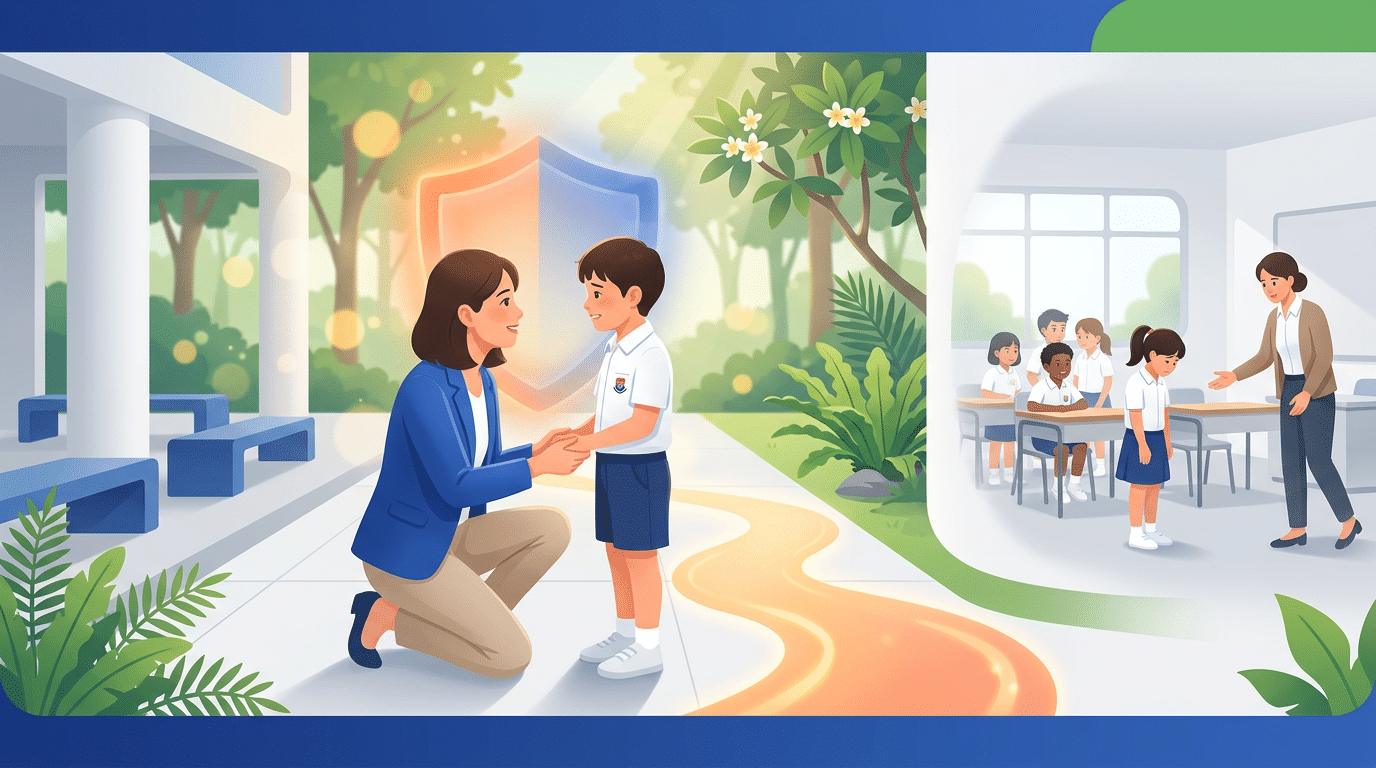
No parent wants to hear that their child is being bullied at school. Yet it remains one of the most pressing concerns for Singapore families — and the conversation around it has intensified significantly in recent years, with high-profile incidents making headlines and the Ministry of Education (MOE) announcing sweeping new measures in 2026. Understanding how bullying in Singapore schools actually works — what it looks like, how schools are required to handle it, and what parents can actively do — is the first step toward protecting your child.
This article breaks down the latest data and official MOE policies, explains exactly how schools investigate and respond to incidents, and gives parents a clear, practical roadmap for action. Whether your child has just confided in you about a bullying experience or you simply want to be prepared, you’ll find everything you need here.
The Bullying Landscape in Singapore Schools
Bullying in Singapore schools is more common than many parents realise, and the trend has been edging upward. According to the most recent MOE data released in April 2026, between 2021 and 2025, reported incidence rates rose from two to three cases per 1,000 pupils in primary schools, and from six to eight cases per 1,000 students in secondary schools. While these figures may appear small at first glance, they represent a measurable increase from the preceding five-year period, prompting the government to undertake a comprehensive nationwide review.
MOE draws an important distinction between two categories of behaviour. Hurtful behaviours refer to one-off incidents such as an insensitive comment or an isolated physical altercation. Bullying, on the other hand, involves persistent and intentional acts where there is a clear power imbalance between the aggressor and the victim. This distinction matters because it shapes how schools respond and what level of disciplinary action is taken.
What the Official Numbers May Not Show
Official reported figures only capture incidents that make their way to teachers and school administrators. Research paints a notably different picture. A study led by a National Institute of Education (NIE) researcher, in collaboration with Singapore Children’s Society and the National University of Singapore, found that approximately one in four upper primary students had experienced bullying. A separate CNA survey in 2025 found that nearly 30 per cent of secondary school students reported similar experiences. These numbers suggest that a significant proportion of bullying goes unreported through official channels.
The NIE study shed light on why this gap exists. Researchers found that bullied students tend to approach friends, classmates, or parents first before confiding in a teacher or school counsellor. This has a direct implication for parents: your child is far more likely to tell you before they tell any adult at school. That makes the quality of communication at home one of the most important protective factors available. The same study also found that strong parental support was a key factor in preventing children from becoming either bullies or victims — a finding that underscores just how central the parent-child relationship is in this equation.
Warning Signs Your Child May Be Being Bullied
Children rarely announce that they are being bullied. More often, the signs emerge gradually through changes in behaviour, mood, and routine. Because these shifts can be subtle — and can overlap with other stressors like exam pressure — parents need to look for patterns rather than isolated incidents. A single bad day does not necessarily indicate bullying, but a cluster of the following signs over time warrants a closer conversation.
Emotional and behavioural warning signs to watch for:
- Sudden reluctance or refusal to go to school, particularly on certain days or before specific activities
- Becoming unusually withdrawn, quiet, or anxious, especially after school hours
- Unexplained mood swings, irritability, or emotional outbursts at home
- A noticeable drop in academic performance or disengagement from schoolwork
- Frequent physical complaints such as stomachaches or headaches, especially on school mornings
- Unexplained bruises, torn belongings, or missing items (including lunch money)
- Withdrawal from friends, or a sudden change in the social circle your child mentions
- Changes in sleep or eating habits
- Avoiding certain routes to school, or asking to be driven rather than taking the bus
It is worth noting that the academic toll of bullying is real and often underappreciated. A child who feels unsafe at school finds it very difficult to concentrate, engage, and perform. If you notice your child’s grades or classroom confidence slipping alongside any of the above signs, it is important to have an open, non-judgmental conversation rather than focusing solely on the academic outcome.
How Singapore Schools Are Required to Respond
When a bullying incident is reported in a Singapore school, a structured process is set in motion. According to MOE guidelines, the first priority is student safety. Schools are required to investigate the incident, establish the facts, and then take appropriate disciplinary action. Parents of all students involved — both the victim and the alleged bully — are contacted and kept informed throughout the process. Schools are also expected to clearly communicate the investigation timeline to parents so that families are not left in the dark.
Beyond punishment, MOE’s approach is explicitly restorative as well as disciplinary. Schools combine consequences with counselling and follow-up support, with the goal of changing the behaviour of the student who bullied rather than simply removing them from the environment. Where a victim requires additional emotional support, they can be referred to School Counsellors, Special Educational Needs (SEN) Officers, or the REACH (Response, Early Intervention and Assessment in Community Mental Health) teams for more specialised care. This layered approach recognises that the effects of bullying — anxiety, low self-esteem, academic disengagement — often persist long after the incident itself has been addressed.
Teachers also play a preventive role. Through Character and Citizenship Education (CCE), students are taught the values of empathy, respect, and responsibility from an early age. Since 2021, every school has also been required to establish a peer support system in which students are trained to support one another, act as upstanders, and look out for peers who may be vulnerable. This peer-led culture is intended to reduce the conditions that allow bullying to take root in the first place.
Singapore’s Stronger Anti-Bullying Framework: What’s New
Following a year-long comprehensive review that engaged over 2,000 students, parents, educators, and researchers, Education Minister Desmond Lee announced nine key recommendations in April 2026 to strengthen Singapore’s approach to school bullying. The headline measure is the introduction of a standardised disciplinary framework to be implemented across all schools by 2027 — ending the previous situation where different schools could handle similar incidents in markedly different ways.
Under the new framework, disciplinary consequences are tiered by severity. First-time serious offenders may face one to three days of detention or suspension, along with conduct grade adjustments. For very serious offences, first-time offenders can receive three to five days of suspension or detention. Repeat offenders face progressively steeper penalties. Caning — which applies only to male students at upper primary level and above — may be imposed for serious cases, with every case requiring approval from the school principal. All schools are also required to develop their own anti-bullying policy by the end of 2026, based on MOE’s guidelines.
Several other significant changes are being introduced alongside the new disciplinary framework. A new online reporting channel will be launched by 2027 to allow students to report bullying directly, providing a clearer pathway for victims who may be hesitant to approach a teacher in person. Schools will also be required to improve the speed and consistency of their communications with parents — acknowledging reports promptly and providing clear timelines for follow-up actions. The combined approach, as MOE described it, pairs firm consequences with restorative education to change behaviour over the long term rather than simply responding to incidents after the fact.
What Parents Can Do: A Step-by-Step Guide
When your child tells you they are being bullied, your response in that first moment matters enormously. The way you react will shape whether your child continues to open up or retreats into silence. Before taking any external action, it is essential to stabilise the situation at home and gather a clear picture of what has been happening.
- Listen first, act second. Stay calm and create space for your child to share their experience without interruption. Avoid minimising the situation or rushing to offer solutions. Your child needs to feel believed and supported before anything else can happen. MOE recommends the C.H.E.E.R. framework as a guide: Calm them down, Hear them out, Empathise, Encourage help-seeking, and Reassure them.
- Document the incidents. Encourage your child to help you record what happened — dates, locations, what was said or done, and who was present. For cyberbullying, take screenshots of messages or social media posts immediately. This documentation will be important if you need to report the matter to the school or, in serious cases, to the police.
- Contact the school proactively and respectfully. In most cases, the right first point of contact is your child’s form teacher or year head, followed by the school counsellor or discipline team if needed. Approach the conversation with clear facts and a cooperative tone. Schools have trained personnel and structured processes for handling these cases, and a collaborative stance from parents typically produces better outcomes than a confrontational one.
- Follow up consistently. Ask for a timeline on the school’s investigation and follow up if you have not received an update within the stated period. Under the new MOE framework, schools are required to communicate more proactively with parents — so you are entitled to timely updates. If you remain unsatisfied with the school’s response, you can escalate the matter to MOE directly.
- Know when to involve the police. In serious cases — particularly those involving physical assault, threats, or persistent harassment — it may be appropriate or necessary to file a police report. Cyberbullying that involves harassment or threats may also fall under the Protection from Harassment Act (POHA). Do not hesitate to take this step if your child’s safety is at risk.
One important reminder: resist the urge to confront the bully’s parents directly, especially without involving the school. This approach often inflames the situation rather than resolving it. Work through the school’s established channels first, and only escalate if those channels are exhausted.
Cyberbullying: The Online Dimension
Bullying no longer ends at the school gate. Group chats, social media platforms, and online gaming communities have created new avenues through which children can be targeted — and because these interactions happen in digital spaces that adults rarely monitor, they can persist around the clock. While MOE data indicates that technology-related bullying incidents remain lower in reported figures than offline bullying, this category requires its own set of parental awareness and action.
If your child is experiencing cyberbullying, the first step is to preserve evidence — screenshots of threatening or humiliating messages, usernames, and timestamps. Report the content to the relevant social media platform using its built-in reporting tools. MOE advises that cyberbullying cases in schools can also be reported through the same school channels as offline incidents. From mid-2026, an Online Safety Commission will provide an additional avenue for reporting serious online harassment. Parents can also teach their children to use privacy settings, block tools, and reporting functions proactively as part of everyday digital literacy — a skill that is increasingly essential for all Singapore students.
Supporting Your Child’s Recovery and Confidence
Addressing the incident is only part of the journey. Children who have been bullied often carry the emotional effects for months after the bullying has stopped — including anxiety, low self-esteem, difficulty trusting peers, and a persistent reluctance to engage at school. Supporting your child through this recovery phase requires both consistent emotional reassurance and a deliberate effort to help them rebuild confidence and a sense of belonging.
Keep the lines of communication open with regular, low-pressure check-ins. Avoid making these feel like interrogations; instead, build them into everyday moments — dinner conversation, the car ride home, or a quiet walk together. Let your child guide the pace. If distress persists or deepens, consider seeking support from a school counsellor, a private therapist, or community mental health services such as the REACH team.
Academic confidence also plays a meaningful protective role. Research consistently shows that children who feel competent and successful in at least one area of their school life are more resilient to the effects of bullying. A learning environment where your child is known by name, receives individual attention, and experiences genuine academic progress can make a significant difference to how they feel about school. At EduFirst’s primary tuition and secondary tuition programmes, small class sizes of just four to eight students mean that every child is seen, supported, and encouraged — making it a particularly nurturing space for children who may be struggling emotionally as well as academically. When a child begins to see genuine improvement in their learning, it rebuilds the sense of self-efficacy that bullying so often erodes.
Finally, encourage your child to invest in friendships and activities outside the immediate school environment. CCAs, sports, arts programmes, and community groups all provide new social contexts where your child can form positive peer connections and develop strengths beyond the classroom. A child who feels valued in multiple areas of life is better equipped to face the challenges that come their way.
A Final Word for Parents
Bullying in Singapore schools is a real and evolving challenge — one that affects more children than the official statistics suggest, and one that demands active, informed responses from both parents and schools. The good news is that Singapore’s educational system is taking it more seriously than ever, with the most comprehensive anti-bullying reforms in years now being rolled out across all schools by 2027.
Your role as a parent is irreplaceable in this picture. The NIE research is clear: strong parental support is one of the most powerful factors in protecting children from becoming either victims or perpetrators of bullying. Stay connected, stay informed, and trust your instincts. When your child opens up to you, it is a sign of trust — one that is worth every bit of care and patience you can give.
For more guidance on supporting your child’s overall well-being and academic journey in Singapore, explore EduFirst’s resources or speak to our educators at any of our 25 centres islandwide. Whether through our primary tuition, secondary tuition, or pre-school programmes, we are committed to creating a warm, small-group environment where every student feels safe, capable, and motivated to learn. We also offer e-lessons for families who prefer flexible online learning options.
Is Your Child Struggling Academically or Socially at School?
A supportive, small-group learning environment can make a world of difference for children facing challenges at school. At EduFirst Learning Centre, our classes of just 4–8 students ensure your child receives the individual attention they deserve — helping them rebuild confidence and thrive both academically and personally.