- Feb 24, 2026
30-Day PSLE Revision Plan: Week-by-Week Guide for Students Who Are Behind

Table Of Contents
- Introduction: It’s Not Too Late to Catch Up
- Preparation: Assessing Where You Stand
- Week 1: Foundation Building and Gap Analysis
- Week 2: Targeted Content Mastery
- Week 3: Practice Papers and Time Management
- Week 4: Final Refinement and Exam Strategies
- Subject-Specific Revision Strategies
- Maintaining Wellbeing During Intensive Revision
- How Parents Can Support the 30-Day Plan
- Conclusion: Turning Anxiety into Achievement
The PSLE exams are approaching, and you’re feeling behind on your revision. First, take a deep breath—you’re not alone, and it’s not too late to make significant progress. Many students find themselves in this position, and with the right strategy, you can still optimize your remaining preparation time.
At EduFirst Learning Centre, we’ve guided thousands of primary school students through effective last-minute PSLE preparation. Our experienced teachers have developed this 30-day revision plan specifically for students who feel they’re lagging behind. This week-by-week guide will help you prioritize effectively, focus on high-impact study strategies, and build confidence as you approach the examination dates.
The key to successful last-minute revision isn’t about studying everything—it’s about studying smart. This plan leverages proven learning techniques optimized for limited time frames, focusing on the most important concepts while building your exam confidence and time management skills. Let’s turn your anxiety into achievement with this structured approach.
Preparation: Assessing Where You Stand
Before diving into intensive revision, it’s crucial to understand your current position. This preparatory phase will help you customize the 30-day plan to your specific needs.
Subject Assessment
Take one day to conduct a honest assessment of where you stand in each subject. Rate your confidence level from 1-10 in each major topic area. This isn’t about being hard on yourself—it’s about identifying where to focus your limited time.
For example, in Mathematics, you might feel confident about whole numbers and fractions (rating: 8/10) but struggle with ratio and percentage (rating: 4/10). This assessment will guide your revision priorities.
Gather Your Resources
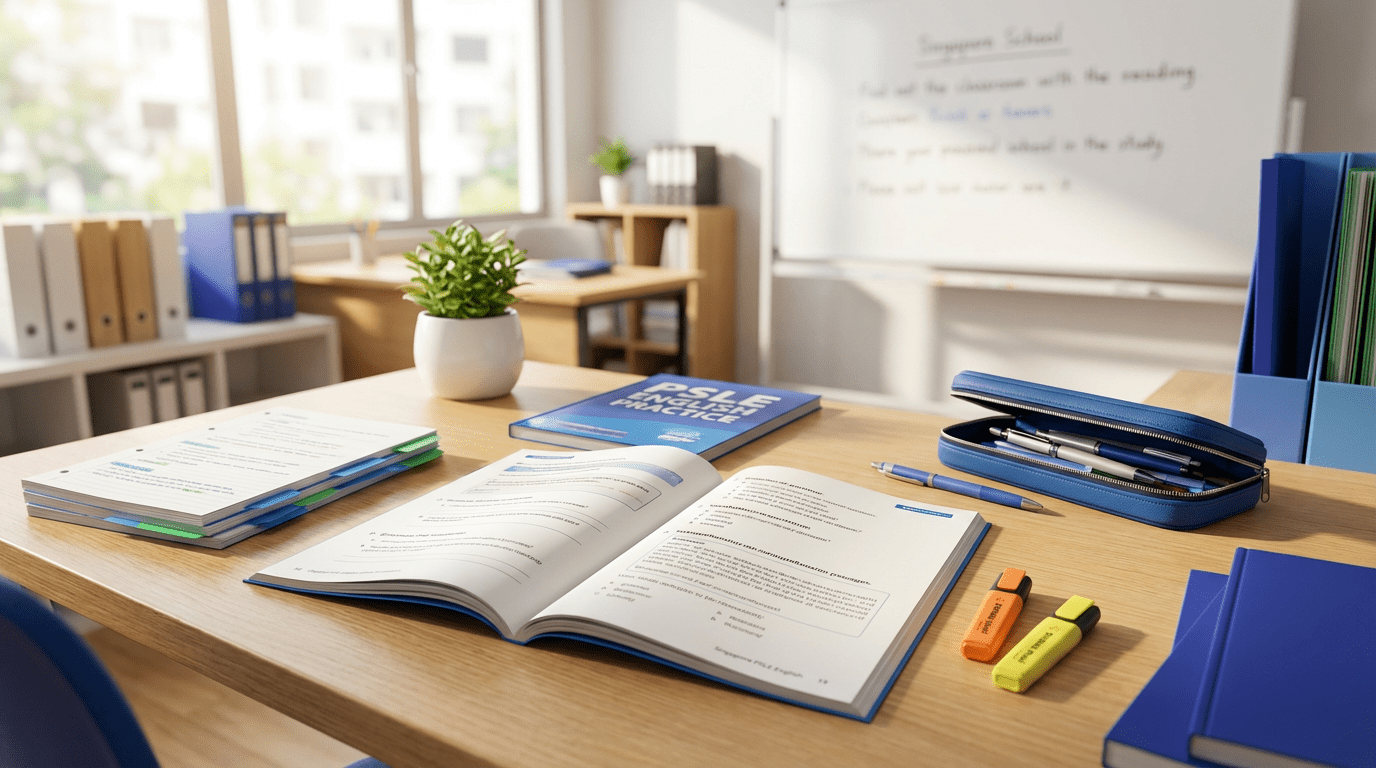
Collect all essential materials for efficient revision:
- Past exam papers and preliminary papers
- School notes and textbooks
- Assessment books with answer keys
- Study guides that summarize key concepts
- A revision timetable template
Having organized materials ready prevents wasted time searching for resources during your precious study periods. At EduFirst Learning Centre, we provide our students with comprehensive revision materials that condense key information, saving valuable time during last-minute preparation.
Week 1: Foundation Building and Gap Analysis
The first week focuses on identifying and addressing knowledge gaps in core concepts—this builds the foundation for more advanced revision in later weeks.
Days 1-2: Subject Overview and Key Concept Revision
For each subject, review the syllabus and identify the most heavily weighted topics. Spend time understanding fundamental concepts that form the basis for more complex questions. For Mathematics, this might include operations with numbers, fractions, and decimals. For Science, review basic concepts like cycles, systems, and energy.
Create concise summaries of these key concepts in your own words. The act of summarizing helps solidify your understanding while providing quick reference materials for later review.
Days 3-5: Targeted Practice on Weak Areas
Based on your initial assessment, focus on your weakest topics first. Work through basic to intermediate-level practice questions on these topics. When you encounter difficulties, don’t just look at the answers—try to understand the underlying principles.
For example, if you struggle with Science open-ended questions, practice breaking down these questions into components and learn the structured answering technique that earns full marks.
Days 6-7: First Mini-Assessment and Adjustment
Complete a mini practice paper for each subject under timed conditions. This isn’t about achieving a perfect score—it’s about identifying persistent gaps and adjusting your strategy for Week 2.
Review your performance objectively. Which questions took too long? Which concepts still confuse you? Note these for focused attention in the coming week.
Our teachers at EduFirst recommend keeping an error log during this process. Record mistakes, why they occurred, and the correct approach. Reviewing this log regularly prevents repeating the same errors.
Week 2: Targeted Content Mastery
With foundations refreshed, Week 2 moves to deeper content mastery and addressing specific challenging areas identified in Week 1.
Days 8-10: Intermediate Concept Mastery
Focus on intermediate-level concepts in each subject. For English, this might include comprehension techniques and composition planning. For Mathematics, work on problem-solving strategies for word problems and multi-step calculations.
Use the active recall technique: after studying a concept, close your notes and explain it aloud or write it down from memory. This approach is significantly more effective than passive re-reading.
Days 11-12: Advanced Concept Introduction
Tackle more challenging concepts that frequently appear in higher-mark questions. For Science, this might include experimental design and data interpretation. For Mathematics, focus on challenging problem types like pattern recognition and multi-step word problems.
Don’t attempt to master everything—prioritize concepts that carry more marks in the examination. Remember that understanding the approach to a difficult question type is often more valuable than memorizing specific examples.
Days 13-14: Topical Revision and Practice
Complete topical practice papers that focus on specific subject areas. Time yourself to build speed awareness, but focus primarily on accuracy at this stage.
Review your work critically, comparing your answers to model solutions. Look for patterns in your approach—are there specific question types where you consistently lose marks? These will become focus areas for Week 3.
At EduFirst Learning Centre, our small class sizes of 4-8 students mean teachers can provide individualized feedback during this critical stage, identifying specific areas where each student needs to improve.
Week 3: Practice Papers and Time Management
Week 3 shifts focus to exam simulation through practice papers, building both skills and stamina for the actual examination.
Days 15-16: Full Practice Paper Simulation
Complete a full-length practice paper for each subject under strict exam conditions. Maintain exact timing and avoid interruptions to simulate the real examination experience.
After completing each paper, mark it using the provided marking scheme. Calculate your score and analyze which sections cost you the most marks. This practice builds mental stamina while revealing time management issues.
Days 17-19: Targeted Improvement in Weak Areas
Based on your practice paper performance, revisit concepts and question types where you lost marks. Create a focused study plan for each subject’s weak areas.
For instance, if you struggled with inference questions in English comprehension, practice these question types specifically. If geometry problems in Mathematics were challenging, review the formulas and work through graduated examples.
Days 20-21: Time Management Strategies
Develop subject-specific time management strategies. Different PSLE papers require distinct approaches:
For Mathematics, learn to allocate time based on marks per question. For English Paper 2, practice dividing your time effectively between different comprehension passages. For Science, ensure you have sufficient time for the open-ended questions which carry significant marks.
Practice these strategies with another full-length paper, focusing specifically on adhering to your time allocation plan. The goal is to complete all sections without rushing, while allocating appropriate time to higher-value questions.
Week 4: Final Refinement and Exam Strategies
The final week focuses on refinement, confidence-building, and ensuring you’re mentally and physically prepared for the examination.
Days 22-24: Final Practice and Refinement
Complete 1-2 more full practice papers for each subject. Focus on implementing all the strategies you’ve developed in previous weeks. Review your performance to identify any remaining gaps that need addressing.
Create quick reference sheets for last-minute review—single pages with key formulas, grammar rules, or science concepts. These serve as efficient revision tools in the final days.
Days 25-27: Strategic Review and Confidence Building
Review your error logs and notes on challenging concepts. Focus on understanding rather than memorization at this stage. Practice explaining difficult concepts aloud as if teaching someone else—this reinforces your understanding.
Engage in positive visualization by imagining yourself successfully working through exam questions. This mental rehearsal builds confidence and reduces anxiety.
Days 28-30: Final Preparations
Shift to lighter revision with quick reviews of your summary sheets. Avoid learning new content at this stage—focus on reinforcing what you already know.
Prepare physically by establishing a healthy sleep schedule that matches exam timing. Organize all materials needed for the examination days, including stationery, water bottle, and identification.
On the day before each exam, do a brief review of key concepts, then relax. A good night’s sleep is more valuable than last-minute cramming.
Subject-Specific Revision Strategies
English
For students behind in English, prioritize these high-impact strategies:
Focus on comprehension techniques, particularly inference and language use questions which often challenge students. Practice identifying question types and applying the appropriate technique for each.
For composition writing, develop 1-2 versatile story outlines that can be adapted to different themes. Practice planning compositions quickly using a standard structure, then write introductions and conclusions for various prompts without completing full essays.
For grammar and vocabulary, review common error patterns rather than trying to learn new words. Practice identifying and correcting mistakes in sample sentences.
Mathematics
Mathematics revision should focus on problem-solving approaches rather than endless practice:
Master the interpretation of word problems by practicing the conversion of text into equations or diagrams. Focus particularly on challenging topics like ratio, percentage, and fractions which frequently appear in PSLE papers.
Create a formula sheet and review it daily. For problem-solving questions, practice identifying the mathematical concepts being tested rather than getting caught up in calculation details.
Work through graduated examples (simple to complex) for each concept to build confidence and understanding of how basic concepts extend to more complex applications.
Science
Science revision requires both content knowledge and application skills:
Create concept maps showing the relationships between different science topics. This helps with questions that integrate multiple concepts, which are common in PSLE Science.
Practice data interpretation questions extensively, as these carry significant marks. Learn to analyze experimental setups, identify variables, and draw conclusions from given data.
For open-ended questions, master the technique of structured answers that include relevant scientific concepts, application to the scenario, and clear explanations. Practice writing concise yet complete answers that use appropriate scientific terminology.
Mother Tongue
For Mother Tongue subjects, balanced practice across all components is essential:
Focus on comprehension techniques similar to those used for English, but adapted to the specific demands of your Mother Tongue paper.
For composition writing, memorize useful phrases and sentence structures rather than entire essays. Practice organizing ideas coherently using these building blocks.
Review grammar rules and practice applying them in context through short exercises rather than extensive writing. This targets improvement in areas that affect multiple sections of the examination.
Maintaining Wellbeing During Intensive Revision
Intensive revision can take a toll on student wellbeing. Incorporate these strategies to maintain physical and mental health:
Schedule short breaks every 30-40 minutes during study sessions. Use these breaks for physical movement, not screen time. Simple stretches or a short walk can refresh your mind and improve concentration for the next study block.
Maintain a balanced diet rich in brain-supporting nutrients like omega-3 fatty acids, antioxidants, and complex carbohydrates. Stay hydrated, as even mild dehydration can affect cognitive function.
Ensure adequate sleep—for primary school students, this means 9-11 hours nightly. Avoid screens at least one hour before bedtime to improve sleep quality. Quality sleep consolidates learning and improves recall during examinations.
Practice simple mindfulness or breathing exercises when feeling overwhelmed. Even a one-minute breathing exercise can reset your emotional state and improve focus. Remember that some stress is normal, but persistent anxiety should be addressed with parents or teachers.
How Parents Can Support the 30-Day Plan
Parental support significantly influences revision effectiveness. Here’s how parents can help implement this 30-day plan:
Create a conducive study environment free from distractions. Ensure good lighting, comfortable seating, and minimal noise. Remove digital distractions during dedicated study periods.
Help manage the revision schedule without micromanaging. Review the weekly plan together and check in periodically, but allow your child ownership of their learning process. Offer guidance when asked rather than directing every study session.
Provide emotional support and perspective. Remind your child that the PSLE, while important, is just one milestone in their educational journey. Celebrate small improvements and efforts rather than focusing solely on results.
Consider additional support from experienced educators when necessary. At EduFirst Learning Centre, our small class sizes ensure each student receives personalized guidance during this crucial period. Our experienced teachers can identify specific areas for improvement and provide targeted strategies to address knowledge gaps efficiently.
Conclusion: Turning Anxiety into Achievement
Feeling behind in PSLE preparation can be overwhelming, but with this structured 30-day revision plan, you can make significant progress in the available time. Remember that effective revision isn’t about studying everything—it’s about strategic focus, consistent effort, and confidence building.
Key takeaways from this plan include:
- Begin with honest assessment to identify priority areas
- Build foundations before tackling advanced concepts
- Practice regularly under exam conditions
- Develop subject-specific strategies for common challenge areas
- Balance intensive revision with proper rest and wellbeing
Every student’s journey is different, and what matters most is making the most of the time remaining. By following this week-by-week guide and adapting it to your specific needs, you can transform anxiety into achievement and approach the PSLE with confidence.
Remember that support is available. At EduFirst Learning Centre, our experienced teachers have helped thousands of students achieve their potential, even when starting their focused revision later than planned. Our small class sizes ensure personalized attention to address your specific challenges efficiently.
Need Additional Support for PSLE Preparation?
EduFirst Learning Centre offers specialized PSLE preparation programs with small class sizes (4-8 students) for personalized attention. Our experienced teachers can help identify and address knowledge gaps quickly, maximizing your remaining preparation time.
Contact us today to learn how we can support your PSLE journey.