- Feb 24, 2026
How to Build a PSLE Study Timetable That Kids Actually Follow
Table Of Contents
- Understanding the PSLE Challenge
- Why Most Study Timetables Fail
- Essential Elements of an Effective PSLE Study Timetable
- Step-by-Step Guide to Creating Your Child’s PSLE Study Timetable
- Making the Timetable Stick: Practical Implementation Strategies
- Balancing Study and Well-being During PSLE Preparation
- Adjusting the Timetable as PSLE Approaches
- Conclusion
The PSLE (Primary School Leaving Examination) represents a significant milestone in every Singaporean child’s educational journey. As parents, you want to provide the best support possible, and creating an effective study timetable is often the first step. But here’s the challenge – designing a schedule is easy; getting your child to actually follow it is the real test.
At EduFirst Learning Centre, we’ve guided thousands of Primary 6 students through successful PSLE preparation. Our experience shows that the most effective study timetables aren’t just well-structured – they’re designed with the child’s unique needs, learning style, and motivation in mind.
This comprehensive guide will walk you through creating a PSLE study timetable that balances academic rigor with your child’s well-being – one they’ll be motivated to follow consistently. We’ll share practical strategies based on educational psychology, our decade-plus experience in Singapore’s education system, and feedback from families who’ve successfully navigated the PSLE journey.
Understanding the PSLE Challenge
The PSLE examines four main subjects: English Language, Mother Tongue Language, Mathematics, and Science. Each subject presents unique challenges and requires different preparation approaches. Before diving into timetable creation, it’s crucial to understand what your child is up against.
PSLE preparation typically spans 9-12 months, with intensity gradually increasing as the examination dates approach. The comprehensive nature of the syllabus means students need to balance:
- Core content mastery across all four subjects
- Development of critical thinking and application skills
- Regular practice with past-year papers and assessment books
- Revision of previously learned concepts
- Mental and emotional resilience building
This breadth of preparation requirements makes a well-designed study timetable essential – but it’s the implementation that often proves challenging for families.
Why Most Study Timetables Fail
Before we explore how to create an effective timetable, let’s understand why many well-intentioned study schedules end up abandoned or causing family conflict. Our experience working with hundreds of PSLE students at EduFirst Learning Centre has revealed several common pitfalls:
Adult-Centered Design
Parents often create timetables based on adult logic and preferences without considering their child’s natural rhythms and learning style. A schedule that works perfectly for you might be completely misaligned with how your child functions best.
Overly Rigid Structure
Timetables that allocate every minute of study time without flexibility quickly become unsustainable. Children need some autonomy and breathing room, especially during the long PSLE preparation period.
Unrealistic Expectations
Many timetables fail because they schedule too many consecutive hours of study or don’t account for varying energy levels throughout the day and week. This leads to burnout and resistance.
Neglecting Motivation Factors
Even the most perfectly structured timetable will fail if it doesn’t address what motivates your child. Without building in elements that boost engagement, any schedule becomes a chore rather than a tool for success.
Essential Elements of an Effective PSLE Study Timetable
Based on our experience at EduFirst Learning Centre, successful study timetables that children actually follow share these key characteristics:
Personalization
The timetable should reflect your child’s unique learning preferences, strengths, and areas for improvement. Some children work best in the morning, others in the evening. Some need frequent short breaks, while others prefer longer study blocks with fewer interruptions. Personalization makes the timetable feel natural rather than imposed.
Balance
Effective timetables balance academic preparation with physical activity, relaxation, family time, and activities that bring joy. This balance isn’t just nice to have – it’s essential for sustainable learning and mental well-being during the challenging PSLE year.
Progressive Structure
The ideal timetable evolves throughout the PSLE preparation journey. It should start with manageable study blocks that gradually increase in intensity as the examination approaches, helping build stamina without overwhelming your child early in the process.
Subject Rotation
Strategic alternating between subjects prevents boredom and fatigue. Switching between different types of learning activities – such as moving from mathematical problem-solving to language comprehension – helps maintain engagement and utilizes different parts of the brain.
Built-in Accountability and Rewards
Children respond well to visual progress tracking and meaningful rewards. Effective timetables include ways for children to see their consistency and achievement, boosting motivation to continue following the schedule.
Step-by-Step Guide to Creating Your Child’s PSLE Study Timetable
Now that we understand the principles, let’s walk through the practical process of creating a timetable your child will actually follow:
Step 1: Assess Current Commitments and Routines
Begin by mapping out your child’s existing schedule, including:
- School hours and travel time
- Existing tuition classes and enrichment activities
- Family commitments and routines
- Current sleep schedule and natural energy patterns
This serves as your baseline and helps identify available time blocks without disrupting established routines. Working within existing patterns rather than against them increases the likelihood of consistency.
Step 2: Involve Your Child in the Planning Process
This critical step is often overlooked. Sit down with your child and discuss:
“When do you feel most alert and ready to tackle challenging subjects?”
“Which subjects do you enjoy most and which ones feel more difficult?”
“How long can you focus before needing a break?”
“What helps you stay motivated when studying?”
By involving your child in the creation process, you build ownership and increase buy-in from the start. This collaborative approach also provides valuable insights about learning preferences you might not have considered.
Step 3: Subject Prioritization and Time Allocation
Work with your child to categorize subjects into:
High priority: Subjects requiring significant improvement
Medium priority: Subjects needing moderate reinforcement
Maintenance: Subjects where your child is already performing well
Allocate more frequent and longer sessions to high-priority subjects while ensuring all subjects receive adequate attention. At EduFirst, we typically recommend that Primary 6 students spend approximately:
- 30-40% of study time on their most challenging subject
- 20-30% on each medium-priority subject
- 10-20% on maintenance subjects
This proportional approach ensures efficient use of limited study time.
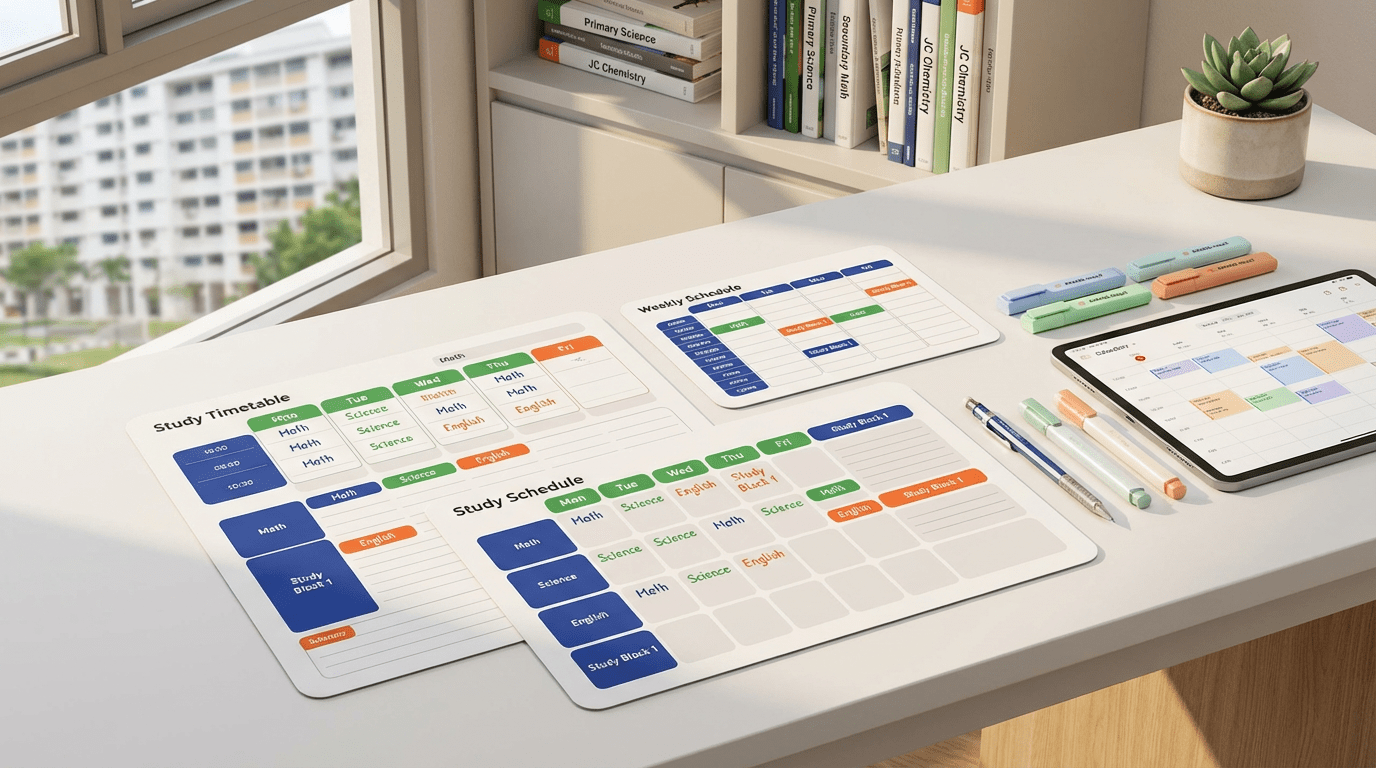
Step 4: Create Weekly and Daily Templates
Rather than planning every day uniquely, develop templates for:
Weekday afternoons: Usually shorter study blocks after school
Weekday evenings: Often good for reviewing the day’s learning or working on homework
Weekend mornings: Typically high-energy time good for challenging concepts
Weekend afternoons: Often suitable for practice papers and longer study sessions
These templates provide structure while allowing for some flexibility within the framework. When designing these templates, remember to:
- Limit consecutive study blocks to 25-40 minutes for most Primary 6 students
- Include 5-10 minute breaks between subjects
- Schedule harder subjects during peak energy times
- Alternate between different types of mental activities
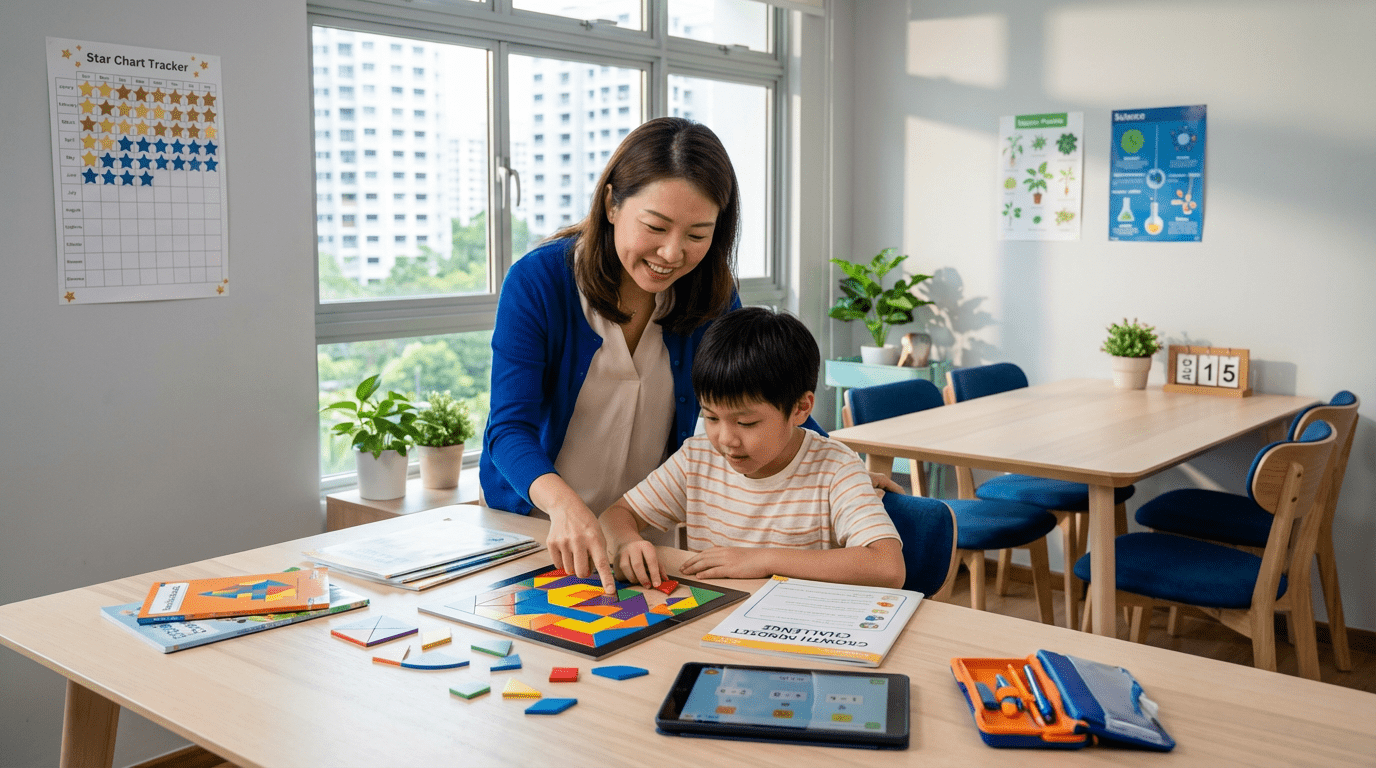
Step 5: Build in Progress Tracking and Reward Systems
Work with your child to design a simple tracking system they’ll enjoy using. This could be:
- A colorful chart where they place stickers for completed study blocks
- A digital tracker or app if they’re technology-oriented
- A journal where they record accomplishments and reflections
Then, establish meaningful rewards that motivate your child specifically. These might include:
- Small daily rewards for following the timetable (extra screen time, choosing dinner, etc.)
- Medium weekly rewards for consistency (a special outing, favorite activity)
- Larger monthly rewards for sustained effort (something they’ve been wanting)
The key is ensuring rewards are meaningful to your child rather than what you think should motivate them.
Making the Timetable Stick: Practical Implementation Strategies
Creating the timetable is only the beginning. Here are strategies we recommend at EduFirst to help children actually follow their study schedules:
Start Small and Build Gradually
Begin with a lighter version of the timetable – perhaps 50-60% of the eventual study time – and gradually increase over 2-3 weeks. This builds the habit without overwhelming your child. Success with a smaller commitment builds confidence for increasing study intensity.
Create a Dedicated Study Environment
Designate a specific area for PSLE preparation that is:
- Free from distractions (especially digital ones)
- Well-lit and comfortable
- Equipped with all necessary materials
- Associated with focused work rather than play or relaxation
This environmental cue helps trigger the study mindset when your child enters the space.
Use the “Study Buddy” Approach
Many children follow timetables more consistently when accountability comes from peers rather than parents. Consider:
- Setting up virtual study sessions with classmates
- Having siblings study during the same scheduled blocks
- Joining study groups at the library or community center
This social element can transform studying from a solitary obligation into a shared activity.
Implement the “Next Time” Strategy
When your child completes a study session, have them prepare everything needed for the next session. This small step removes barriers to starting the next study block and increases follow-through.
Model the Behavior
Children are more likely to follow schedules when they see parents doing the same. Consider creating your own “work timetable” that aligns with your child’s study blocks – whether you’re handling household administration, working from home, or pursuing personal development.
Balancing Study and Well-being During PSLE Preparation
At EduFirst Learning Centre, we emphasize that effective PSLE preparation must balance academic readiness with psychological well-being. Your timetable should explicitly include:
Physical Activity Blocks
Schedule 30-45 minutes of physical activity daily. Research consistently shows that physical exercise improves cognitive function, memory retention, and focus – making subsequent study sessions more productive. Activities could range from organized sports to simple neighborhood walks or indoor dance sessions.
Downtime for Mental Recovery
Include dedicated blocks for activities your child enjoys that aren’t screen-based – reading for pleasure, creative pursuits, music, or simply unstructured time. These periods aren’t wasted time; they’re essential for preventing burnout and maintaining motivation over the long PSLE preparation journey.
Adequate Sleep Protection
Your timetable should protect 9-10 hours for sleep. Many parents underestimate how critical sufficient sleep is for learning consolidation and cognitive function. Studies show that consistently sacrificing sleep for extra study time actually reduces academic performance.
Weekly Family Connection Time
Schedule regular family activities that are completely study-free. This preserves the parent-child relationship beyond academic support and provides emotional anchoring during a potentially stressful period.
Adjusting the Timetable as PSLE Approaches
A successful PSLE study timetable evolves through different phases of preparation:
Foundation Phase (9-12 months before PSLE)
Focus on building strong fundamental understanding across all subjects. The timetable during this phase should emphasize:
- Thorough comprehension of core concepts
- Addressing knowledge gaps from earlier primary years
- Building consistent study habits with moderate intensity
Application Phase (4-8 months before PSLE)
Shift toward applying knowledge to different question types. Your timetable should now include:
- More practice with varied question formats
- Regular topic tests to identify areas needing reinforcement
- Slightly increased study duration while maintaining balance
Integration Phase (2-3 months before PSLE)
Focus on bringing together all learning through comprehensive practice. Timetables in this phase typically feature:
- Full-length practice papers under timed conditions
- Targeted revision of challenging topics
- Strategic breaks to prevent burnout as examination pressure increases
Final Review Phase (2-4 weeks before PSLE)
Consolidate learning and build confidence. Your timetable should now:
- Prioritize review over new content
- Include calming activities to manage exam anxiety
- Allow for adequate rest to ensure peak mental performance
At each phase transition, sit down with your child to review and adjust the timetable. This regular reassessment keeps the schedule aligned with changing needs and maintains your child’s ownership of the process.
Conclusion
Creating a PSLE study timetable that your child will actually follow isn’t about perfect scheduling – it’s about developing a sustainable system that respects your child’s unique needs while steadily building toward PSLE readiness. The most successful timetables blend structure with flexibility, challenge with support, and academics with well-being.
At EduFirst Learning Centre, we’ve seen that children who follow personalized, balanced timetables not only perform better academically but also develop valuable self-management skills that serve them well beyond PSLE. These students approach the examination with confidence rather than anxiety, knowing they’ve prepared systematically and thoroughly.
Remember that the ultimate goal isn’t just PSLE success – it’s nurturing a child who understands how to learn effectively, manage their time, and maintain balance even under pressure. These life skills will continue serving your child long after the PSLE results are released.
Building an effective PSLE study timetable takes time and requires ongoing adjustment. Be patient with both yourself and your child as you refine the system. Celebrate consistency over perfection, and remember that how your child feels about learning during this critical period will influence their educational journey for years to come.
By implementing the strategies outlined in this guide, you can create a study timetable that your child not only follows but embraces as a tool for success rather than a burden to be avoided. The right timetable transforms PSLE preparation from a source of family tension into an opportunity for growth, achievement, and shared accomplishment.
Need personalized guidance for your child’s PSLE preparation journey? At EduFirst Learning Centre, our experienced educators provide customized support through small-group tuition (4-8 students) across 25 locations islandwide. We’ll help your child develop effective study strategies tailored to their learning style and subject needs.
Contact us today to discover how we can support your child’s PSLE success!