- Oct 6, 2026
Activities for Primary-Age Children in Singapore: A Practical Round-Up
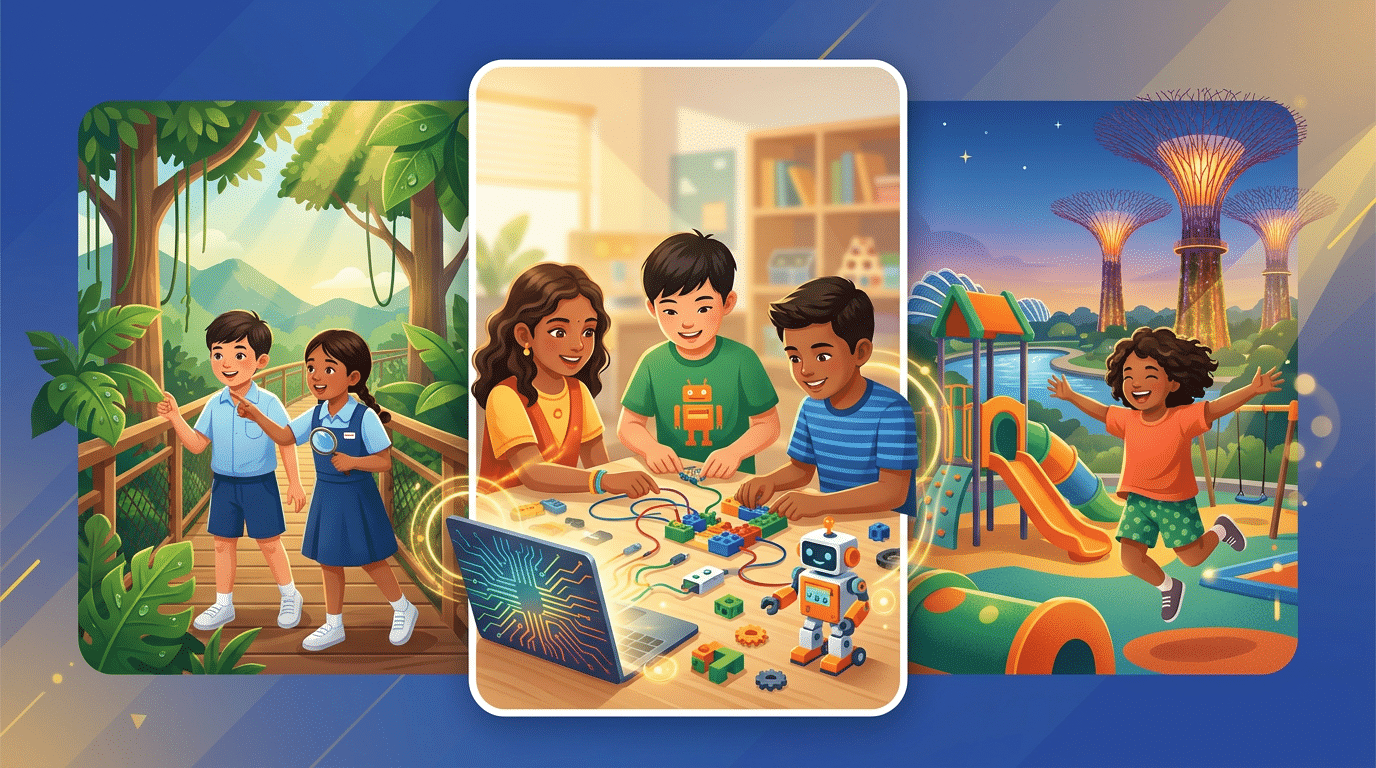
If you’ve ever found yourself staring at a long weekend with a primary school child and absolutely no plan, you’re not alone. Singapore is genuinely packed with things to do — but not every list is written with a seven-to-twelve-year-old’s world in mind. Toddler soft play and teen adrenaline parks are great, yet they’re not quite what your Primary 3 student is after on a Saturday afternoon.
Primary school years are a remarkable window for growth. Children this age are curious, increasingly independent, and capable of engaging with activities at a far deeper level than when they were younger. The activities you choose during these years don’t just fill time — they build confidence, spark interests, and complement what’s happening in the classroom. Whether you’re planning a weekend outing, a school holiday schedule, or simply looking for something fresh to try, this round-up has you covered with practical, age-appropriate ideas across every category.
From free outdoor adventures to stimulating STEM attractions and enrichment programmes that support academic progress, here’s a comprehensive guide to activities for primary-age children in Singapore — thoughtfully chosen with both fun and development in mind.
Why Activities Matter for Primary-Age Children
The primary school years — roughly ages seven to twelve — are a critical period for cognitive, social, and physical development. Research in child psychology consistently shows that children who engage in a variety of structured and unstructured activities outside the classroom develop stronger problem-solving skills, greater emotional resilience, and a broader base of general knowledge that supports academic performance. In Singapore’s fast-paced education environment, this balance matters enormously.
Activities don’t need to compete with schoolwork — when chosen well, they complement it. A child who spends a Saturday morning exploring Sungei Buloh’s wetland trails is building observational skills, vocabulary, and scientific curiosity. One who takes a pottery class is developing fine motor control and patience. Even a casual bowling trip teaches turn-taking, focus, and handling disappointment gracefully. The goal isn’t to schedule every waking hour; it’s to ensure the hours outside school are genuinely enriching and restorative.
With that philosophy in mind, here are some of the best activities Singapore has to offer for primary-age children, organised by category so you can find exactly what fits your child’s interests and your family’s schedule.
Outdoor & Nature Activities
Singapore may be a dense city-state, but it punches well above its weight when it comes to accessible green spaces and nature experiences. Primary-age children benefit enormously from unstructured outdoor time — it sharpens attention, reduces stress, and builds physical stamina. The good news is that many of the best outdoor options are either free or very affordable.
MacRitchie Reservoir Park
For children who enjoy a mild sense of adventure, MacRitchie Reservoir Park offers well-marked trails that are manageable for primary schoolers with reasonable fitness. The highlight is the Treetop Walk, a 250-metre suspension bridge above the forest canopy that genuinely thrills children in this age group without being unsafe. Bring water, keep an eye out for monkeys, and allow at least two to three hours for a proper visit. Entry is free.
Sungei Buloh Wetland Reserve
Few places in Singapore connect primary-age children to the natural world as vividly as Sungei Buloh. The reserve’s boardwalk trails are stroller-friendly and easy to navigate, but the real draw for older children is the wildlife — resident crocodiles, monitor lizards, migratory birds, and kingfishers that reward patient observers. It’s a wonderful, conversation-rich outing that ties naturally into Primary Science topics on ecosystems and biodiversity.
East Coast Park
East Coast Park remains one of Singapore’s most reliable family destinations for a reason. For primary-age children specifically, the combination of cycling paths, the Marine Cove Playground, beach access, and the Coastal PlayGrove water playground means there’s genuinely something for every mood. Hire bicycles for a few hours, pack a picnic, and let the day unfold organically. It’s the kind of outing that feels effortless but delivers real physical activity and fresh air in abundance.
Pulau Ubin
A trip to Pulau Ubin feels like stepping back in time, and children absolutely love it. The short bumboat ride from Changi Point Ferry Terminal sets the adventure tone immediately. Once on the island, hiring bicycles and riding through kampong roads and forest paths is an experience unlike anything on the mainland. For primary schoolers, it’s a brilliant blend of independence, physical activity, and genuine discovery that screens simply can’t replicate.
Creative & Arts Activities
Creative activities play a vital role in primary-age development that’s easy to underestimate. Drawing, making, and performing develop spatial reasoning, narrative thinking, and self-expression — skills that matter academically as much as they matter personally. Singapore has a growing and impressive creative scene that caters specifically to children.
Pottery and Ceramics Classes
Pottery has become one of Singapore’s most popular activity categories for families, and it’s a particularly good fit for primary-age children. Working with clay is tactile, absorbing, and genuinely therapeutic. Several studios across Singapore offer children’s classes, with many available for as little as $15 to $30 per session. Children love having a finished piece to take home, and parents often find it’s one of the few activities where phones are forgotten entirely for an hour or two.
ArtScience Museum – FutureWorld
The FutureWorld permanent exhibition at the ArtScience Museum is one of the most imaginative interactive experiences in Singapore for children aged seven and up. Developed by teamLab, the exhibition blurs the line between art, science, and play in ways that genuinely captivate primary schoolers. Children can draw sea creatures that swim into a digital ocean, play in rooms where every step triggers light and sound, and collaborate on large-scale digital art. It’s the kind of place that sparks real conversations on the way home.
Children’s Museum Singapore
Singapore’s first dedicated children’s museum brings cultural heritage to life through interactive storytelling and hands-on exhibits designed specifically for younger visitors. For primary-age children — especially those studying Singapore history or social studies — a visit here adds a vivid, tangible dimension to what they’re learning in school. The museum runs regular workshops and programmes, so it’s worth checking the calendar before you visit to make the most of your trip.
STEM & Educational Attractions
Singapore is home to some genuinely world-class STEM attractions that make science, technology, engineering, and mathematics feel exciting and accessible rather than intimidating. For primary-age children who are building their foundational understanding of these subjects, these venues offer experiences that textbooks simply cannot provide.
Science Centre Singapore
Science Centre Singapore is a perennial favourite for primary school children, and with good reason. The centre’s exhibitions cover topics from human biology and electricity to climate change and optical illusions, all presented in genuinely interactive formats that invite children to touch, experiment, and question. The Fire Tornado Show is a particular highlight for this age group, and the adjacent water play area makes it easy to extend the visit into a full day out. Older primary students tend to get the most out of the text-heavy context panels, which deepen understanding beyond the hands-on activities.
KidsSTOP
Housed within Science Centre Singapore but separately ticketed, KidsSTOP is a dedicated STEAM play space that’s especially well-suited to children between the ages of six and twelve. The facility features a suspended obstacle course, a dinosaur dig pit, maker workshops, and dozens of interactive stations where children can explore scientific principles through unstructured play. It’s one of the few venues in Singapore where primary-age children can spend three or four hours and genuinely not run out of things to discover.
Lee Kong Chian Natural History Museum
The Lee Kong Chian Natural History Museum at NUS is a spectacular resource for primary-age children, particularly those studying life sciences or simply fascinated by animals. The museum’s centrepiece — a collection of three diplodocid sauropod dinosaur skeletons — never fails to generate genuine awe, but the wider collection covering Southeast Asian biodiversity is equally impressive. It connects meaningfully with Primary Science topics and is detailed enough to reward repeat visits as children grow older and absorb more context.
Sports & Physical Activities
Regular physical activity is linked to improved concentration, better sleep, and stronger academic performance in school-age children — making it one of the most evidence-backed investments a parent can make in their child’s overall wellbeing. Singapore offers a wide range of sports and active options for primary schoolers, from organised classes to casual drop-in experiences.
Rock Climbing and Bouldering
Rock climbing has grown enormously in popularity in Singapore over the past decade, and it’s an activity where primary-age children frequently outperform their parents. Several climbing gyms offer youth sessions and beginner classes, with themed walls and augmented reality climbing experiences that make the learning curve feel like play. Beyond the obvious physical benefits, climbing develops problem-solving, spatial awareness, and the kind of calm determination under pressure that translates directly into academic resilience.
Swimming at Public Pools
Singapore’s network of public swimming pools is genuinely excellent — affordable, well-maintained, and often featuring water slides, wave pools, and dedicated training lanes. For primary-age children, regular swimming develops cardiovascular fitness, coordination, and breath control, while the social dimension of pool visits builds friendships outside the school environment. Entry fees are minimal, making this one of the most accessible ways to build a consistent physical activity habit.
Trampoline Parks
Few activities tire out primary-age children quite as effectively as a session at a trampoline park, and Singapore has several good options. Beyond the obvious appeal, trampolining develops balance, coordination, and spatial awareness in ways that translate well to other sports. Many parks also feature foam pits, dodgeball courts, and climbing walls, meaning there’s variety to keep even easily-bored children engaged for a full session. Book ahead on weekends, as popular parks fill up quickly.
Forest Adventure at Bedok Reservoir
Forest Adventure offers a high-elements obstacle course suspended among the trees above Bedok Reservoir, and it’s one of the best bonding activities Singapore has for families with primary-age children. Children must be a minimum of 1.1 metres tall to participate, and the experience genuinely challenges them both physically and mentally. Navigating rope bridges, zip lines, and aerial platforms builds confidence and a sense of personal achievement that children carry well beyond the course itself.
Cultural & Heritage Exploration
Singapore’s remarkable multicultural identity makes it an ideal city for children to develop cultural awareness and a sense of place. Primary school social studies curricula explore exactly these themes, meaning cultural and heritage outings can directly reinforce and enrich classroom learning in meaningful ways.
National Museum of Singapore
The National Museum of Singapore brings the nation’s story to life through immersive, interactive galleries that engage primary-age children far more effectively than a textbook. The museum offers family-oriented programmes, self-guided children’s trails, and regular workshops during school holidays. Permanent and rotating exhibitions cover Singapore’s history from its early trading days through to independence and beyond — providing rich context for children studying local history in school. Entry to the permanent galleries is free for Singapore citizens and PRs under eighteen.
Kampong Glam and Chinatown
Walking tours of Singapore’s historic districts offer an accessible, low-cost way to bring cultural learning to life. Kampong Glam — with its golden-domed Sultan Mosque, colourful shophouses, and vibrant Haji Lane street art — makes for a lively, visually rich exploration. Chinatown’s temples, heritage centre, and hawker stalls offer a similarly immersive experience. For primary schoolers studying Singapore’s multicultural communities, these neighbourhoods are living textbooks that make the abstract tangible.
Fort Canning Park
Fort Canning Park layers Singapore’s history in a way that’s genuinely engaging for curious primary schoolers. The park contains artefacts and remnants from Singapore’s pre-colonial kingdoms, its colonial era, and the Second World War, all set within beautifully maintained green space. The Jubilee Playground within the park adds a practical incentive for children who need the promise of something fun at the end of a history walk. It’s free to enter, easily accessible by MRT, and full of excellent photo opportunities.
Enrichment & Academic Support
Alongside recreational and cultural activities, structured academic enrichment plays a crucial role in a primary-age child’s overall development — particularly in Singapore, where the PSLE and subject-specific competencies carry real weight. Enrichment isn’t about adding pressure; it’s about building confidence, filling learning gaps early, and ensuring children approach their academic work from a position of genuine understanding rather than anxiety.
At EduFirst Learning Centre’s Primary Tuition programme, small class sizes of just four to eight students ensure that every child receives the individual attention they need to thrive. Whether your child is looking to strengthen their foundation in English, Mathematics, or Science, or needs more targeted support as they approach the PSLE, EduFirst’s experienced educators provide personalised guidance across 25 convenient locations islandwide.
For younger learners just beginning their educational journey, EduFirst’s Pre-School programme builds early literacy and numeracy skills in a nurturing environment that sets children up for confident primary school entry. And for families with secondary students, Secondary Tuition extends the same personalised approach through the O-Level years. For added convenience and flexibility, EduFirst’s E-Lessons allow students to continue their learning from home with the same quality instruction and small-group format.
Academic enrichment works best when it’s balanced alongside all the activities above — it’s not a replacement for outdoor play, cultural exploration, or creative pursuits, but a complement to them. Children who are active, curious, and engaged outside the classroom generally bring that same energy and openness to their academic work.
Tips for Balancing Activities with Schoolwork
One question parents of primary-age children ask frequently is: how do I fit all of this in without overwhelming my child or sacrificing academic performance? The answer lies less in time management and more in intentionality. Here are a few practical principles that experienced parents and educators tend to agree on.
- Prioritise quality over quantity. Two or three activities done consistently and with genuine enthusiasm are far more valuable than a packed schedule that leaves children exhausted and resentful.
- Let children lead where possible. Children who choose their own activities — even within a shortlist you’ve curated — are more motivated, more engaged, and develop greater ownership over their time. Autonomy is a skill worth building early.
- Protect unstructured time. Not every hour needs a programme. Boredom is genuinely productive for primary-age children; it develops imagination, self-regulation, and the ability to entertain themselves — all of which support academic focus.
- Connect activities to learning when natural. A trip to the Science Centre before a science topic at school, a visit to Fort Canning during a history unit, or a cooking session to practise fractions — these connections deepen both the outing and the academic understanding without making either feel like work.
- Build in academic support early, not reactively. If your child is showing signs of struggle in a particular subject, addressing it early through structured, supportive tuition is far less stressful than emergency intervention before exams. Consistent, low-stakes enrichment keeps academic confidence high year-round.
The primary school years pass quickly. Children who look back on this period with warmth tend to remember a balance — adventures with family, creative projects they were proud of, friendships formed through shared activities, and the quiet confidence of knowing they were supported academically. That balance is entirely achievable in Singapore, where both the activity options and the educational support available to families are genuinely world-class.
Making the Most of the Primary School Years
Singapore offers primary-age children an extraordinary range of experiences — from forest canopy walks and wetland wildlife trails to STEM exhibitions, cultural heritage walks, and creative workshops. The key is approaching these options with purpose: choosing activities that match your child’s current interests and developmental needs, rather than simply filling the calendar.
When recreational activities are balanced with the right academic support, primary school children don’t just keep up — they genuinely flourish. They arrive at school more curious, more confident, and better equipped to engage with the material in front of them. If you’d like to explore how structured, personalised tuition can complement everything else your child is experiencing, EduFirst Learning Centre is here to help.
Give Your Child the Academic Edge They Deserve
EduFirst Learning Centre has been supporting primary and secondary students across Singapore since 2010. With small class sizes of just 4–8 students and 25 locations islandwide, personalised attention is always within reach.