- Apr 18, 2026
Homework Battles: Practical Tips for Frustrated Parents
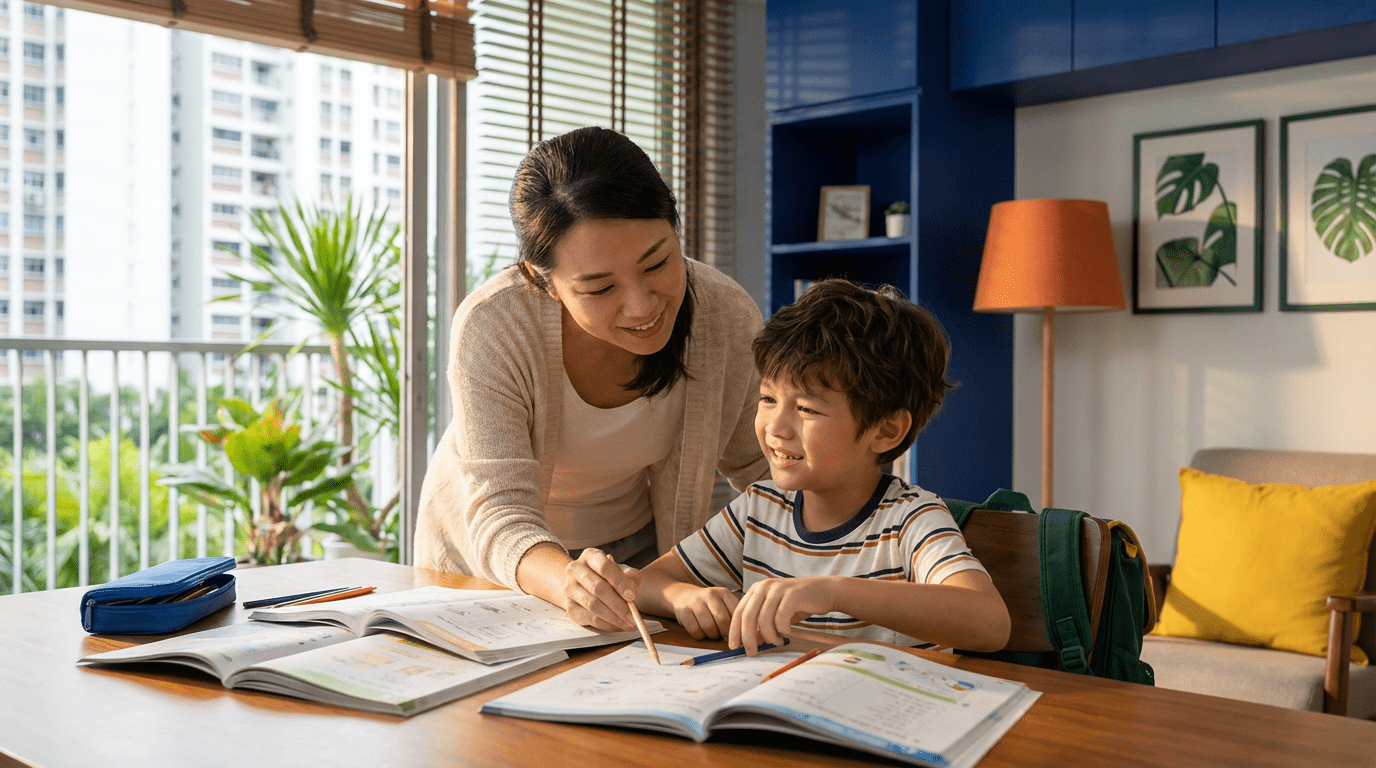
It starts innocently enough. You remind your child it’s time to do their homework, and within minutes the dining table has become a battlefield. There are tears, excuses, missing pencils, and a sudden urgent need for a snack. Sound familiar? You are definitely not alone.
For many parents across Singapore, homework battles are a nightly reality — exhausting for both the child and the adult trying to help. Whether your child is in primary school wrestling with composition writing or in secondary school struggling through algebra, the tension around homework is one of the most common parenting pain points. But with the right strategies, it doesn’t have to be this way.
This guide offers practical, research-backed tips to help frustrated parents turn homework time from a source of conflict into a more productive — and even peaceful — part of the day.
Why Homework Battles Happen in the First Place
Before jumping into solutions, it helps to understand what’s driving the conflict. Homework resistance rarely comes from laziness alone. Children are often mentally fatigued by the time they get home, especially after a full day of school followed by co-curricular activities (CCAs) or enrichment classes. When a child explodes over a single worksheet, what they may actually be communicating is exhaustion, anxiety, or a genuine lack of understanding of the material.
In Singapore’s academically demanding environment, pressure builds quickly. Primary school students face PSLE preparations, while secondary students juggle O-Level or N-Level syllabuses that can feel overwhelming. When a child doesn’t understand a concept, homework becomes a source of shame rather than practice, which makes avoidance feel like the safest option. Recognising this emotional layer is the first step toward addressing homework struggles with empathy rather than frustration.
Set Up a Consistent Homework Routine
Children thrive on predictability. One of the most effective ways to reduce homework battles is to establish a consistent daily routine so that schoolwork becomes an expected part of the day rather than a dreaded interruption. The key is to find a timing that works with your child’s energy levels, not against them.
Some children do best tackling homework immediately after a short break following school, while others need a longer wind-down period before they can focus. Experiment to find what works, and then commit to that schedule consistently. Once homework time is simply “what we do at 5pm,” much of the negotiation and resistance starts to fade.
Here are a few routine-building principles that work well for Singapore families:
- Give a transition break first: Allow 20–30 minutes of free play or a snack before sitting down to work. This helps discharge the stress of the school day.
- Set a fixed start time: Consistency matters more than perfection. Even if homework finishes at different times, starting at the same time daily creates structure.
- Use a visual schedule: Younger children especially benefit from seeing their after-school schedule written out or displayed on a whiteboard.
- Keep weekends predictable too: If homework spills into weekends, assign a specific window rather than leaving it open-ended, which creates anxiety.
Create the Right Study Environment
The physical environment where your child does homework has a bigger impact on focus than most parents realise. A cluttered, noisy, or distraction-filled space makes it significantly harder for children to concentrate, especially younger students who are still developing their self-regulation skills.
Ideally, designate a specific study spot in your home that is used consistently for homework and nothing else. This could be a desk in their room, a corner of the living room, or even a cleared section of the dining table. The association between the space and focused work builds over time. Remove devices and screens that aren’t needed for the task, and keep necessary supplies like stationery, rulers, and dictionaries within easy reach so that getting up to search for things doesn’t become an avoidance strategy.
Managing Digital Distractions
In today’s household, devices are a significant source of homework disruption. Phones, tablets, and smart TVs all compete for a child’s attention. Consider using parental control apps during homework hours, or simply have devices placed in another room. If your child needs a laptop for school assignments, use browser extensions that block social media and video platforms during designated study windows. The goal is to reduce the mental effort required to stay focused by removing temptation from the environment altogether.
How to Handle Resistance and Meltdowns Calmly
Even with the best routines and environments in place, meltdowns will still happen. How you respond in those moments shapes whether the situation escalates or de-escalates. The most important thing to remember is that matching your child’s emotional intensity with your own frustration will almost always make things worse.
When your child shuts down or erupts over homework, try acknowledging the emotion first before addressing the task. Phrases like “I can see this is really hard for you right now” or “It looks like you’re feeling really stuck” validate the feeling without abandoning the expectation. Once the emotional temperature lowers, you can gently re-engage with the work together.
Avoid power struggles wherever possible. If a particular worksheet is becoming a major battle, it can sometimes be more productive to take a 10-minute break and return to it, rather than forcing a frustrated child to sit through escalating tears. That said, it’s important not to let avoidance become a habit, so always return to the task after the break rather than abandoning it entirely.
Helping Without Doing the Homework for Them
One of the trickiest parts of homework support is knowing where the line is between helping and doing. It’s entirely natural to want to just fix the problem when you see your child struggling — but doing the homework for them robs them of the learning experience and creates a dependence that grows over time.
Instead of giving answers, try asking guiding questions. If your child is stuck on a maths problem, rather than showing them the solution, ask: “What do you know about this type of question? What did your teacher say to do first?” This approach, sometimes called Socratic questioning, helps children activate what they already know and develop independent problem-solving habits.
For parents supporting children with primary school subjects, it’s also worth revisiting the syllabus yourself if you haven’t done so recently. Singapore’s MOE curriculum has evolved, and the methods taught today — particularly in maths — may differ significantly from how you learned them. Understanding the current approach helps you support your child in a way that aligns with their classroom learning rather than confusing them with alternative methods.
Keeping Your Child Motivated
Sustained homework motivation is built through small wins, autonomy, and meaningful encouragement. Children who only ever hear what they did wrong quickly lose confidence and motivation. Make a point of noticing and praising the effort your child puts in, not just the results. Comments like “I noticed you stayed focused for 20 minutes without a break — that’s real improvement” are far more motivating than “Good job” or “Why can’t you get this right?”
Giving children some degree of choice and ownership can also dramatically reduce resistance. Let them choose which subject to tackle first, or whether to do the harder task or the easier one to start. This sense of control helps children feel less like homework is something being done to them, and more like something they’re managing themselves.
Simple Reward Systems That Actually Work
Reward systems can be effective when used thoughtfully. Sticker charts work well for younger primary school children, while older students might respond better to earning screen time or a weekend outing. The key is to keep the rewards proportionate, predictable, and tied to consistent effort rather than perfect results. Avoid over-rewarding, which can actually undermine intrinsic motivation over time. The goal is to scaffold external motivation until internal motivation develops naturally.
When to Seek Extra Academic Support
Sometimes, persistent homework battles are a signal that a child needs more academic support than a parent can reasonably provide at home. This is especially true when homework struggles are tied to genuine gaps in understanding rather than behavioural resistance. If your child consistently cannot complete assignments without significant adult intervention, or if their grades are declining despite your best efforts, it may be time to explore professional academic support.
Tuition, when delivered well, can be transformative. Unlike cramming at home, structured tuition with experienced educators helps children build genuine understanding of concepts, which makes homework feel less daunting and more manageable. At EduFirst Learning Centre, classes are kept deliberately small — between 4 and 8 students — so that every child receives the individual attention they need to actually understand the material, not just get through it.
For parents of younger children, EduFirst’s primary tuition programmes are designed to build strong academic foundations in key subjects, giving students the confidence to tackle homework independently. For secondary school students facing the pressure of major examinations, the secondary tuition programmes provide targeted support across subjects like English, Mathematics, and Science.
For families with scheduling constraints, e-lessons offer a flexible and equally effective alternative that brings quality tuition support directly to your home. And if you’re looking for early academic support for younger children, EduFirst’s pre-school programmes help build the foundational skills and learning habits that make primary school — and homework — a far smoother experience.
Final Thoughts
Homework battles are frustrating, but they are rarely unsolvable. In most cases, a combination of consistent routines, a calm and supportive environment, and the right balance of guidance and independence is enough to bring lasting change. The key is to approach the issue with curiosity rather than blame, asking not “Why won’t my child do their homework?” but “What does my child need to feel capable of doing this?”
When you address both the emotional and academic dimensions of homework resistance, you’re not just solving a nightly inconvenience — you’re helping your child build the self-discipline, confidence, and learning habits that will serve them for years to come. And if you ever need a little extra support along the way, EduFirst is here to help.
Is Your Child Struggling with Homework?
EduFirst Learning Centre has helped thousands of Singapore students build confidence and catch up academically through personalised, small-group tuition across 25 locations islandwide. Let us take some of the pressure off your shoulders.