- Oct 5, 2026
MOE Kindergarten: How It Differs From Other Preschools in Singapore
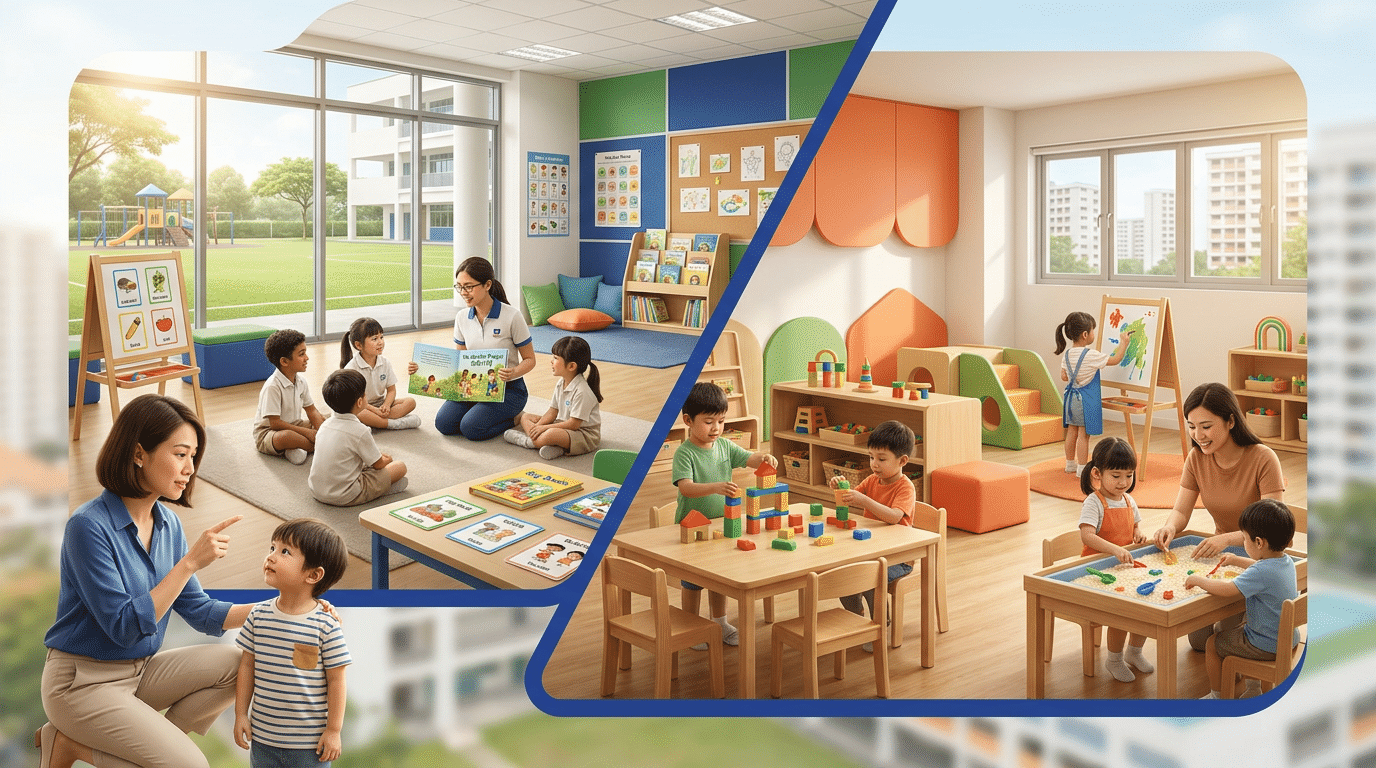
Choosing the right preschool for your child is one of the most important early decisions a parent in Singapore makes. With so many options available — from private childcare centres and enrichment-focused preschools to government-supported programmes — it can be difficult to know where MOE Kindergarten fits in the picture and whether it is the right choice for your family.
MOE Kindergartens (commonly known as MK) are a unique part of Singapore’s education landscape. Directly run by the Ministry of Education, they differ from other preschools in several meaningful ways — from how the curriculum is designed and how long children attend each day, to their fees, their eligibility requirements, and even the advantages they offer during Primary 1 registration. Understanding these differences gives parents a clearer picture of what MK offers and what it does not, so you can make a decision grounded in your child’s actual needs.
This guide walks you through everything you need to know: how MOE Kindergarten is structured, how it compares to private preschools and other government-supported options, what fees and subsidies apply, and how you can support your child’s learning journey beyond the classroom.
What Is an MOE Kindergarten?
An MOE Kindergarten is a preschool programme run directly by Singapore’s Ministry of Education, specifically for children in the Kindergarten 1 (K1) and Kindergarten 2 (K2) years — that is, children aged five and six. Unlike private preschools or even other government-supported childcare centres, MOE Kindergartens are designed with a singular purpose: to give every eligible child a quality, affordable foundation in the years immediately before Primary 1. They are most commonly located within or adjacent to primary schools, which is itself a deliberate structural decision to ease the transition into formal schooling.
The first MOE Kindergartens opened in January 2014, and the programme has since expanded significantly. Today, parents can find MK locations across the island, with further expansion underway. Because these kindergartens sit within primary schools, children become familiar with the school environment, its routines, and even its teachers and staff well before they formally begin Primary 1 — a head start that many private preschools simply cannot replicate.
The MOE Kindergarten Curriculum: What Your Child Actually Learns
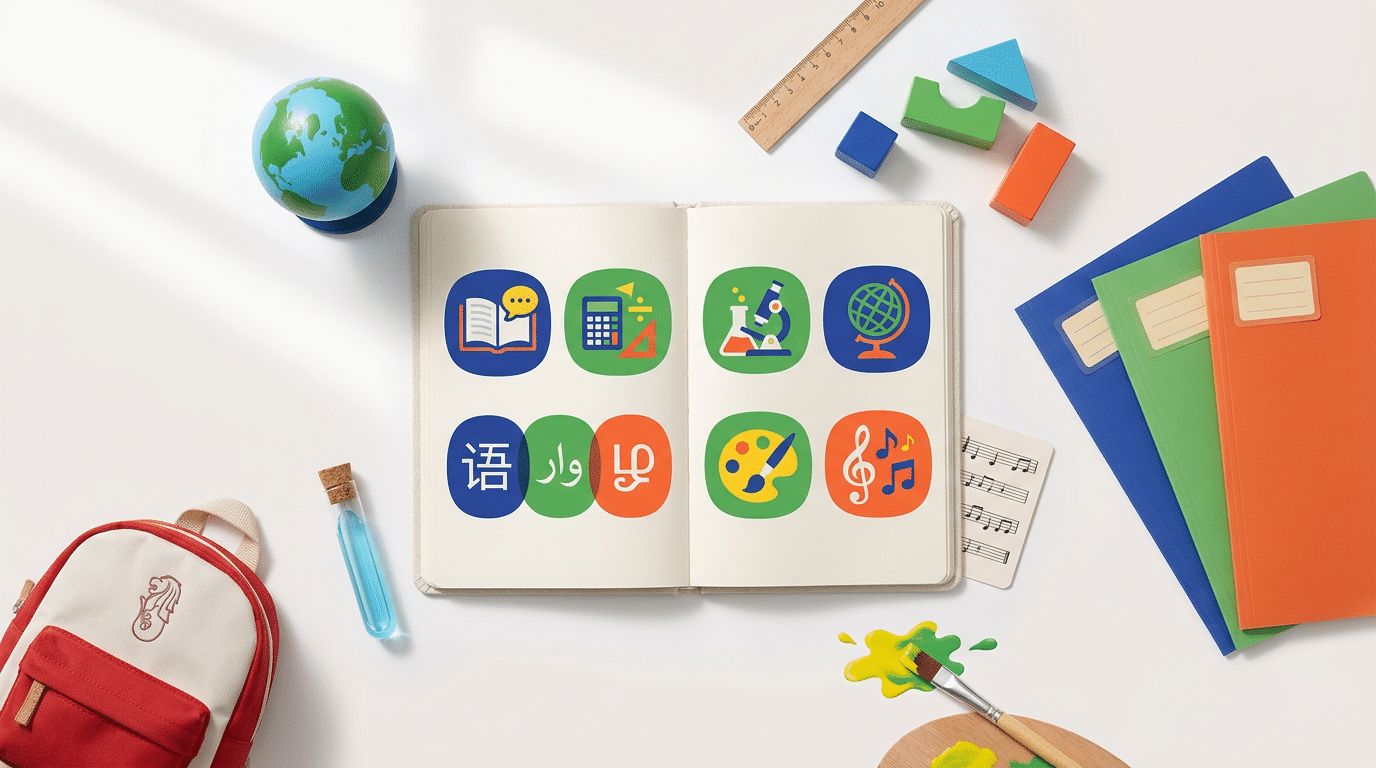
The MK curriculum is built on MOE’s Nurturing Early Learners (NEL) Framework, which treats children as curious, active, and capable learners. Rather than drilling children on facts or academic content, the NEL framework is designed to develop the whole child across six key learning areas: Aesthetics and Creative Expression, Discovery of the World, Language and Literacy, Motor Skills Development, Numeracy, and Social and Emotional Development. This gives the curriculum a broad developmental scope that goes beyond reading and arithmetic.
Within the four-hour daily programme, two flagship components bring the curriculum to life. The HI-Light Programme supports holistic development through structured activities, guided play, and themed project work organised around topics with a distinctly Singaporean flavour. The Starlight Literacy Programme focuses on early bilingualism, equipping children with listening, speaking, and early reading and writing skills in both English and their chosen Mother Tongue Language — Chinese, Malay, or Tamil. Children build language skills through games, activities, and interactive reading sessions rather than rote learning.
One distinctive feature of the MK curriculum is the “Weeks of Wonder” (WoW) projects, which encourage children to explore topics independently through inquiry and discovery. These projects develop curiosity, collaboration, and a love of learning in a way that goes beyond what a standard lesson can achieve. For parents considering how this compares to a private preschool’s curriculum, it is worth noting that the MK curriculum is standardised — every child enrolled in an MOE Kindergarten receives the same programme — whereas private preschools may follow their own philosophies, such as Montessori, Reggio Emilia, or proprietary frameworks.
Programme Structure: Half-Day vs. Full-Day Preschools
One of the most practical differences between MOE Kindergarten and other preschool options is how the child’s day is structured. The core MK programme runs for four hours each day, either in the morning (typically 8.00am to 12.00pm) or in the afternoon (typically 1.00pm to 5.00pm), and follows the MOE school calendar with four school terms, including scheduled school and public holidays. This is fundamentally different from most private preschools and childcare centres, which operate on a full-day basis and integrate learning, meals, rest, and care into a continuous programme.
For families who need full-day coverage, MOE Kindergartens offer Kindergarten Care (KCare) at all centres. KCare extends care from 7.00am to 7.00pm on weekdays, with the child attending their MK session during the day and receiving supervised care before and after within the same premises. However, it is important to note that KCare is a care arrangement, not an extension of the academic programme — it does not replicate the kind of integrated full-day learning that some private preschools offer, where enrichment, play, and guided learning are woven throughout the entire day.
For working parents comparing options, this is a meaningful distinction. A private preschool or an Anchor Operator (AOP) / Partner Operator (POP) centre typically combines education and care within a single full-day programme. These centres serve children from as young as two months old, providing continuity across the early years in a way that MOE Kindergarten — which only covers K1 and K2 — does not. If your child is younger than five or if you value a seamless daily rhythm where learning and care are fully integrated, a full-day centre may better suit your family’s needs during those earlier years.
Fees and Subsidies: How MOE Kindergarten Compares
Cost is often the starting point for many parents’ preschool research, and MOE Kindergarten is notably one of the most affordable options in Singapore. The monthly fee for 2025 is $160 for Singapore Citizens and $320 for Singapore Permanent Residents. These fees are spread over 12 months and are payable even during the June and December holidays. Importantly, there are no additional out-of-pocket costs for complementary programmes, including field trips, and the government absorbs GST on MK fees.
Financial assistance is also available for eligible families through the Kindergarten Fee Assistance Scheme (KiFAS), administered by ECDA. Families with Singapore Citizen children who meet the Gross Monthly Household Income or Per Capita Income criteria may qualify for subsidies that further reduce the monthly cost. For KCare, all Singapore Citizen children are eligible for a basic KCare subsidy of $150 per month, with additional subsidies available depending on household income.
By comparison, private preschool fees in Singapore vary widely — from around $300 to $800 per month at government-supported Anchor Operator centres, to $800 and well beyond $2,000 per month at boutique or international-style private preschools. This makes MK a compelling option for families who prioritise affordability without wanting to compromise on curriculum quality. That said, fees alone should not drive the decision. The programme’s half-day structure, age eligibility limited to K1 and K2, and the absence of integrated enrichment within the core programme are all factors worth weighing alongside the cost advantage.
Eligibility and Registration: Who Can Enrol
MOE Kindergarten is open to Singapore Citizens and Permanent Residents only. Your child must be turning five in the year of K1 entry (or turning six for K2). Registration for K1 admission opens once a year during a specific window — typically in early to mid-February of the year before your child starts K1 — via the MOE website. Parents seeking K1 or K2 places outside the formal registration period can contact individual MK centres directly to check for vacancies.
Admission is not simply first-come, first-served. MOE uses a priority order system that considers several factors:
- Priority Order 1: Singapore Citizen children from households with a Gross Household Income (GHI) not exceeding $4,500 per month or Per Capita Income (PCI) not exceeding $1,125 per month, who live within 1km of the kindergarten. One-third of places are reserved for this group.
- Priority Order 2: SC and PR children with siblings currently studying in K1 to P6 at the same MK or co-located primary school.
- Priority Order 3: All Singapore Citizen children.
- Priority Order 4: All Permanent Resident children.
This priority structure means that not every application is guaranteed a place, particularly at popular MKs located within sought-after primary schools. If you have a specific school in mind, it is wise to plan registration early, check the priority order criteria carefully, and have alternative options ready. For families who miss the registration window or are considering options for children younger than five, private preschools and childcare centres remain the primary route.
The P1 Priority Admission Advantage
One of the most discussed benefits of enrolling in an MOE Kindergarten is the Phase 2A priority advantage during Primary 1 (P1) registration. Singapore Citizens and Permanent Residents who attend an MK located within a primary school are eligible to register for P1 at that school under Phase 2A — the same phase available to children whose parents or siblings are alumni, school committee members, or staff of the school. This is a meaningful advantage in the competitive P1 registration landscape, as Phase 2A comes before the distance-based phases that most other children must rely on.
It is important, however, to understand the limits of this advantage. Phase 2A priority does not guarantee a place. If applications during Phase 2A exceed the number of available vacancies, balloting takes place. Within that ballot, priority is further determined by citizenship and home-to-school distance. In practice, for highly oversubscribed schools, even Phase 2A applicants may not secure a place. Parents should check historical Phase 2A balloting outcomes for their target school before treating this as a certainty. No other preschool or childcare centre in Singapore currently provides equivalent Phase 2A priority — making MK unique in this regard.
Key Differences Between MOE Kindergarten and Other Preschools
When you look at MOE Kindergarten alongside other preschool types available in Singapore, a clear picture emerges. Here is a summary of the main differences to help guide your comparison:
- Age coverage: MK only accepts K1 and K2 children (aged 5–6). Private preschools and AOP/POP centres typically serve children from infancy through K2, offering continuity across the early years.
- Programme duration: MK runs a four-hour core programme daily. Private and childcare-based preschools typically operate full-day, often from 7.00am to 7.00pm.
- Curriculum design: MK follows a standardised, MOE-designed curriculum based on the NEL Framework. Private preschools have autonomy to design their own curriculum, which may follow Montessori, Reggio Emilia, bilingual immersion, or other approaches.
- Enrichment: The MK core programme does not include additional enrichment subjects. Private preschools often embed enrichment — such as arts, physical education, or extended language programmes — within their daily schedule.
- Class size and ratios: MOE Kindergartens adhere to ECDA-stipulated teacher-child ratios of 1:20 for K1 and 1:25 for K2. Many private preschools maintain smaller ratios, which allows for more individualised attention.
- Fees: MK is among the most affordable options at $160/month for Singapore Citizens. Private preschool fees range from $300 to over $2,000 per month depending on the centre and programme.
- P1 registration: MK students are eligible for Phase 2A priority for the co-located primary school. No other preschool type offers this advantage.
Is MOE Kindergarten Enough to Prepare Your Child for Primary School?
The MK curriculum is genuinely well-designed to build foundational skills in literacy, numeracy, bilingualism, and social-emotional development before Primary 1. For many children, it provides a solid and sufficient start. However, because the programme is delivered within a four-hour window with larger class sizes and no enrichment components, some children — particularly those who benefit from more individualised attention or who need additional language or numeracy support — may find that the MK programme alone leaves certain gaps as they prepare to enter the demands of primary school.
This is where supplementary support becomes valuable. Whether your child attends an MOE Kindergarten or a private preschool, the transition into Primary 1 introduces a meaningful step up in pace and expectations. Building strong habits early — particularly in English and Mathematics — can make that transition significantly smoother. At EduFirst Learning Centre, our preschool programme is designed to complement what children learn in kindergarten, nurturing early literacy and numeracy skills in small-group settings of just four to eight students, so every child receives the attention they need.
As children move into primary school, consistent academic support continues to matter. Our primary tuition programmes at EduFirst are tailored to support students at every level, helping them build confidence and strong fundamentals from the very first year of formal schooling. For students progressing further, our secondary tuition ensures that the academic foundation built in the early years continues to grow. And for families who prefer flexibility, our e-lessons bring the same quality teaching online, accessible from anywhere.
Frequently Asked Questions
Who is eligible for MOE Kindergarten in Singapore?
MOE Kindergarten is open to Singapore Citizens and Permanent Residents. Children must be aged five for K1 entry (turning five in the year of enrolment) or aged six for K2. International students are not eligible for the standard MK programme.
Does MOE Kindergarten guarantee a place at the co-located primary school?
No. Attending an MK gives SC and PR children Phase 2A priority during the P1 registration exercise for the primary school where the MK is located. However, a place is not guaranteed. If Phase 2A is oversubscribed, balloting takes place based on citizenship and home-to-school distance. Parents should check historical balloting data for their target school.
What is Kindergarten Care (KCare) and is it the same as a full-day preschool?
KCare is a full-day care service available at all MOE Kindergartens for families who need supervision beyond the core four-hour MK session. KCare runs from 7.00am to 7.00pm on weekdays. It is a care arrangement, not an extended academic programme, so it differs from private full-day preschools that integrate learning and enrichment throughout the entire day.
How does the MK curriculum differ from private preschool curricula?
The MK curriculum is standardised and designed by MOE curriculum specialists, based on the Nurturing Early Learners (NEL) Framework. It covers six learning areas and includes the HI-Light and Starlight Literacy programmes. Private preschools, by contrast, have the autonomy to develop their own curricula, which may follow approaches such as Montessori, Reggio Emilia, or bilingual immersion models, and can include additional enrichment subjects within the school day.
Should my child attend tuition or enrichment after MOE Kindergarten?
This depends on your child’s individual readiness and learning style. While the MK programme provides a strong foundation, children who would benefit from more personalised attention or additional preparation for the pace of Primary 1 can gain significantly from supplementary support. Small-group preschool and primary tuition programmes, like those offered by EduFirst Learning Centre, help bridge any gaps in a nurturing, focused environment.
Making the Right Preschool Choice for Your Child
MOE Kindergarten stands apart from other preschool options in Singapore in several important ways: its government-designed curriculum, affordable and subsidised fees, standardised national framework, and the unique Phase 2A primary school registration advantage. For families with Singapore Citizens or Permanent Residents aged five to six, it offers a highly accessible and educationally sound option for the final two years before Primary 1.
At the same time, every child is different. Some thrive in the structured consistency of an MK setting, while others benefit from the richer daily immersion, smaller class sizes, and integrated enrichment of a private preschool. Understanding the practical differences — in programme duration, curriculum depth, fees, eligibility, and care arrangements — puts you in the best position to choose what truly fits your child and your family’s circumstances.
Whatever preschool path you choose, the support your child receives beyond the classroom can make a meaningful difference. Early habits in language, numeracy, and structured learning set the stage for everything that follows in primary school and beyond.
Give Your Child the Best Start with EduFirst Learning Centre
Whether your child is in preschool, preparing for Primary 1, or already navigating primary school, EduFirst Learning Centre is here to support their learning journey. With small class sizes of just 4 to 8 students, personalised attention, and over 25 centres islandwide, we help every child build confidence and achieve their potential — from the earliest years through secondary school.