- Apr 6, 2026
What Is the GEP in Singapore? Complete Guide to Eligibility, Testing, and What to Expect
Table Of Contents
Every year, thousands of Primary 3 students across Singapore sit for the Gifted Education Programme (GEP) tests, with parents hoping their child will secure a spot in this prestigious programme. But what exactly is the GEP, and is it the right path for your child?
The GEP represents one of Singapore’s most selective educational pathways, designed specifically for students who demonstrate exceptional academic ability and intellectual potential. With an acceptance rate of approximately 1% of the Primary 3 cohort, the programme offers a specialized curriculum that challenges gifted learners to develop their talents fully.
Understanding the GEP’s structure, eligibility requirements, and testing process is essential for parents considering this option. This comprehensive guide will walk you through everything you need to know about the Gifted Education Programme, from eligibility criteria to what daily life looks like for GEP students. Whether you’re preparing your child for the upcoming tests or simply exploring educational options, you’ll find the clarity and insights needed to make informed decisions about your child’s academic journey.
What Is the Gifted Education Programme (GEP)?
The Gifted Education Programme is a specialized educational pathway offered by Singapore’s Ministry of Education (MOE) for academically gifted students. Established in 1984, the GEP aims to nurture students who demonstrate high intellectual ability, creative thinking, and strong motivation to learn. The programme runs from Primary 4 through Secondary 4, providing an enriched curriculum that goes beyond the standard national syllabus.
Unlike traditional streaming, which focuses on academic performance, the GEP specifically targets students with exceptional cognitive abilities who would benefit from a more challenging and faster-paced learning environment. Students selected for the programme attend specialized GEP schools where they learn alongside other gifted peers, fostering an environment of intellectual stimulation and mutual growth.
The GEP curriculum emphasizes depth over breadth, encouraging students to explore subjects more thoroughly and develop higher-order thinking skills. Teachers in the programme receive specialized training to work with gifted learners, employing differentiated instruction methods that cater to advanced learners’ unique needs. Beyond academic excellence, the programme also focuses on developing social-emotional skills, leadership qualities, and a sense of responsibility toward community and nation.
It’s important to understand that the GEP is not simply an accelerated programme. While GEP students do cover material more quickly, the emphasis is on enrichment and exploration rather than pure acceleration. Students engage in independent research projects, participate in specialized competitions, and have access to resources and opportunities designed specifically for gifted learners.
Who Is Eligible for the GEP?
Eligibility for the Gifted Education Programme is straightforward but highly selective. All Primary 3 students in mainstream government and government-aided schools in Singapore are automatically considered for the GEP. There is no application process required from parents or students. Instead, the Ministry of Education identifies potential candidates based on their performance in Primary 3 examinations.
Students who perform exceptionally well in their Primary 3 school examinations will receive an invitation to sit for the GEP Screening Test. This typically includes the top 10% of the Primary 3 cohort. International students attending local schools who are Singaporean citizens or Permanent Residents are also eligible if they meet the performance criteria.
However, students attending international schools are generally not eligible for the GEP selection process. Additionally, students who have repeated a year or are older than the typical Primary 3 age cohort may have restricted eligibility. The programme specifically targets students at the Primary 3 level because research indicates this is an optimal developmental stage for identifying giftedness and implementing differentiated education.
It’s worth noting that there is no option to appeal for inclusion in the testing process if your child is not selected for the Screening Test. The selection is based purely on academic performance indicators, and the MOE maintains strict criteria to ensure fairness and consistency across all schools. This can be disappointing for some parents, but it reflects the programme’s highly selective nature and limited capacity.
The GEP Selection Process: What to Expect
The GEP selection process consists of two rigorous stages, both conducted in the third quarter of the Primary 3 year, typically between August and September. This two-stage approach ensures comprehensive assessment of students’ abilities while managing the large number of potential candidates efficiently.
Stage 1: GEP Screening Test
The GEP Screening Test is the first hurdle in the selection process. Students who receive invitations will sit for two papers: English Language and Mathematics. These tests are designed not to assess curriculum knowledge but to evaluate reasoning abilities, problem-solving skills, and intellectual potential. The questions are intentionally different from typical school examinations, focusing on higher-order thinking rather than rote learning.
English Language Paper: This component assesses language reasoning, comprehension, and verbal abilities. Students encounter passages and questions that require inference, analysis, and critical thinking. The test measures how well students can manipulate language, understand nuanced meanings, and apply logical reasoning to verbal problems. Vocabulary knowledge at an advanced level is also assessed, though in context rather than through simple definitions.
Mathematics Paper: The mathematics component evaluates numerical reasoning, spatial visualization, and mathematical problem-solving abilities. Questions often involve patterns, logical sequences, and non-routine problems that cannot be solved through standard algorithms alone. Students must demonstrate flexible thinking and the ability to apply mathematical concepts in unfamiliar contexts. The test includes both multiple-choice and open-ended questions to assess different dimensions of mathematical thinking.
Approximately 3,000 students sit for the Screening Test each year, and roughly 500 to 600 advance to the second stage. Results are typically released within three to four weeks, and students who qualify will receive invitations to the GEP Selection Test.
Stage 2: GEP Selection Test
The GEP Selection Test represents the final stage of the selection process and is considerably more challenging than the Screening Test. Students again sit for English Language and Mathematics papers, but these assessments dive deeper into cognitive abilities and potential for advanced learning. The questions are more complex, requiring sustained concentration, sophisticated reasoning, and creative problem-solving approaches.
Unlike the Screening Test, the Selection Test is specifically designed to differentiate among already high-performing students. The difficulty level is calibrated to identify those with exceptional intellectual abilities who would genuinely benefit from the enriched GEP curriculum. Many questions are designed so that students cannot simply apply learned procedures but must think independently and creatively.
After the Selection Test, the MOE conducts a thorough evaluation of all results, considering both test scores and other relevant factors. Final GEP offers are made to approximately 1% of the entire Primary 3 cohort, typically around 300 to 400 students nationwide. Parents receive notification of results by late October or early November, with successful candidates given school placement options.
Students who receive offers must accept or decline by a specified deadline. Those who accept will begin their GEP journey in Primary 4 the following January, typically transferring to one of the nine designated GEP schools if their current school does not offer the programme.
What Does GEP Curriculum Look Like?
The GEP curriculum differs significantly from the mainstream curriculum, though it remains aligned with national educational objectives. The programme covers the same core subjects as regular classes but approaches them with greater depth, complexity, and intellectual rigor. GEP students are expected to think critically, analyze information from multiple perspectives, and engage with content at a more sophisticated level.
In English Language, GEP students explore a wider range of literary genres and encounter more challenging texts. The curriculum emphasizes critical analysis, creative expression, and advanced communication skills. Students regularly engage in debates, presentations, and extended writing projects that develop their ability to articulate complex ideas persuasively and eloquently.
The Mathematics curriculum for GEP students extends beyond computational skills to focus on mathematical reasoning, problem-solving strategies, and abstract thinking. Students explore topics not typically covered in the mainstream curriculum and learn to approach mathematical problems with creativity and persistence. The emphasis is on understanding underlying principles rather than memorizing formulas.
Science instruction in the GEP encourages inquiry-based learning and scientific investigation. Students conduct more extensive experiments, engage in research projects, and learn to think like scientists by questioning, hypothesizing, and testing their ideas. The curriculum covers additional topics and explores scientific concepts at greater depth than the standard syllabus.
Beyond core subjects, GEP students participate in enrichment activities, special projects, and competitions that challenge them intellectually and develop their talents. Many schools offer specialized programmes in areas such as robotics, debate, creative writing, and scientific research. Students also have opportunities to work with mentors, attend specialized workshops, and engage with the broader gifted education community.
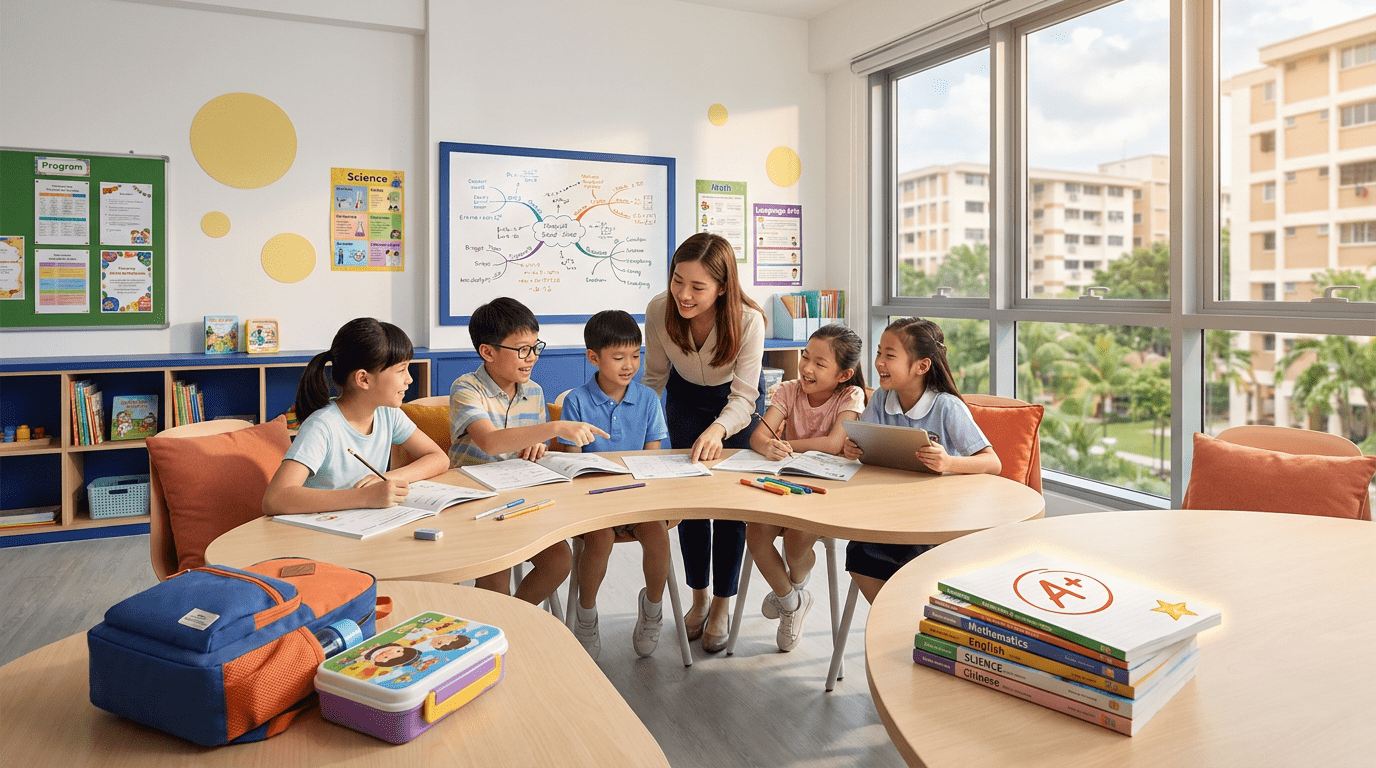
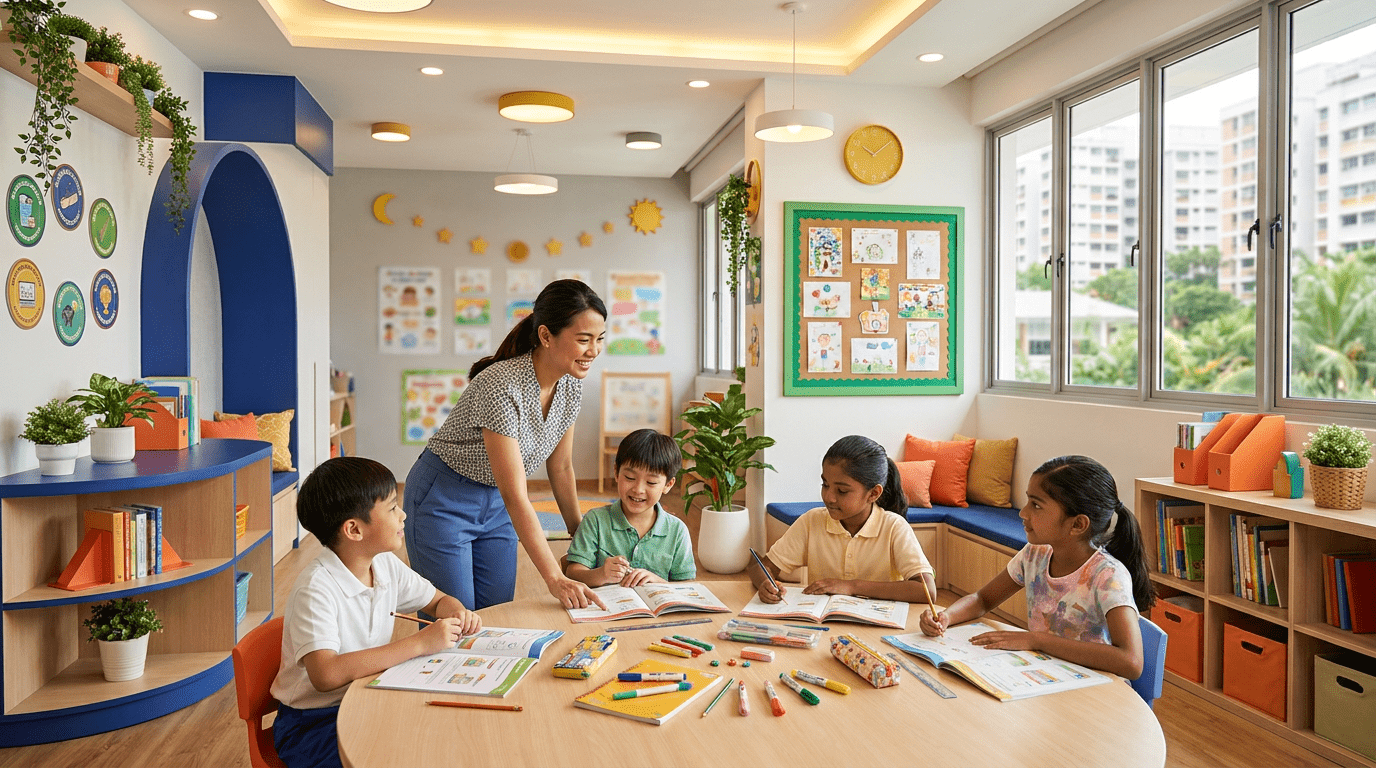
The learning environment itself differs from mainstream classes. With smaller class sizes and peers of similar ability levels, discussions tend to be more intellectually stimulating and fast-paced. Teachers can maintain a challenging pace without leaving students behind, and the collaborative atmosphere encourages students to push each other’s thinking further. At EduFirst’s primary tuition programmes, we understand the importance of this small-group learning environment, which is why we maintain class sizes of just 4-8 students to ensure personalized attention and optimal learning outcomes.
GEP Schools in Singapore
The Gifted Education Programme is currently offered at nine primary schools across Singapore, strategically located to serve students from different regions. These schools have developed specialized expertise in gifted education and employ teachers trained specifically to work with high-ability learners. The nine GEP primary schools are:
- Anglo-Chinese School (Primary) – Located in the Barker Road area
- Catholic High School (Primary) – Situated in Bishan
- Henry Park Primary School – In the Bukit Timah area
- Nan Hua Primary School – Located in Clementi
- Nanyang Primary School – In the Bukit Timah region
- Raffles Girls’ Primary School – Situated at Braddell Road
- Rosyth School – Located in Serangoon
- St. Hilda’s Primary School – In the Tampines area
- Tao Nan School – Situated in Marine Parade
When students receive GEP offers, they are given school placement options based on availability and proximity to their homes. Parents can indicate their preferences, though final placement decisions consider various factors including school capacity and geographical distribution. Some students may continue at their current school if it offers the GEP, while others will transfer to a designated GEP school.
At the secondary level, GEP students can continue their gifted education at Raffles Institution or Raffles Girls’ School, both of which offer the GEP track through Secondary 4. These schools provide continuity in the specialized curriculum and maintain the enriched learning environment that GEP students experienced in primary school.
How to Prepare Your Child for the GEP
Preparing for the GEP tests requires a thoughtful approach that focuses on developing genuine intellectual abilities rather than rote memorization or test-taking tricks. Since the GEP assessments are designed to evaluate reasoning and problem-solving skills, the most effective preparation involves nurturing these abilities through consistent, long-term engagement with challenging material.
The most important foundation is building strong fundamental skills in English and Mathematics throughout Primary 1 and 2. Students should have solid mastery of basic concepts before attempting more complex reasoning tasks. Reading widely and regularly is particularly crucial for developing the language comprehension and analytical skills assessed in the English paper. Expose your child to diverse genres, including fiction, non-fiction, poetry, and informational texts that challenge their thinking and expand their vocabulary.
For mathematics preparation, focus on developing problem-solving abilities rather than simply practicing computation. Encourage your child to tackle puzzles, logic problems, and non-routine mathematical challenges that require creative thinking. Pattern recognition, spatial reasoning, and logical thinking are all important areas to develop. Games like chess, Sudoku, and strategy games can help build these cognitive skills in engaging ways.
Many parents wonder whether they should enroll their children in specialized GEP preparation programmes. While such programmes can be beneficial, they are not essential for success. Quality tutoring that emphasizes understanding, reasoning, and intellectual development can be valuable, particularly if it provides exposure to challenging problems and teaches thinking strategies. At EduFirst Learning Centre, our primary tuition programmes focus on building strong foundational skills and developing critical thinking abilities that serve students well regardless of whether they pursue the GEP pathway.
However, it’s crucial to maintain balance and avoid creating excessive pressure. The GEP tests are designed to identify children who are naturally suited for the programme, not to reward those who have been intensively drilled. Over-preparation can lead to stress and anxiety that actually undermines performance. Instead, focus on creating a rich learning environment at home, encouraging curiosity, and supporting your child’s natural interests and talents.
Some practical preparation strategies include:
- Practicing with past-year GEP-style questions to familiarize your child with the question format and difficulty level
- Working on timed exercises to build stamina and time-management skills
- Discussing answers and thinking processes rather than just focusing on correct answers
- Encouraging your child to explain their reasoning and justify their solutions
- Building vocabulary through contextual learning rather than memorization
- Developing comfort with ambiguity and complex problems that don’t have obvious solutions
Finally, prepare your child emotionally for the possibility of not being selected. With only 1% of students offered GEP places, even exceptionally bright children may not qualify. Not being selected for GEP does not mean your child isn’t gifted or won’t achieve academic success. There are many pathways to excellence in Singapore’s education system, and GEP is just one option among many.
Is GEP Right for Every Gifted Child?
While the Gifted Education Programme offers exceptional opportunities for intellectually advanced students, it’s not necessarily the best fit for every gifted child. Parents should consider several factors beyond academic ability when thinking about whether GEP would benefit their child.
The GEP environment is intensely academic and competitive. Students are surrounded by high-achieving peers, and the pace of learning is rapid. While this challenges many gifted students in positive ways, some children may feel overwhelmed or stressed by the constant pressure to perform at high levels. Children who thrive on intellectual challenge and enjoy academic competition typically do well in GEP, while those who are more sensitive to pressure or prefer a more balanced approach may find the environment stressful.
Social and emotional maturity also matter significantly. GEP students often transfer to new schools where they must build new friendships and adjust to different social dynamics. Children who are socially confident and adaptable typically navigate this transition successfully, but those who struggle with change or have established strong friendship networks at their current school may find the transition challenging.
Another consideration is the opportunity cost. GEP students dedicate significant time and energy to academic pursuits, which may limit time for other interests such as sports, arts, or other extracurricular activities. If your child has strong talents or passions in non-academic areas, you’ll need to consider whether the GEP schedule allows adequate time to pursue these interests.
It’s also worth noting that Singapore’s education system offers multiple pathways to success. Students who don’t participate in GEP can still excel academically, gain admission to top secondary schools, and achieve outstanding outcomes in national examinations. Many schools offer their own enrichment programmes for high-ability students, and talented students in mainstream classes often receive differentiated instruction and opportunities to participate in competitions and advanced activities.
Some parents also choose alternative pathways such as the Integrated Programme (IP) at secondary level, subject-based banding, or specialized schools that focus on particular talent areas like arts or sports. These alternatives may better suit children with specific interests or different learning preferences.
Ultimately, the decision about whether to pursue GEP should consider your child’s unique personality, learning style, interests, and needs rather than simply their academic ability. Quality education that supports your child’s holistic development is more important than participation in any specific programme, no matter how prestigious. At EduFirst, we support students across all educational pathways, helping them develop their full potential regardless of which programme they’re in.
The Gifted Education Programme represents a unique and valuable opportunity for intellectually gifted students in Singapore, offering an enriched curriculum designed to challenge and nurture exceptional abilities. Understanding the eligibility criteria, testing process, and what GEP entails helps parents make informed decisions about their children’s educational journeys.
Whether your child is preparing for the upcoming GEP tests, currently in the programme, or pursuing alternative educational pathways, the key to success lies in building strong foundational skills, nurturing intellectual curiosity, and maintaining a balanced approach to learning. Remember that academic excellence can be achieved through multiple routes, and the most important factor is finding the educational environment that best supports your child’s unique strengths, interests, and needs.
If you’re looking for personalized support to help your child develop the critical thinking skills and strong academic foundation needed for success, whether in GEP or mainstream education, quality guidance makes all the difference. The right learning environment provides not just academic instruction but also the confidence and intellectual skills that serve students throughout their educational journey.
Support Your Child’s Academic Journey with EduFirst
At EduFirst Learning Centre, we specialize in helping primary school students build the strong foundational skills and critical thinking abilities they need to excel academically. With small class sizes of just 4-8 students across our 25 locations islandwide, we provide the personalized attention that makes a real difference in your child’s learning outcomes.
Whether you’re preparing for GEP, supporting a gifted learner, or simply want to help your child reach their full academic potential, our experienced teachers are here to guide them every step of the way.
Contact us today to learn how we can support your child’s educational success →