- Apr 8, 2026
ADHD and Learning in Singapore: Proven Strategies and Support Options
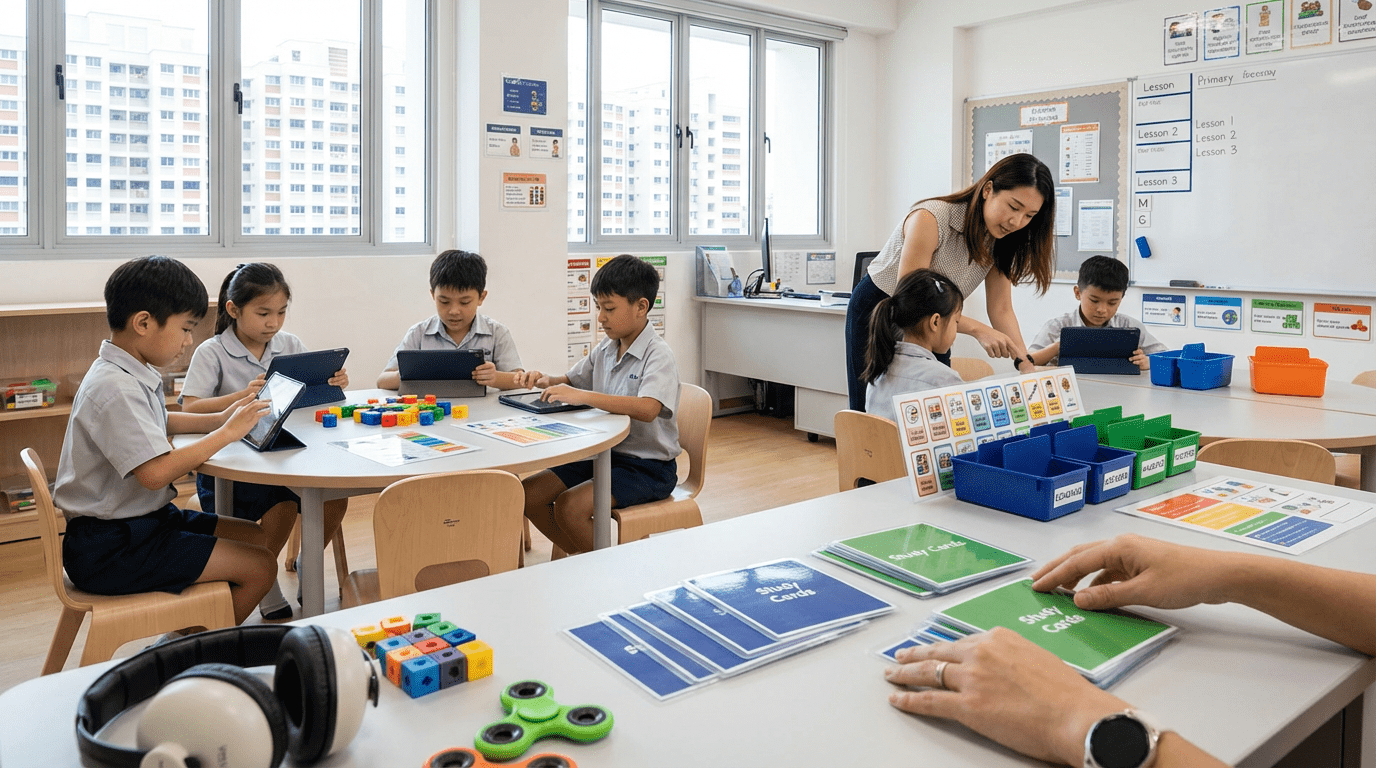
Table Of Contents
- Understanding ADHD in the Singapore Education Context
- Effective Classroom Strategies for ADHD Learners
- Creating a Supportive Learning Environment at Home
- The Role of Specialized Tuition and Small Class Settings
- Assessment and Diagnosis Options in Singapore
- MOE Support Schemes and School-Based Resources
- Technology and Digital Learning Tools for ADHD Students
- Building on Strengths: Beyond Managing Challenges
When your child struggles to sit still during homework sessions, loses track of assignments despite repeated reminders, or seems to understand concepts one day only to forget them the next, you might wonder if something more than typical childhood restlessness is at play. For many families in Singapore, the answer lies in understanding how ADHD (Attention Deficit Hyperactivity Disorder) affects learning and discovering the right support strategies to help their children thrive academically.
ADHD is one of the most common neurodevelopmental conditions affecting school-aged children in Singapore, yet it remains widely misunderstood. Parents often grapple with questions about whether their child’s difficulties stem from ADHD, lack of motivation, or simply different learning needs. The good news is that with the right combination of educational strategies, environmental modifications, and targeted support, students with ADHD can excel in their studies and develop skills that serve them well beyond the classroom.
This comprehensive guide explores evidence-based strategies for supporting ADHD learners within Singapore’s education system. We’ll examine classroom accommodations that make a real difference, discuss how specialized tuition settings can provide the individualized attention ADHD students need, and outline the assessment and support resources available locally. Whether you’re a parent seeking answers, an educator looking for practical strategies, or simply trying to better understand ADHD and learning, you’ll find actionable insights to help students with ADHD reach their full potential.
Understanding ADHD in the Singapore Education Context
ADHD manifests differently across children, but three core challenges consistently affect learning: inattention (difficulty sustaining focus and following through on tasks), hyperactivity (excessive movement and restlessness), and impulsivity (acting without thinking through consequences). Some students display predominantly inattentive symptoms, quietly struggling to process information or complete work, while others exhibit more obvious hyperactive behaviors that disrupt classroom settings. Many children experience a combination of both patterns.
Within Singapore’s academically rigorous education system, where students face substantial homework loads and high-stakes examinations like PSLE and O-Levels, ADHD symptoms can significantly impact academic performance. The extended concentration required for long study sessions, the organizational skills needed to manage multiple subjects, and the self-regulation necessary to complete independent work all pose particular challenges for ADHD learners. However, it’s crucial to recognize that ADHD doesn’t reflect a lack of intelligence or capability. Many students with ADHD possess above-average cognitive abilities but struggle to demonstrate their knowledge through traditional teaching and assessment methods.
The Singapore context adds unique dimensions to ADHD support. Cultural attitudes sometimes attribute ADHD symptoms to poor discipline or parenting rather than recognizing them as neurological differences requiring specific interventions. Additionally, the competitive academic environment can intensify stress for ADHD students who already find conventional learning approaches challenging. Understanding these contextual factors helps parents and educators develop more effective, culturally-informed support strategies.
Effective Classroom Strategies for ADHD Learners
The most successful educational approaches for ADHD students modify the learning environment and teaching methods rather than expecting students to simply “try harder” or “focus more.” Research consistently shows that environmental accommodations and structured support produce better outcomes than relying solely on the student’s willpower to overcome attention challenges.
Optimizing the Physical Environment
Classroom seating arrangements significantly impact ADHD students’ ability to concentrate. Positioning students near the teacher and away from high-traffic areas or windows reduces distractions. Some students benefit from standing desks or flexible seating options that allow controlled movement without disrupting learning. In smaller tuition settings like those at EduFirst’s primary tuition programmes, educators can more easily customize seating arrangements to each student’s needs, providing quiet corners for focused work or designated movement breaks when restlessness builds.
Visual organization tools transform abstract expectations into concrete, manageable steps. Color-coded folders, clearly labeled storage systems, and visual schedules help ADHD students track materials and tasks without relying solely on working memory, which is often impaired in ADHD. Breaking down assignments into smaller, visually distinct components makes overwhelming projects feel more achievable.
Instructional Modifications That Make a Difference
ADHD students benefit tremendously from multi-sensory teaching approaches that engage multiple pathways for processing information. Rather than lecture-based instruction alone, effective teachers incorporate hands-on activities, visual aids, movement-based learning, and verbal discussion. This variety not only maintains engagement but also helps information stick by creating multiple memory associations.
Providing written instructions alongside verbal directions addresses the working memory challenges many ADHD students face. When teachers verbally explain homework assignments, ADHD students may genuinely listen but struggle to retain all the details moments later. Having written instructions to reference eliminates the anxiety of trying to remember multi-step directions and reduces the likelihood of incomplete work due to forgotten requirements.
Frequent check-ins and immediate feedback help ADHD students stay on track. Rather than assigning lengthy independent work periods, teachers can break work sessions into shorter intervals with brief check-ins to ensure comprehension and progress. This approach prevents students from spending extended time heading in the wrong direction before discovering they misunderstood the task. In secondary tuition settings with smaller class sizes, educators have the capacity to provide these regular touch-points that mainstream classrooms sometimes cannot accommodate.
Building Executive Function Skills
Executive functions are the mental processes that help us plan, organize, remember instructions, and manage time effectively. These skills are often delayed in ADHD students, but they can be explicitly taught and practiced. Teaching students to use planners, break large projects into smaller tasks with individual deadlines, and employ checklists transforms abstract organizational demands into concrete, manageable systems.
Time management requires particular attention. ADHD students often struggle with time perception, experiencing “time blindness” that makes estimating how long tasks will take extremely difficult. Using visual timers, teaching time-estimation strategies through practice, and building in buffer time for transitions all help students develop more realistic time awareness. These aren’t just academic skills; they’re life competencies that serve students well into adulthood.
Creating a Supportive Learning Environment at Home
The home environment plays an equally critical role in supporting ADHD learners. After managing attention challenges throughout the school day, students often reach home mentally exhausted, making homework time particularly challenging. Creating structures that reduce friction and support focus makes a substantial difference in both academic outcomes and family stress levels.
Establishing Consistent Routines
ADHD brains thrive on predictability. Establishing consistent daily routines for homework, meals, and bedtime reduces the mental energy required for transitions and decision-making. When homework always happens at the same time in the same location, the routine itself becomes a cue that helps the brain shift into “work mode.” This doesn’t mean rigidity without flexibility, but rather creating a reliable framework within which some variation can occur.
The homework environment should minimize distractions while remaining comfortable enough to sustain focus. This looks different for each child. Some students need complete silence, while others focus better with background white noise or soft music. Some work best at a cleared desk, while others prefer spreading materials across a table. Experimenting with different setups helps identify what works for your particular child rather than imposing one-size-fits-all solutions.
Breaking Down Homework Into Manageable Chunks
One of the most effective strategies parents can implement is breaking homework into smaller work intervals with built-in breaks. The Pomodoro Technique—working for 25 minutes followed by a 5-minute break—often works well for ADHD students. During breaks, physical movement helps: jumping jacks, stretching, or briefly playing with a pet allows the brain to reset before the next work session.
When assignments feel overwhelming, breaking them into smaller sub-tasks makes them approachable. Rather than “complete the entire worksheet,” the goal becomes “complete the first five problems.” This approach provides more frequent experiences of completion and success, building momentum rather than creating a prolonged struggle toward a distant finish line.
Positive Reinforcement and Strength-Based Approaches
ADHD students typically receive substantially more negative feedback than their neurotypical peers, hearing constant reminders about what they’re doing wrong or forgetting. This chronic criticism erodes self-esteem and motivation. Intentionally noticing and acknowledging what students do well—completing work on time, remembering to use their planner, staying focused for progressively longer periods—builds the confidence and motivation that fuel continued effort.
Reward systems can effectively reinforce desired behaviors when used thoughtfully. Rather than bribing for basic expectations, reward systems should acknowledge genuine effort and progress. Token economies where students earn points toward meaningful rewards, privilege-based systems, or simple recognition of achievements all tap into motivation while teaching delayed gratification.
The Role of Specialized Tuition and Small Class Settings
While mainstream classrooms implement various accommodations, the realities of large class sizes often limit how much individualized attention teachers can provide. This is where specialized tuition programs designed with smaller class sizes offer distinct advantages for ADHD learners.
At EduFirst Learning Centre, class sizes of 4-8 students create an environment where educators can closely monitor each student’s attention and comprehension, providing immediate redirection when focus wanders and clarifying concepts before confusion compounds. This ratio allows for the frequent check-ins and personalized pacing that ADHD students need but may not consistently receive in classes of 30-40 students.
Individualized Pacing and Content Delivery
ADHD students often have spiky learning profiles, excelling in some areas while struggling in others. Small-group tuition enables educators to adjust pacing and presentation methods to match individual learning needs. When a student grasps a concept quickly, instruction can accelerate; when a topic requires more time or a different explanatory approach, tutors can provide that without the time constraints of large-class teaching.
This flexibility extends to teaching methods as well. Tutors in smaller settings can incorporate more hands-on activities, provide more opportunities for verbal processing, or offer additional visual supports based on what works for each student. This responsiveness to individual learning styles creates more “aha moments” and reduces the frustration of repeatedly encountering instruction that doesn’t match how your brain processes information.
Building Executive Function Skills Through Structured Support
Beyond subject content, specialized tuition programs can explicitly teach the organizational and study skills that ADHD students need. Tutors can model effective note-taking strategies, guide students through planning long-term projects, and teach active reading techniques that maintain engagement with texts. These meta-learning skills often receive minimal attention in content-focused mainstream classes but make an enormous difference in overall academic success.
Regular tuition sessions also create external accountability structures that help ADHD students stay on track with coursework. Knowing that assignments will be reviewed at the next session provides additional motivation to complete work, while tutors can help students troubleshoot organizational challenges before they derail academic progress.
The Confidence Factor
Perhaps most importantly, small-class environments where ADHD students receive appropriate support and experience academic success rebuild the confidence that struggles in mainstream settings often damage. When students repeatedly experience understanding concepts, completing work successfully, and receiving positive feedback, they begin to see themselves as capable learners rather than students who are “bad” at school. This mindset shift often proves as valuable as the academic content itself.
Assessment and Diagnosis Options in Singapore
If you suspect your child has ADHD, formal assessment provides clarity and opens access to various support resources. In Singapore, several pathways exist for ADHD evaluation, each with different considerations regarding cost, waiting times, and comprehensiveness.
Public Healthcare Options
Public hospitals including the National University Hospital (NUH), KK Women’s and Children’s Hospital (KKH), and the Institute of Mental Health (IMH) offer ADHD assessments through their child development or psychiatric departments. These assessments are typically more affordable than private options, especially for Singapore citizens and permanent residents who benefit from government subsidies. However, waiting times often extend several months due to high demand.
Public healthcare assessments generally include clinical interviews, behavioral questionnaires completed by parents and teachers, and standardized testing to evaluate attention, impulsivity, and executive function. Some facilities also conduct psychological testing to rule out learning disabilities or other conditions that can present similarly to ADHD.
Private Assessment Services
Private psychiatrists, psychologists, and developmental pediatricians offer ADHD assessments with considerably shorter waiting times, typically scheduling evaluations within weeks rather than months. The costs are substantially higher, generally ranging from $800 to $3,000 depending on the comprehensiveness of testing and the professional’s specialization. Private assessments often provide more extensive psychological and educational testing, which can be particularly valuable when learning disabilities co-occur with ADHD.
When selecting a private provider, look for professionals with specific experience in ADHD and child development. Developmental pediatricians, child psychiatrists, and clinical psychologists specializing in neurodevelopmental conditions typically have the most relevant expertise.
School-Based Screening and Referrals
Some schools conduct preliminary ADHD screenings or refer students showing attention difficulties for external assessment. While schools cannot diagnose ADHD, teachers’ observations about attention, behavior, and academic performance provide valuable information that contributes to professional evaluations. Maintaining open communication with your child’s school creates opportunities for early identification and coordinated support.
MOE Support Schemes and School-Based Resources
The Ministry of Education (MOE) in Singapore provides various support mechanisms for students with ADHD and other learning needs, though many parents remain unaware of these resources or how to access them.
Access Arrangements for Examinations
Students with diagnosed ADHD may be eligible for access arrangements during school examinations, including extra time, separate rooms with fewer distractions, or supervised breaks. These accommodations level the playing field by reducing the impact of attention difficulties on students’ ability to demonstrate their knowledge. Applications for access arrangements require supporting documentation from healthcare professionals and typically need to be submitted well before examination periods.
Learning Support Programs
MOE’s Learning Support Programme (LSP) provides additional support in literacy and numeracy for students who need it, though it’s not specifically designed for ADHD. Some schools also offer School-based Dyslexia Remediation (SDR) programs that can benefit students with co-occurring reading difficulties. While not all students with ADHD qualify for these programs, those who do gain access to specialized, small-group instruction that addresses foundational skill gaps.
Allied Educator Support
Many schools employ Allied Educators who provide learning and behavioral support to students with various needs. These professionals work with individual students or small groups on organizational skills, emotional regulation, social skills, and learning strategies. The extent and nature of Allied Educator support vary across schools, but it represents an important in-school resource for ADHD students.
Financial Assistance Schemes
The Ministry of Social and Family Development (MSF) offers financial assistance for early intervention and therapeutic services through schemes like the Enabling Masterplan. Additionally, ComCare provides support for lower-income families to access various healthcare and developmental services. Medisave can be used to offset certain ADHD-related medical costs, and some private insurance policies cover developmental assessments and interventions.
Technology and Digital Learning Tools for ADHD Students
Technology offers powerful tools for supporting ADHD learners, both in making learning more engaging and in providing systems for organization and task management. When used strategically rather than as passive entertainment, digital resources can significantly enhance learning outcomes.
Organization and Time Management Apps
Digital planners and task management apps provide visual organization systems that sync across devices, sending reminders that compensate for working memory challenges. Apps like Todoist, Google Calendar, and specialized student planners help students track assignments, manage long-term projects, and develop time-awareness. The key is teaching students to actually use these tools consistently, which requires initial scaffolding and practice.
Timer apps visualizing remaining time make abstract time concepts concrete. Visual countdown timers showing shrinking bars or color changes provide the external cues that help ADHD students gauge how much time remains for tasks or activities.
Educational Technology and Adaptive Learning
Adaptive learning platforms that adjust difficulty based on student responses maintain optimal challenge levels, preventing both boredom and overwhelming frustration. Gamified learning apps that incorporate immediate feedback, progressive rewards, and interactive elements tap into motivation while teaching content. E-learning options can provide supplementary practice with built-in engagement features that sustain attention more effectively than traditional worksheets.
Text-to-speech and speech-to-text tools support students who struggle with sustained reading or written expression. These assistive technologies allow students to access content and express ideas through their stronger modalities, reducing the fatigue that comes from constantly working through weaker processing channels.
Managing Screen Time and Digital Distraction
While technology offers benefits, ADHD students are particularly vulnerable to digital distraction and hyperfocus on stimulating but non-educational content. Website blockers, focus apps that disable distracting features during work times, and parental controls that limit access to games and social media during homework hours help create digital boundaries that support rather than undermine learning.
The goal isn’t eliminating technology but rather teaching mindful, purposeful use. This includes explicit instruction about when technology serves as a learning tool versus when it becomes a distraction, and helping students develop metacognitive awareness of their own engagement patterns.
Building on Strengths: Beyond Managing Challenges
Much of the conversation around ADHD focuses on deficits and challenges that need management. While addressing difficulties is necessary, equally important is recognizing and cultivating the unique strengths many ADHD individuals possess. This strength-based perspective transforms how students see themselves and opens pathways to success that deficit-focused approaches miss.
Creativity and Divergent Thinking
Many ADHD individuals demonstrate exceptional creativity and ability to make unexpected connections between seemingly unrelated ideas. This divergent thinking style can be channeled into problem-solving, artistic pursuits, and innovative approaches to academic challenges. Rather than viewing unconventional thinking as off-task behavior, educators and parents can provide appropriate outlets for creative expression while teaching students to harness these strengths in productive directions.
Hyperfocus as an Asset
While attention regulation is challenging, many ADHD individuals experience hyperfocus, the ability to become completely absorbed in activities that captivate their interest. Understanding what topics or activity types trigger hyperfocus helps identify potential areas of passion and talent. Connecting academic content to these areas of intense interest creates engagement that makes learning feel effortless rather than exhausting.
Energy and Enthusiasm
The high energy that can disrupt traditional classroom settings becomes an asset in the right environments. Physical activities, hands-on projects, performance-based learning, and leadership roles that channel enthusiasm productively allow ADHD students to leverage their energy rather than constantly fighting to suppress it. Recognizing when and where high energy serves as a strength helps students find contexts where they naturally excel.
Resilience and Adaptability
ADHD students who have navigated challenges, experienced setbacks, and learned to advocate for their needs often develop remarkable resilience. These experiences, though difficult, can build character strengths including persistence, self-awareness, and adaptability that serve them well throughout life. Helping students recognize these developing strengths, even amid ongoing challenges, provides perspective that sustains them through difficult periods.
Supporting ADHD learners effectively requires looking beyond behavior management to see the whole child, including their unique strengths, interests, and potential. This comprehensive approach, combining evidence-based strategies, appropriate accommodations, and strength-based development, creates the foundation for both academic success and positive self-concept that extends far beyond school years.
Supporting students with ADHD in Singapore’s demanding education system requires a multifaceted approach that addresses both environmental accommodations and skill development. As we’ve explored throughout this guide, success comes not from expecting ADHD students to simply work harder or focus more, but from implementing strategic modifications that work with rather than against how their brains function.
The most effective support combines several elements: classroom strategies that reduce distractions and provide structure, home environments that support focus and organization, specialized educational settings that offer individualized attention, and a strength-based perspective that recognizes ADHD students’ unique capabilities alongside their challenges. When these elements align, ADHD students don’t just manage their difficulties; they thrive academically and develop confidence in their ability to learn.
For many families, the journey includes both mainstream school support and supplementary assistance through specialized tuition programs. Small class environments where educators can provide the frequent check-ins, personalized pacing, and executive function coaching that ADHD students need often make the difference between ongoing struggle and meaningful progress. These settings don’t replace mainstream education but rather complement it, providing the targeted support that helps students succeed across all their learning environments.
Remember that ADHD is not a barrier to academic achievement or future success. With appropriate understanding, evidence-based strategies, and the right support systems in place, students with ADHD can excel in their studies and develop the organizational, self-advocacy, and learning skills they’ll use throughout their lives. The challenges are real, but so are the pathways to success.
Personalized Learning Support for Your Child
At EduFirst Learning Centre, our small class sizes of 4-8 students create the ideal environment for students with ADHD to receive the individualized attention and structured support they need to succeed. Our experienced educators understand how to adapt teaching methods to different learning styles, provide frequent check-ins to maintain focus, and build the executive function skills that support both academic achievement and lifelong learning.
With 25 locations across Singapore and programs designed for primary and secondary students, we make specialized, quality education accessible and convenient for your family. Whether your child needs support catching up in specific subjects, developing stronger study skills, or building the confidence that comes from experiencing academic success, we’re here to help.