- May 24, 2026
After-School Care in Singapore: A Complete Guide for Parents
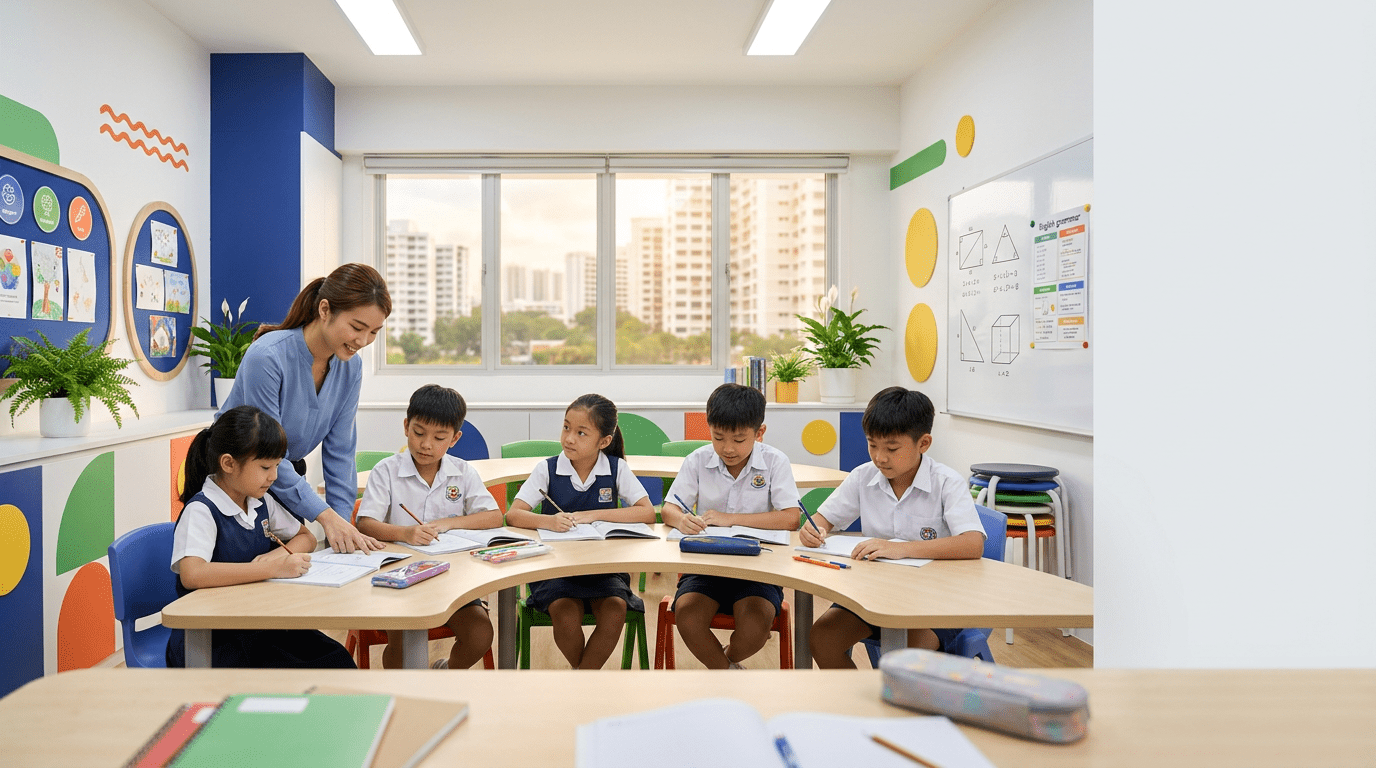
For working parents in Singapore, the hours between school dismissal and the end of the workday can feel like a logistical puzzle. Primary schools typically wrap up around 1.00–1.30pm, while most parents are still at their desks. That gap — several hours every single weekday — is exactly where after-school care becomes not just helpful, but essential.
Singapore has developed one of the most comprehensive after-school care ecosystems in Asia, offering everything from school-based student care centres to enrichment-focused private programmes and dedicated tuition support. With so many options available, though, it can be genuinely hard to know where to start. This complete guide walks you through every key aspect of after-school care in Singapore: the types of programmes available, what they typically include, how much they cost, what subsidies you may qualify for, and how to decide whether student care, tuition, or a combination of both is the right fit for your family.
What Is After-School Care in Singapore?
After-school care in Singapore refers broadly to any structured arrangement that supervises and supports school-going children during the hours between school dismissal and a parent’s return home. The most formal version of this is the Student Care Centre (SCC), which is officially defined by the Ministry of Social and Family Development (MSF) as a service that provides care and supervision to school-going children from primary school to lower secondary levels outside school hours. These centres may be run by commercial operators or social service agencies, and they exist both within school premises and in the wider community.
The demand for structured after-school care has grown significantly over recent years. Singapore’s fast-paced lifestyle means many households have both parents working full-time, and grandparents who might have once stepped in are increasingly remaining economically active themselves. After-school care bridges the gap between school dismissal and family time, ensuring children remain supervised, productive, and emotionally supported throughout the afternoon.
Types of After-School Care Available
Not all after-school care is the same. Singapore’s landscape offers several distinct programme types, each suited to different family needs, budgets, and learning priorities. Understanding the differences will help you make a more informed decision.
School-Based Student Care Centres (SCCs)
These are student care centres set up directly within primary school premises. Every MOE primary school in Singapore has a school-based SCC, which means your child can transition from their classroom to the care centre without ever leaving the school building. This eliminates transportation concerns entirely and keeps children in a familiar, comfortable environment. School-based SCCs are typically more affordable than private alternatives and often have close coordination with the school’s teaching staff.
Community-Based Student Care Centres
Community-based SCCs operate independently of any specific school, often located near housing estates, MRT stations, or community hubs. While they may require a short commute after school, the coverage of SCCs across Singapore is now so extensive that most children won’t have to travel far. These centres may accept children from multiple schools, which can be a social advantage — students get to interact with peers from different communities and year levels.
Private Enrichment-Focused After-School Programmes
Some parents prefer after-school programmes that go beyond homework supervision and standard care to prioritise skill development. These private centres often include tuition in academic subjects alongside enrichment activities such as coding, robotics, arts, music, or language learning. The smaller student-to-teacher ratios at private centres can mean more personalised attention for each child, although fees are correspondingly higher — typically ranging from SGD 600 to SGD 1,000 per month depending on the services offered and the centre’s location.
Home-Based Care (Grandparents or Domestic Helpers)
Some families rely on grandparents or a domestic helper to look after children after school. This option offers comfort and flexibility, and it can be cost-effective. However, it’s worth noting that grandparents, while loving and reliable, are not educators — helping a Primary 1 child with spelling lists or new mathematics concepts can be genuinely challenging. Without structured homework supervision, some children may struggle to stay on task, and the social interaction that comes naturally in a care centre setting will be limited.
What to Expect from a Student Care Centre
Most student care centres in Singapore follow a broadly similar daily structure, though the quality and depth of programming varies between providers. A typical afternoon at an SCC might look like this:
- Arrival and lunch: Children are picked up or walk over from school, settle in, and have a meal provided by the centre.
- Homework supervision: Trained staff supervise and assist with homework completion. This is one of the most valued aspects of student care — it ensures assignments are done correctly and on time, reducing stress at home in the evenings.
- Enrichment activities: Depending on the centre, this might include arts and crafts, STEM projects, sports, reading programmes, or character development activities.
- Free play and social time: Children are given unstructured time to relax and socialise with peers.
- Parent pickup: Most centres operate until 7.00pm, giving working parents ample time to collect their children after the workday.
Beyond these basics, many quality centres also offer academic assessments, subject-specific coaching, and regular parent communication on a child’s progress and well-being. Most SCCs recruit former or retired teachers, or staff with solid teaching experience, so the academic guidance children receive is grounded in genuine subject knowledge.
Fees and Government Subsidies
The cost of after-school care in Singapore varies considerably depending on the type of programme, the centre’s location, and the services included. Monthly fees at school-based and community SCCs typically range from around SGD 200 to SGD 800, while premium private centres can charge over SGD 1,000 per month. It’s also important to look beyond the advertised monthly rate — registration fees, material costs, enrichment surcharges, and holiday programme expenses can significantly affect your total annual spend.
That said, the Singapore government provides meaningful financial support for families who qualify. Here are the key subsidy schemes to know about:
- Student Care Fee Assistance (SCFA): Administered by MSF, this scheme provides subsidies for children attending registered SCCs. Eligible families can receive up to 98% off centre fees, with subsidy levels tiered according to gross household income. Lower-income families receive higher support, with the most generous assistance going to households earning below SGD 3,000 per month.
- ComCare Student Care Subsidies: These subsidies are specifically available through school-based SCCs and are given to children from low-income families. You can check your eligibility directly through the MOE or MSF websites.
It’s important to verify that any centre you consider is registered with MSF — only MSF-registered centres are eligible to administer these subsidy schemes. Always ask a centre for proof of registration before enrolling.
How to Choose the Right After-School Care
With more than 320 SCCs operating across Singapore, choosing the right one for your child can feel overwhelming. Rather than simply going with the nearest option or the most prominently advertised centre, consider these key factors before making your decision:
- Location and logistics: Is the centre within easy reach of your child’s school, ideally without requiring a lengthy commute? Shorter travel time means children arrive less tired and with more energy for learning and play.
- Staff qualifications and ratios: Ask specifically about staff-to-child ratios and the educational background of the people supervising your child. Quality centres employ trained educators who understand child development. Many standard school-based SCCs have ratios of up to 1:25 or even 1:30; smaller ratios generally mean more individualised attention.
- Academic support quality: If your child needs more than basic homework help — particularly as they move into upper primary — consider whether the centre’s staff can meaningfully assist with more challenging curriculum content.
- Enrichment offerings: Some centres integrate coding, arts, sports, or character development into their schedule. Think about whether these align with your child’s interests and developmental needs.
- Meals and nutrition: Most centres provide lunch and an afternoon snack. Ask about the meal quality and whether the menu accommodates any dietary restrictions your child has.
- Parent communication: The best centres maintain open, regular communication with parents about their child’s progress, behaviour, and well-being — not just when problems arise.
- Licensing and accreditation: Verify that the centre holds a valid MSF licence. Some centres also hold additional accreditation recognising quality beyond the minimum licensing requirements.
Visiting a centre in person before enrolling is always worthwhile. Observe how staff interact with children, assess whether the environment feels safe and nurturing, and ask questions that reflect your child’s specific needs. Signs that your child is adjusting well to a new centre include enthusiasm to attend, improved homework habits, and positive behaviour at home.
Student Care vs. Tuition: Do You Need Both?
This is one of the most common questions Singapore parents ask, and the honest answer is: it depends on your child. After-school care focuses primarily on homework supervision, foundational learning support, and general enrichment. Tuition, on the other hand, provides targeted academic coaching designed to strengthen a child’s grasp of specific subjects — whether that means closing gaps in understanding, building exam confidence, or extending a student’s abilities beyond what the classroom covers.
Many parents find that student care adequately meets their child’s needs in the early primary years, when the curriculum is more straightforward and supervised homework time is sufficient. However, as children progress into Primary 3 and beyond — where subjects like Science are introduced and English and Mathematics become considerably more demanding — the academic support available in a general SCC may not be enough on its own. Secondary school students face an even steeper academic gradient, where personalised subject coaching can make a meaningful difference to exam outcomes.
Some student care centres do include structured tuition as part of their programme, which can reduce the need to make separate arrangements. For families whose children need more targeted support, enrolling in a dedicated tuition programme alongside student care is a practical and increasingly common approach. The key is to avoid overloading your child’s schedule — look for tuition options that offer small class sizes and personalised attention, so sessions are genuinely productive rather than just time-consuming. EduFirst’s primary tuition and secondary tuition programmes are designed precisely with this balance in mind.
How EduFirst Supports Your Child’s After-School Journey
EduFirst Learning Centre has been supporting Singapore students since 2010, with a network of 25 locations islandwide. What sets EduFirst apart is its commitment to small class sizes of just 4 to 8 students — a deliberate choice that ensures every child receives genuinely individualised attention, not just a seat in a room. This is the kind of personalised academic support that general student care centres, with their higher student-to-teacher ratios, often cannot provide.
Whether your child needs structured help to keep pace with the primary school curriculum or more advanced coaching to excel at the secondary level, EduFirst offers programmes tailored to each student’s current needs and learning pace. Families with younger children can also explore EduFirst’s pre-school programmes to give children a confident head start before they enter Primary 1. For families who need flexibility — including those whose children are already enrolled in student care but need additional academic support — EduFirst’s e-lessons provide a convenient online option that fits around any after-school schedule.
Choosing after-school care and choosing the right academic support are two decisions that work best when considered together. A good student care centre covers the supervision and social aspects of your child’s afternoon; quality tuition ensures they are building the academic foundations they need for long-term success.
Making the Right Choice for Your Family
After-school care in Singapore is not a one-size-fits-all decision. The right arrangement depends on your child’s age, academic needs, personality, and your family’s logistics and budget. School-based SCCs offer affordability and convenience; private enrichment centres offer richer programmes at higher cost; and dedicated tuition provides the targeted academic coaching that general care often cannot. For many families, a combination of structured student care and small-group tuition delivers the best of both worlds — safe, supervised afternoons paired with meaningful academic progress.
The most important thing is to be intentional. Visit centres, ask the right questions, monitor how your child responds, and don’t hesitate to reassess if something isn’t working. Your child’s after-school hours are valuable time — and with the right support in place, they can be genuinely productive ones.
Find the Right Academic Support for Your Child
Looking for personalised tuition that complements your child’s after-school care? EduFirst Learning Centre offers small-class tuition (4–8 students) for primary and secondary students across 25 locations islandwide. Let us help your child build real academic confidence.