- Apr 25, 2026
Primary Science Tuition in Singapore: Is It Worth the Investment?
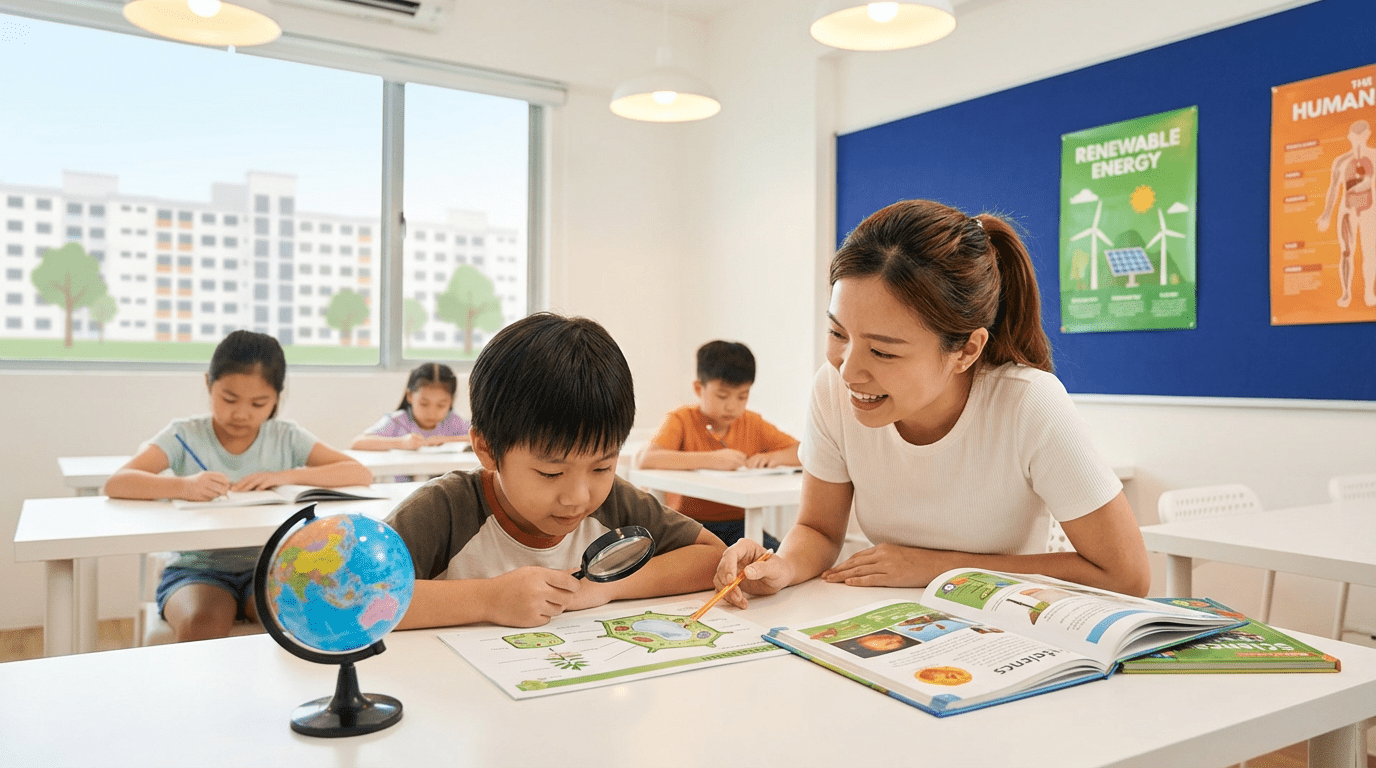
If your child has ever stared blankly at a science worksheet or come home frustrated after a test, you are not alone. Primary science is one of the most underestimated subjects in Singapore’s primary school curriculum — and by the time PSLE approaches, many parents wish they had acted sooner. The question most families ask is straightforward: is primary science tuition in Singapore actually worth the investment?
The honest answer depends on your child’s learning needs, the quality of support available, and how early you start. This article breaks down what primary science really demands of students, the tangible benefits of structured tuition, and what to look for when choosing the right centre — so you can make a confident, informed decision for your child.
Why Primary Science Matters More Than Parents Realise
Science is introduced as a formal subject in Primary 3, and from that point it carries significant weight all the way through to PSLE. Unlike Mathematics, which many children practise regularly at home, science is often left to classroom learning alone. This creates a gap that widens quickly, because the subject does not just test memorised facts — it tests a child’s ability to observe, reason, apply concepts, and communicate scientific ideas clearly in writing.
The PSLE Science paper is divided into two sections: multiple choice questions that test conceptual understanding, and open-ended questions that require structured written responses. Many students who understand the content still lose marks because they cannot articulate their answers using the precise scientific language the examiners expect. This is a skill that needs to be deliberately taught and practised, and it is rarely covered in enough depth during regular school lessons where teachers are managing large classes.
Beyond PSLE, the habits of scientific thinking built in primary school form the foundation for secondary science subjects such as Biology, Chemistry, and Physics. A child who leaves primary school with a strong grasp of scientific inquiry will find the transition to secondary science considerably smoother.
Signs Your Child May Need Additional Science Support
Not every child requires external tuition, but there are clear indicators that additional support would be beneficial. Parents should pay attention to patterns rather than isolated test results.
- Consistently scoring below 70% on school science tests despite studying
- Losing marks on open-ended questions even when the concept is understood
- Difficulty distinguishing between similar topics such as the water cycle and the digestive system
- Struggling to apply concepts to unfamiliar scenarios or new question types
- Expressing a dislike for science or anxiety before science examinations
- Gaps in foundation concepts from earlier primary levels that were never addressed
If several of these resonate, structured tuition can provide the focused, consistent practice your child needs. Early intervention, particularly before Primary 5 when the syllabus expands significantly, tends to produce better outcomes than last-minute PSLE preparation.
Key Benefits of Primary Science Tuition
Quality primary science tuition offers benefits that go well beyond improving test scores. When delivered in the right environment, it reshapes how a child thinks about and approaches the subject entirely.
1. Personalised Attention for Individual Learning Gaps
One of the most significant advantages of a good tuition centre is the ability to identify and address each child’s specific weaknesses. In a school classroom of 30 or more students, teachers simply do not have the time to diagnose why a particular child consistently drops marks on Cycles questions but performs well on Systems. In a small group tuition setting, tutors can pinpoint these patterns and design targeted practice around them.
2. Mastery of Open-Ended Answer Techniques
A large portion of marks in primary science examinations comes from open-ended questions, where students must construct responses using specific keywords and a logical structure. Tuition programmes that focus on answering techniques — such as identifying the key demand of the question, structuring cause-and-effect responses, and using precise scientific vocabulary — can dramatically improve a child’s score independent of their raw subject knowledge.
3. Concept Consolidation and Real-World Application
Good science tuition does not just drill past-year papers. It helps students understand the why behind concepts, which makes knowledge transferable to novel questions. When a child understands why plants need sunlight rather than simply memorising that they do, they can answer application-based questions they have never seen before — a critical skill for scoring well at PSLE level.
4. Rebuilding Confidence and Motivation
Children who have struggled with science for a prolonged period often carry negative associations with the subject. A patient, experienced tutor who celebrates small wins and provides consistent positive reinforcement can reverse this mindset over time. When a child starts to see improvement, their engagement with the subject at school typically improves as well — creating a productive cycle that benefits their overall academic performance.
What to Look for in a Primary Science Tuition Centre
Not all tuition centres are equal, and choosing the right one makes a meaningful difference to your child’s progress. Here are the most important factors to evaluate:
- Small class sizes: Classes of four to eight students allow tutors to monitor individual progress closely and address questions without any child feeling left behind.
- Qualified and experienced tutors: Look for tutors who have a strong understanding of the MOE primary science syllabus and are familiar with current PSLE marking schemes and question trends.
- Structured curriculum with clear progression: The programme should follow a logical sequence that builds foundational understanding before advancing to application and higher-order thinking questions.
- Regular assessments and feedback: Parents should receive updates on their child’s progress, not just at the end of the term but throughout the programme.
- Convenient location and scheduling: Consistency matters — a centre that is easily accessible from home or school makes it far more likely that your child attends regularly.
It is also worth asking the centre about their approach to students who fall behind. Do they offer make-up lessons? How do they handle children who need more time to grasp a concept? The answers will tell you a great deal about how the centre truly operates.
Addressing Common Parent Concerns
“My child is already doing fine — do they still need tuition?”
This is one of the most common questions parents ask. The answer depends on your child’s goals and the level of challenge they face as the syllabus progresses. A child scoring consistently in the B range may be performing adequately, but targeted tuition can help push them towards the A grade that makes a real difference in their PSLE aggregate. Additionally, as questions become more application-heavy in Primary 5 and 6, students who were previously coping may suddenly find the difficulty level has jumped significantly.
“Won’t extra tuition add too much pressure?”
This is a legitimate concern, and the quality of the tuition environment matters enormously here. Tuition that is conducted in a stressful, high-pressure manner can indeed be counterproductive. However, a supportive, well-paced programme with a nurturing tutor typically reduces a child’s exam anxiety rather than increasing it, because the child feels better prepared and more confident. The goal is to build competence, not to pile on additional hours of rote drilling.
“When is the right time to start?”
Ideally, Primary 3 or 4 is the best time to build a strong foundation, before the more demanding topics of Primary 5 and 6 come into play. However, it is never too late to start. Even a well-structured programme begun in Primary 6 can yield noticeable improvements if the student is engaged and the tutor is skilled. The earlier you act, though, the more time your child has to genuinely absorb and apply what they learn.
How EduFirst Makes a Difference
At EduFirst Learning Centre, primary science tuition is designed around one core belief: every child learns differently, and every child deserves to be seen. With over a decade of experience supporting students across Singapore since 2010, EduFirst has developed a curriculum that addresses both conceptual understanding and examination technique in equal measure.
Classes are intentionally kept small, with just four to eight students per group, so tutors can give each child the focused attention they need. This is not just a selling point — it is the structural foundation that makes personalised learning possible. Tutors are able to identify gaps in understanding early, adjust their explanations to suit different learning styles, and ensure that no child is quietly struggling while the lesson moves on.
EduFirst’s primary tuition programme covers all core subjects, including science, with a focus on building genuine competence rather than temporary test readiness. The centre operates across 25 locations islandwide, making it accessible for families in most parts of Singapore. For families who prefer flexible learning options, e-lessons are also available, offering the same quality of instruction in an online format.
Whether your child is just beginning Primary 3 science or preparing intensively for PSLE, EduFirst’s structured approach provides the consistency and quality of support that makes a measurable difference over time.
Final Verdict: Is Primary Science Tuition Worth It?
For most families in Singapore, primary science tuition is a worthwhile investment — particularly when started early, delivered in a small and supportive class environment, and focused on building both understanding and answering skills. The subject demands more than memorisation, and the open-ended examination format requires a level of structured thinking that benefits enormously from dedicated coaching.
The key is not simply enrolling your child somewhere, but choosing a programme that genuinely prioritises their individual progress. When the right tuition environment is found, the benefits extend well beyond improved grades: children develop stronger scientific reasoning, greater academic confidence, and a much more positive relationship with learning overall.
If you are considering support for other subjects as well, EduFirst also offers secondary tuition for older students and pre-school programmes for younger learners — making it a centre where families can find continuity of quality education at every stage.
Ready to Give Your Child the Science Edge?
Discover how EduFirst’s small-class primary science tuition can help your child build real confidence and achieve better results. With 25 convenient locations across Singapore and experienced tutors who genuinely care, getting started is easier than you think.