- May 16, 2026
What Is the Difference Between S-AEIS and AEIS?
Moving to Singapore with school-going children is an exciting new chapter — but it also comes with a fair share of paperwork, decisions, and unfamiliar processes. One of the first things parents encounter is the question of how their child gains entry into a Singapore government or government-aided school. This is where the AEIS and S-AEIS examinations come into the picture.
If you have been searching for clarity on what each test is, who needs to sit for which one, and how they differ from each other, you are in the right place. This guide breaks down both examinations in plain language, so you can make informed decisions and help your child prepare with confidence. Whether your child is entering primary or secondary school, understanding these two pathways is an essential first step in their Singapore schooling journey.
What Are AEIS and S-AEIS?
Both AEIS and S-AEIS are standardised admissions tests administered by the Ministry of Education (MOE) Singapore. They serve as the primary gateway for international students (non-Singapore Citizens and non-Permanent Residents) who wish to study in Singapore government or government-aided schools. Without passing one of these tests, international children generally cannot be directly enrolled in mainstream Singapore schools.
AEIS stands for Admissions Exercise for International Students, and it is held once a year, typically between September and October. S-AEIS stands for Supplementary Admissions Exercise for International Students, and as the name suggests, it is a supplementary round held in February of the following year for students who were unsuccessful in the main AEIS exercise or who missed it altogether.
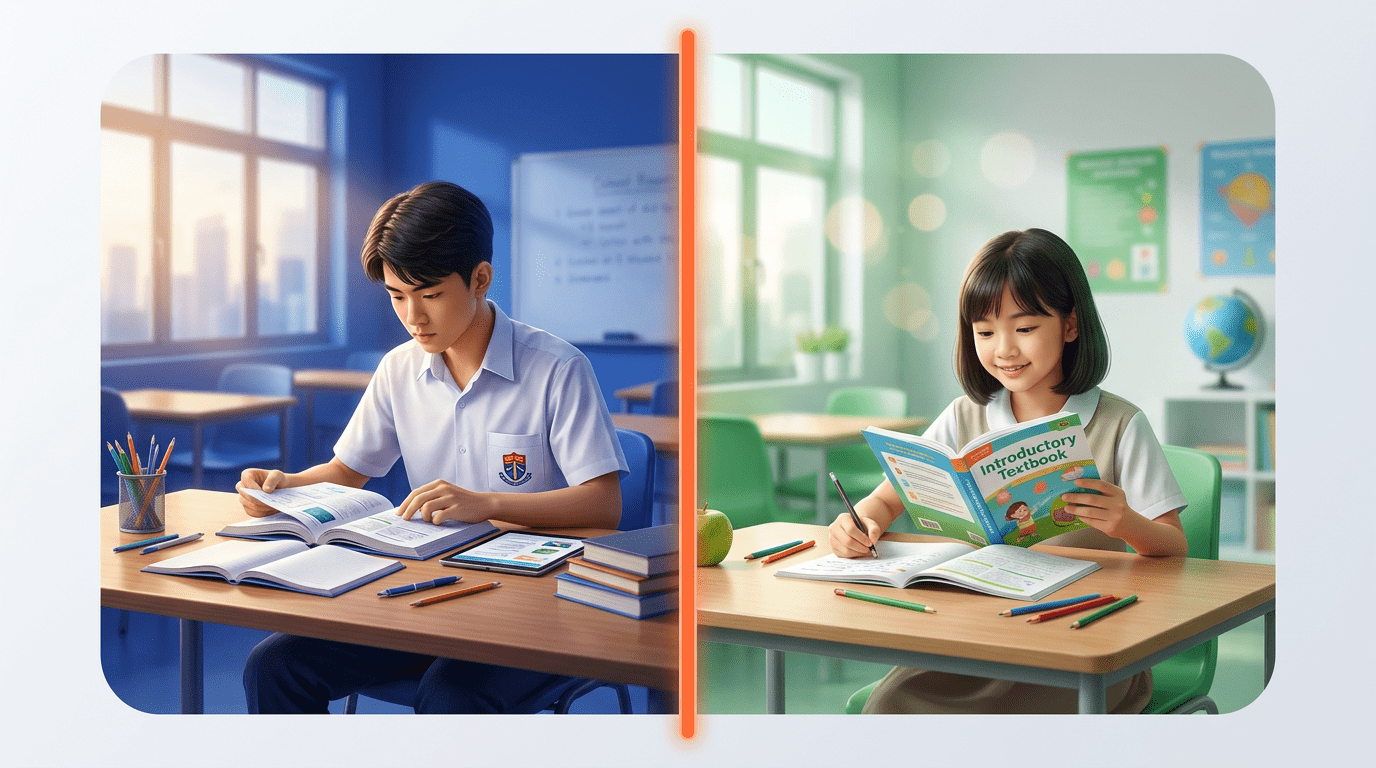
In short, AEIS is the main exercise and S-AEIS is the follow-up opportunity. Both tests assess the same core competencies, but they differ in timing, eligibility conditions, and availability of school vacancies.
Key Differences Between S-AEIS and AEIS
While S-AEIS and AEIS share the same overall purpose and test similar academic content, there are several important distinctions that parents need to understand before deciding which exercise their child should register for.
- Timing: AEIS is conducted between September and October each year, while S-AEIS is held in February the following year.
- Purpose: AEIS is the primary admissions exercise. S-AEIS is a supplementary round for those who need a second chance.
- Eligibility: AEIS is open to all eligible international students. S-AEIS is only available to students who sat for AEIS but were unsuccessful, or to those who did not participate in the AEIS that year.
- School vacancies: Because S-AEIS takes place after AEIS placements have been confirmed, the pool of available school vacancies is smaller. Students who pass AEIS generally have more school options to choose from.
- School start date: Students placed through AEIS typically begin school in January of the new year. Those placed through S-AEIS start later, often in March or April.
Understanding these differences is critical because they directly affect your child’s school start date, the range of schools available, and how much preparation time your family has. If your child is arriving in Singapore before August, sitting for the AEIS in September or October is the logical first step. If circumstances prevent that, S-AEIS provides a valuable second window.
Who Should Sit for Each Exam?
Eligibility for both AEIS and S-AEIS is governed by MOE’s guidelines, and there are a few important criteria to keep in mind. Both exercises are open to non-Singapore Citizens and non-Permanent Residents. Students must be between the ages of 7 and 16, seeking placement in Primary 2 through Secondary 4. Students who have previously studied in Singapore mainstream schools are generally not eligible to apply.
For AEIS, the exercise is suited to international students who are planning their move to Singapore in advance and can align their arrival with the September or October test window. Families who know they will be relocating by the end of the year should prioritise AEIS registration, as it offers more school placement options.
For S-AEIS, it is the right choice if your child participated in the most recent AEIS but did not receive a placement offer, or if your family’s relocation timeline means you arrived in Singapore after the AEIS registration window had closed. It is also worth noting that a student can only sit for the same level of the exam a limited number of times, so families should plan carefully and not rely solely on multiple attempts.
Exam Format and Subjects Tested
Both AEIS and S-AEIS test students in English Language and Mathematics. The difficulty level and format of the papers are calibrated to the level of school entry the student is applying for. A child applying for Primary 3 entry, for example, will face a different paper than one applying for Secondary 1 entry.
The English papers assess reading comprehension, vocabulary, grammar, and writing skills. The Mathematics papers test problem-solving ability, numerical reasoning, and conceptual understanding across topics that are aligned with the Singapore mathematics curriculum. There is no science component in either exercise, even for secondary school applicants.
It is important to understand that the Singapore curriculum has its own distinct style, particularly in Mathematics. Singapore’s math curriculum is internationally recognised for its emphasis on deep conceptual understanding and structured problem-solving methods. International students who are unfamiliar with this approach may find the exam challenging even if they are otherwise strong in mathematics. This is one of the key reasons targeted preparation with experienced educators makes such a meaningful difference.
For families preparing children for primary school entry or secondary school entry, working with a tuition provider who understands the Singapore curriculum inside and out can help bridge these gaps efficiently.
Registration and Timeline
Registration for both AEIS and S-AEIS is done online through the MOE website. For AEIS, registration typically opens in August and closes a few weeks before the exam in September or October. For S-AEIS, registration is usually open in January, with the exam taking place in February.
Parents are advised to monitor the MOE website closely for exact dates each year, as these can shift slightly. Missing the registration window means waiting for the next exercise, which could result in your child being out of school for an extended period. Planning ahead and marking these dates on your calendar as early as possible is strongly recommended.
Results for both exercises are released within a few weeks of the exam. Successful students will receive placement offers from MOE, which they must accept or decline within a stipulated period. Families who do not receive offers may explore private school options or wait for the next admissions exercise.
School Placement After the Exam
One of the most important things to understand is that passing the AEIS or S-AEIS does not guarantee admission to a specific school. MOE allocates students to schools based on available vacancies at the time of placement. Students and parents cannot choose their preferred school; instead, MOE considers factors such as the student’s performance, the level applied for, and the location of available school places.
Because AEIS takes place earlier in the year and placements are made before the academic year begins in January, the number of available school places is generally larger. S-AEIS placements, by contrast, are made from whatever vacancies remain after AEIS is completed. This is a practical reason why families who can sit for AEIS should do so, as it increases the likelihood of placement in a school that is geographically closer to home or better suited to their child’s needs.
It is also worth noting that students who do not receive a placement offer after either exercise may need to explore alternatives such as private schools or international schools while preparing for the next admissions window.
How to Prepare Your Child for S-AEIS or AEIS
Preparation is everything when it comes to these admissions exercises. Because the exams are aligned with the Singapore national curriculum, international students often face a gap between what they have learned in their home country and what is expected in Singapore classrooms. The good news is that this gap can be bridged with structured, focused preparation under the right guidance.
Here are some effective ways to prepare your child:
- Familiarise with the Singapore curriculum: Review past exam papers and MOE-aligned materials to understand the style and format of questions your child will encounter.
- Focus on English comprehension and composition: Singapore English papers are rigorous. Practice reading a variety of texts and writing structured responses regularly.
- Master Singapore Math methods: Even if your child is strong in math, ensure they understand the Singapore model method and heuristics-based problem-solving approach.
- Enrol in a structured tuition programme: A reputable tuition centre with experience in Singapore curriculum preparation can provide targeted practice, constructive feedback, and exam strategies.
- Build a consistent study routine: Regular, focused practice over several months is far more effective than last-minute cramming. Start as early as possible once the decision to sit for the exam is made.
At EduFirst Learning Centre, we have been supporting students across Singapore since 2010 with personalised tuition in small class sizes of just 4 to 8 students. This means your child receives the individual attention they need to fill learning gaps and build genuine confidence before their exam. Our experienced educators understand the Singapore curriculum deeply and can help international students get up to speed efficiently. Whether your child is preparing for primary or secondary level entry, our primary tuition and secondary tuition programmes are designed to deliver real, measurable results.
For families who prefer the flexibility of learning from home, our e-lessons offer the same quality instruction in an online format, making it easy to begin preparation even before you arrive in Singapore.
Final Thoughts
The difference between AEIS and S-AEIS comes down to timing, opportunity, and strategy. AEIS is the main admissions exercise held each year in September or October, offering the broadest range of school placements. S-AEIS is the supplementary exercise held in February for those who missed AEIS or were unsuccessful. Both test English and Mathematics at the level your child is applying for, and both require solid preparation — especially for students who are new to the Singapore curriculum.
The most important takeaway for parents is this: plan early, register on time, and invest in proper preparation. Singapore’s education standards are world-class, and with the right support, your child can not only pass these exams but genuinely thrive in the local school environment. Understanding the difference between these two exercises is the first step — taking action is the next one.
Ready to Give Your Child the Best Start?
At EduFirst Learning Centre, our experienced tutors have helped hundreds of students prepare for AEIS and S-AEIS across our 25 locations islandwide. With small class sizes of just 4 to 8 students, your child will receive the focused, personalised attention they need to succeed.