- May 18, 2026
Is Homeschooling Legal in Singapore? Requirements and Options Explained
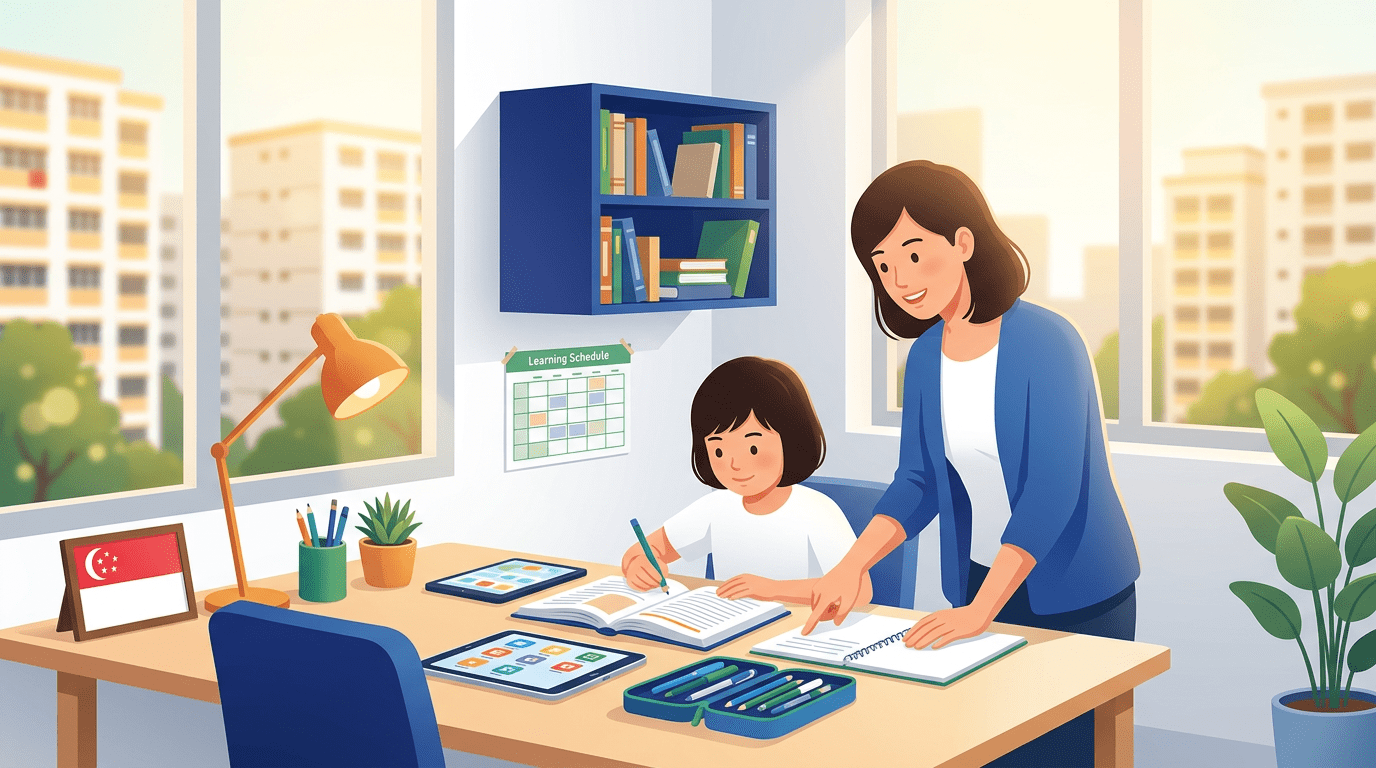
Every year, a small but growing number of Singaporean families find themselves asking a bold question: can we educate our children at home? Whether driven by concerns about learning differences, a desire for a more flexible curriculum, or deeply held educational philosophies, the idea of homeschooling in Singapore is no longer as fringe as it once seemed. But before parents pack away the school bag for good, there is one critical question that must be answered first — is it actually legal?
The short answer is yes, homeschooling is legal in Singapore, but it comes with important conditions and a formal approval process. Singapore’s education system is highly structured, and the government takes compulsory schooling seriously. That means parents cannot simply choose to keep their child home without following a defined legal pathway. This article breaks down exactly how homeschooling works under Singapore law, what the Ministry of Education requires, what curriculum options are available, and how supplementary tuition can play a valuable role in a home-based education journey.
The Quick Answer
Yes — homeschooling is legal in Singapore, but requires a formal MOE exemption. You cannot simply keep your child home without official approval.
5 Key Facts to Know
How to Apply: Step-by-Step
Contact MOE’s Compulsory Education Unit and prepare your application carefully.
Contact MOE
Reach out to the Compulsory Education Unit to begin your enquiry
Prepare Documents
Draft your detailed educational plan, curriculum choice & social plans
Submit Application
Submit formal written request with all supporting documentation
Ongoing Review
MOE reviews progress periodically — exemption is not permanent
What MOE Looks For
Academic Rigour
Curriculum must match national syllabus standards
Parental Capability
Qualifications or teaching experience assessed
Socialisation Plan
Regular peer interaction opportunities required
Progress Monitoring
Clear tracking & assessment plan must be in place
Curriculum Options at a Glance
International Curricula
Cambridge, American K-12, or IB frameworks. Ideal for families considering international schooling or re-entry into formal education.
Local Aligned Programme
Mirrors Singapore national syllabus using MOE-approved textbooks. Easiest path for potential re-entry into national schools.
Eclectic / Interest-Led
Blended, personalised approach. Engaging but requires thorough documentation for MOE’s ongoing reviews.
Common Challenges — and How to Tackle Them
You Don’t Have to Go It Alone
EduFirst Learning Centre supports homeschooled students with small-group personalised tuition — primary, secondary & online e-lessons.
edufirst.com.sg | Personalised Tuition for Singapore Students | Primary · Secondary · Online
Is Homeschooling Legal in Singapore?
Yes, homeschooling is legal in Singapore, but it is not a default right. Under Singapore law, all children who are Singapore citizens between the ages of 6 and 15 are subject to compulsory education. This means attendance at a national primary school is mandatory unless a family formally applies for and is granted an exemption by the Ministry of Education (MOE). Parents who wish to homeschool must go through this exemption process; educating a child at home without official approval is not permitted and could result in legal consequences.
It is worth noting that homeschooling in Singapore occupies a relatively niche space. The vast majority of families educate their children through the national school system, and MOE does not actively promote homeschooling as an alternative. Nevertheless, the option exists, and families who meet the right criteria and demonstrate a credible educational plan are regularly granted exemptions each year. The process is structured but accessible for parents who are prepared and committed.
Understanding the Compulsory Education Act
The legal foundation for compulsory schooling in Singapore is the Compulsory Education Act, which was enacted in 2003. This legislation requires all Singapore citizen children to attend a national primary school from Primary 1 through to the end of primary education, broadly spanning ages 6 to 12. After primary school, education is not legally compulsory in the same formal sense, though secondary schooling is strongly encouraged and virtually universal.
Under this Act, parents or guardians are responsible for ensuring their child attends school. Failure to comply without an approved exemption can result in fines or other legal action. The Act does, however, include a provision for exemptions, which is the legal doorway through which homeschooling becomes possible. Exemptions are granted at MOE’s discretion, and each application is evaluated on a case-by-case basis. This is why preparation and a well-documented educational plan are so important for families considering this path.
How to Apply for a Homeschooling Exemption
The exemption application process is managed directly through the Ministry of Education. Parents should begin by contacting MOE’s Compulsory Education Unit, which handles all enquiries and applications related to homeschooling. The application typically involves submitting a formal written request along with supporting documentation that demonstrates why home-based education is appropriate for the child and how the parents intend to deliver a quality education.
While MOE does not publish a rigid checklist of required documents, most successful applications include the following types of supporting material:
- A detailed educational plan outlining subjects, curriculum, and learning goals
- Evidence of the parents’ ability to teach, such as academic qualifications or teaching experience
- Information about the curriculum or educational programme to be used
- Plans for social interaction and co-curricular development
- Any relevant medical, psychological, or specialist reports if the application is health-related
Once an exemption is granted, it is not permanent. MOE typically reviews the arrangement periodically, and parents are expected to demonstrate that the child’s education is progressing satisfactorily. Families should be prepared for ongoing accountability, which may include assessment of the child’s academic progress over time.
What MOE Looks For: Key Requirements
MOE evaluates homeschooling applications with a primary focus on the welfare and educational outcomes of the child. There is no single factor that guarantees approval, but the ministry generally looks for evidence that the home education environment will be structured, rigorous, and socially enriching. Parents are expected to show that their child will not be disadvantaged compared to peers attending national schools.
Key considerations include the following:
- Academic rigour: The proposed curriculum must cover core subjects and meet educational standards comparable to the national syllabus
- Parental capability: MOE assesses whether the parent or primary educator has the knowledge and skills to deliver effective teaching
- Socialisation: Children must have adequate opportunities for peer interaction, which may include community classes, co-curricular activities, or homeschool groups
- Progress monitoring: A clear plan for tracking and assessing the child’s academic development must be in place
- Special circumstances: Applications are more commonly approved where there is a documented medical condition, learning disability, or other compelling reason that makes mainstream schooling unsuitable
It is important to approach the MOE application with honesty and thoroughness. Families who provide vague or underdeveloped plans are far less likely to receive approval than those who submit detailed, well-researched proposals that reflect genuine commitment to the child’s education.
Homeschooling Curriculum Options in Singapore
Once a family has obtained MOE approval, the next major decision is choosing a curriculum. Unlike in countries with long homeschooling traditions, Singapore does not have a government-provided homeschooling programme, so parents must source their own materials and structure. There are several broad approaches that families in Singapore tend to adopt.
International curricula are popular among homeschooling families here. Options such as the Cambridge International curriculum, the American K-12 model, or the International Baccalaureate framework provide structured, well-recognised programmes with clearly defined learning outcomes. These are particularly useful for families who may plan to transition their child back into a formal school setting eventually, or who are raising children with international schooling aspirations.
Locally aligned home programmes attempt to mirror the Singapore national syllabus, using MOE-approved textbooks and workbooks. This approach keeps the child academically on par with peers and makes re-entry into the national school system more straightforward. Parents using this approach often supplement with commercially available assessment books, online resources, and structured tuition.
Eclectic or interest-led approaches blend different resources and teaching philosophies to create a personalised learning plan. While this can be engaging and responsive to a child’s learning style, it requires more planning effort from parents and may need careful documentation to satisfy MOE’s ongoing review requirements.
Regardless of the curriculum chosen, most homeschooling families in Singapore also consider whether their child will eventually sit for national examinations such as the PSLE or the GCE O-Levels. Private candidates can sit for these examinations, but preparation requires careful planning and targeted academic support.
Common Challenges Homeschooling Families Face
Homeschooling is not without its difficulties, and parents considering this path should go in with realistic expectations. The demands placed on the primary teaching parent are significant, covering lesson planning, instruction, progress tracking, and sourcing materials — all while managing family life. Burnout is a genuine concern, particularly for families homeschooling multiple children across different levels.
Socialisation is another common concern. Children in national schools benefit from daily peer interaction, teamwork, and shared experiences that naturally build social skills. Homeschooled children need deliberate and regular opportunities for socialisation, whether through community classes, sports groups, church or religious communities, or dedicated homeschool cooperatives where families share teaching responsibilities.
There is also the question of academic rigour and objectivity. It can be difficult for a parent to accurately gauge whether their child is progressing at an appropriate pace, particularly in subjects outside their own expertise. Without external benchmarks, gaps in learning can sometimes go unnoticed until they become significant. This is one of the strongest arguments for incorporating structured external academic support into a homeschooling plan.
How Tuition Centres Can Support Homeschooled Students
Many homeschooling families in Singapore find that partnering with a reputable tuition centre significantly strengthens their child’s educational experience. A tuition centre provides structured academic instruction from experienced educators, offers an objective assessment of the child’s progress, and introduces an element of peer learning that is difficult to replicate in a home environment. For homeschooled students preparing for national examinations as private candidates, this kind of targeted academic support can be the difference between passing and excelling.
At EduFirst Learning Centre, we work with students at both the primary and secondary levels, offering personalised tuition in small classes of just 4 to 8 students. This means every child receives meaningful individual attention from their tutor — something that resonates deeply with the values many homeschooling families already hold. Whether your child needs comprehensive support across multiple subjects or targeted help in a specific area, our programmes are designed to meet students where they are and move them forward with confidence.
For younger homeschooled children, our primary tuition programmes provide structured learning in key subjects aligned with Singapore’s curriculum standards, helping children build strong academic foundations. For older students navigating more complex content, our secondary tuition programmes offer expert guidance across subjects including English, Mathematics, and the Sciences. Families who prefer the flexibility of learning from home can also explore our e-lessons, which bring quality instruction to your child without requiring travel to a centre.
Homeschooling parents often appreciate the transparency and communication that comes with a small, dedicated tuition centre. At EduFirst, our educators are invested in each student’s progress, and we work closely with families to ensure our support aligns with the broader learning goals parents have set for their children.
Final Thoughts
Homeschooling in Singapore is a legitimate educational option, but it is one that requires careful planning, formal approval from MOE, and a serious commitment from the entire family. The legal framework is clear: parents must apply for an exemption under the Compulsory Education Act, demonstrate a credible educational plan, and maintain accountability for their child’s progress over time. Done well, homeschooling can offer a richly personalised learning experience tailored to a child’s unique strengths, interests, and pace.
At the same time, no homeschooling parent needs to go it entirely alone. Whether you are looking for structured academic support, preparation for national examinations, or simply a reliable way to benchmark your child’s progress against curriculum standards, professional tuition can play a meaningful and complementary role in your child’s home education journey. The goal, ultimately, is the same as it is for every family: a child who is curious, capable, and well-prepared for the future ahead.
Looking for Academic Support for Your Homeschooled Child?
EduFirst Learning Centre has been helping Singapore students reach their potential since 2010. With small class sizes of just 4 to 8 students across 25 locations islandwide, our experienced tutors provide the personalised attention your child deserves — whether you are homeschooling full-time or looking to supplement your home programme with expert tuition.