- May 27, 2026
How Much Does Student Care Cost in Singapore? A Complete Fee Guide for Parents

If you’ve recently started comparing student care centres in Singapore, you’ve probably noticed that the fees listed on brochures rarely tell the full story. A centre might advertise a base rate of $380 per month, but by the time you factor in snacks, dinner, transport, holiday programmes, and a security deposit, the real cost could be double that figure. For parents trying to plan a household budget — especially with school holidays arriving every few months — these surprises are more than inconvenient.
The truth is, student care in Singapore spans an enormous range, from under $200 a month at a school-based centre to over $900 at a premium community provider. Understanding why that range exists, what you actually get at each level, and how to access government subsidies that can significantly reduce your costs is essential knowledge for any family with a primary school child. This guide walks you through the complete 2026 cost picture — monthly fees, hidden charges, upfront costs, subsidy schemes, and the questions that will help you make a confident, well-informed decision.
What Is Student Care and Who Is It For?
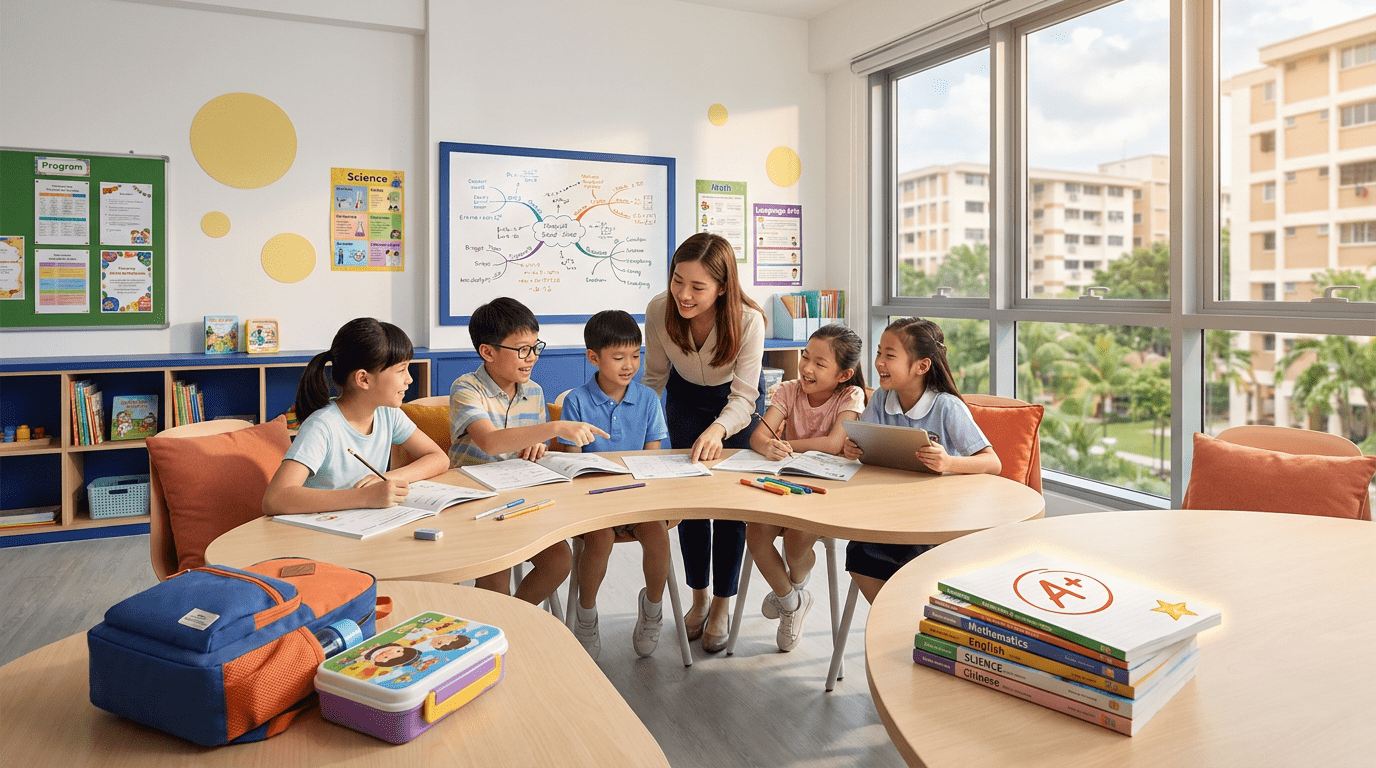
Student care centres (SCCs) are licensed after-school facilities designed for primary school children, typically aged 7 to 14. They exist to bridge the daily gap between school dismissal — usually around 1:30 PM to 3:00 PM — and the time working parents can collect their children in the evening. Beyond supervision, quality centres provide homework guidance, structured activities, enrichment programmes, and nutritious meals, creating a productive and nurturing environment for children during those critical after-school hours.
In Singapore, all student care centres serving as fee assistance administrators must be registered with the Ministry of Social and Family Development (MSF). This registration is important for two reasons: it signals that the centre meets baseline standards for safety, staffing, and programming, and it is a prerequisite for families to access government fee subsidies. When you begin comparing options, always confirm MSF registration status before making any other assessment.
School-Based vs. Community-Based: What’s the Difference?
Singapore’s student care landscape is broadly divided into two models, and understanding which type you’re looking at will immediately set your fee expectations. School-based student care centres operate within primary school premises, meaning children simply move from their classrooms to the care area without leaving the campus. This convenience is genuinely valuable — no transport logistics, no transition anxiety, and a familiar environment for younger children. Fees for school-based centres tend to be lower, typically between $160 and $350 per month, partly because these centres use existing school facilities and face lower rental costs.
Community-based student care centres, on the other hand, are independently operated facilities located in HDB void decks, residential estates, community centres, or commercial spaces near schools. Children are transported or walk to these centres after school, and many providers arrange school pick-up services. Community-based centres generally charge more — fees can range from $400 to over $900 per month — but they often justify this with purpose-built learning environments, lower student-to-teacher ratios, broader enrichment offerings, and greater holiday programme flexibility. Unlike school-based centres, which typically follow the school calendar and do not operate on weekends or during holidays, community-based centres can usually accommodate children during all four school holiday periods.
The choice between these two models is not simply a matter of budget. It involves thinking about your child’s personality, commute logistics, and whether the academic and enrichment programming on offer genuinely matches your child’s needs. A school-based centre may be a practical fit for a child who dislikes transitions, while a community-based centre with a stronger academic support structure may be the better investment for a child who needs more guided homework time or targeted subject help.
Monthly Fee Breakdown: What You Can Expect to Pay in 2026
Monthly student care fees in Singapore fall roughly into three tiers, each reflecting a different level of service, location, and centre positioning. Here is a realistic overview based on current market rates:
- School-based centres: $160 – $350 per month. Basic supervision, homework guidance, and standard activities using existing school facilities.
- Budget-friendly community centres: $250 – $400 per month. Often run by non-profit organisations or voluntary welfare groups in HDB heartland locations.
- Mid-range community centres: $400 – $600 per month. Better student-to-teacher ratios, more structured academic support, and some enrichment included.
- Premium community centres: $600 – $900+ per month. Specialised curricula, purpose-built facilities, extended hours, comprehensive enrichment, and prime locations.
It’s important to note that these figures represent advertised base rates, not total costs. The gap between the base rate and what a family actually pays each month can be significant once meals, transport, materials, and enrichment add-ons are included. When comparing two centres side by side, always work from a fully loaded monthly figure, not just the headline number.
What’s Included in the Monthly Fee (and What Isn’t)
At a minimum, your monthly student care fee should cover after-school supervision until the centre’s closing time (commonly 7:00 PM on weekdays), homework assistance, basic recreational activities, and daily attendance tracking. Most reputable centres also include character development programming and access to their core learning spaces. However, what counts as “included” versus “extra” varies considerably between providers, and this is where careful comparison really matters.
Meals are one of the most variable elements. Some centres include both an afternoon snack and dinner in their monthly fee, while others charge per item, typically between $2 and $4 per meal. Over a full month, separate meal charges can add $80 to $150 to your actual costs. Similarly, transportation from the school gate to the centre may be bundled into the monthly fee or charged separately, usually between $40 and $100 depending on distance. Always ask about both before comparing quotes.
Learning materials are handled differently across centres too. Some include all workbooks, art supplies, and activity materials in the monthly fee. Others charge an annual materials fee of $50 to $200, or bill parents directly for specific resources as they are used. Neither approach is inherently better, but knowing which model a centre uses prevents unwelcome mid-year charges. Enrichment programmes — things like coding, music, drama, or sports — are typically offered as paid add-ons rather than core inclusions, though some mid-range and premium centres bundle at least one enrichment stream into their base pricing.
Hidden Costs That Add Up Over the Year
Beyond the monthly fee and its common add-ons, several cost categories catch parents off guard because they are either infrequent, not prominently advertised, or bundled into promotional materials in misleading ways. The biggest of these is holiday programme fees. Most student care centres charge separately for care during Singapore’s four school holiday periods. Depending on the centre and whether special activities, excursions, or camps are included, weekly holiday programme fees typically range from $200 to $500. For families who require full-day care across all four holiday periods, this can add $3,200 to $8,000 to your annual student care bill — a figure that rarely appears in any upfront fee comparison.
Other costs worth factoring in include peak-hour supplements at centres that charge extra for pickups close to closing time (typically $50–$100 per month), late payment fees (often $20–$50 per instance), late pickup penalties that can accrue per minute after a grace period, and examination period supplements at some centres that provide intensive revision support during PSLE preparation. These charges are individually modest, but they accumulate meaningfully over an academic year. Building a realistic annual budget means accounting for all of them, not just the twelve monthly base fees.
Registration Fees and Security Deposits Explained
Before your child attends their first session, most centres will collect two types of upfront payment. The registration fee is a one-time, typically non-refundable charge ranging from $50 to $200 that covers administrative processing and initial assessments. Because this fee is rarely returned even if your child doesn’t ultimately attend, parents who want to evaluate multiple centres before committing sometimes hesitate to register at several simultaneously — a reasonable caution worth keeping in mind during your shortlisting process.
The security deposit, usually equivalent to one or two months’ fees, is a different matter entirely. Unlike the registration fee, this amount should be refunded when your child leaves the centre, provided you give the required notice period (typically one month) and have no outstanding balances. Always request written documentation that clearly states the deposit amount, the refund conditions, and the timeline for receiving it back after withdrawal. Some centres also collect a separate materials or equipment deposit of $100 to $300 if they provide devices or specialist equipment for student use. Together, these upfront costs mean that the true cost of enrolling a child can easily reach $600 to $1,500 in the first month alone before any recurring fees kick in.
Government Subsidies: SCFA and Other 2026 Schemes
The Singapore government provides meaningful financial support to working families who need help with student care costs. The primary scheme is the Student Care Fee Assistance (SCFA), administered by MSF. As of 2026, SCFA is available to families whose gross household income (GHHI) is $4,500 or less per month for families with four or fewer members, or whose per capita income (PCI) is $1,125 or less for households with five or more members. Both parents must be working at least 56 hours per month each, and the child must be enrolled at an MSF-registered centre that administers SCFA subsidies.
The subsidy is paid directly by MSF to the student care centre, reducing the amount parents pay monthly. For eligible families, the subsidy can cover a substantial portion of monthly fees — in some cases, families pay as little as a few dollars per month after the subsidy is applied. Importantly, Budget 2026 announced further enhancements to SCFA income tiers, with changes set to take effect from 1 January 2027, which will broaden eligibility and ease cost pressures for lower- and lower-middle-income families further. If your household income is near the current threshold, it is worth checking the updated criteria closer to that date.
Beyond SCFA, additional support is available through ComCare Student Care Subsidies for families already receiving ComCare assistance, as well as grants from self-help groups including CDAC, SINDA, Mendaki, and the Eurasian Association for families from respective communities. Some employers also provide childcare-related benefits that can be applied to student care expenses — a frequently overlooked option that can further reduce net costs for working parents. Applications for SCFA are submitted online through the SupportGoWhere portal, and the subsidy is reviewed annually, so families must reapply to confirm their continued eligibility.
How to Evaluate Value for Money
With such wide variation in pricing, the most useful exercise you can do before committing to a centre is calculating a true all-in annual figure. Take the monthly base fee, add any meal charges, transport costs, and materials fees, multiply by twelve, and then add your estimated holiday programme costs. This total, rather than the headline monthly rate, is the number that should drive your comparison. A centre advertising $420 per month but charging separately for meals ($120) and transport ($80) actually costs $620 per month — more than a competitor charging $550 all-in.
Beyond pure cost, the student-to-teacher ratio is one of the most important quality indicators. Ratios in Singapore student care centres commonly range from 1:15 at premium community-based providers to 1:25 or higher at school-based centres. A lower ratio means your child receives more individual attention during homework time and activities — a genuinely meaningful difference for children who need academic guidance rather than just supervision. Ask every centre you visit for their actual ratio during peak hours, not just an average, as the experience during busy afternoon sessions is what your child will encounter daily.
Also consider operating hours and holiday flexibility, particularly if your work schedule extends past 6:30 PM or if you rely on full-day care during school holidays. Centres that close at 7:00 PM sharp and do not offer holiday programmes effectively require you to make separate childcare arrangements four times a year, which adds both cost and logistical complexity. Finally, visit each centre in person before making a decision. The physical environment — whether it feels purposeful, warm, and well-maintained — tells you things that websites and brochures never will.
The Academic Support Gap: When Student Care Isn’t Enough
A point that many fee comparison guides overlook is the distinction between homework supervision and genuine academic support. Most student care centres — even good ones — provide the former rather than the latter. Teachers circulate, ensure children stay on task, and answer general questions, but they are not providing the kind of structured, subject-specific instruction that helps children who are struggling with a particular topic or working towards a demanding examination like the PSLE. For primary school children who need deeper academic support, student care and tuition serve fundamentally different purposes.
If your child is finding certain subjects challenging, or if you want to build stronger foundations alongside their student care arrangement, EduFirst’s Primary Tuition programme is designed specifically for this. With small class sizes of just 4 to 8 students across 25 locations islandwide, EduFirst ensures every child receives the focused attention that standard student care homework supervision simply cannot provide. For parents of secondary school children, EduFirst’s Secondary Tuition offers the same small-group, personalised approach to help students navigate a more demanding curriculum. For families who need flexibility, EduFirst’s e-Lessons bring the same quality of instruction online, fitting around school and student care schedules. And if your younger child is still in the preschool years, EduFirst’s Pre-School programme builds the foundational skills that make the transition to primary school smoother.
Key Questions to Ask Before You Enrol
Armed with a solid understanding of how student care pricing works, you are in a much stronger position to evaluate any centre you visit. The following questions will help you surface the information that marketing materials rarely volunteer:
On fees and inclusions:
- What is the total monthly cost including meals, transport, and materials — not just the base fee?
- Are holiday programmes mandatory or optional, and what do they cost per week?
- Are there any examination period supplements, peak-hour charges, or activity fees not mentioned in the brochure?
On deposits and withdrawals:
- How much is the security deposit, and what are the exact conditions and timeline for its refund?
- What notice period is required for withdrawal, and does giving insufficient notice affect my deposit?
On subsidies and eligibility:
- Is your centre registered with MSF to administer SCFA subsidies?
- Can you assist us with the SCFA application process?
On programme quality:
- What is your actual student-to-teacher ratio during afternoon peak hours?
- What qualifications do your supervising teachers hold?
- What enrichment programmes are included in the base fee, and which are paid add-ons?
- How do you handle children who need extra academic support beyond general homework supervision?
Request a complete written fee schedule rather than relying on verbal answers. This document protects both you and the centre, and any reputable provider will have one ready to share. If a centre is evasive about its full cost structure, that tells you something important before you commit to a year-long enrolment.
Making the Right Choice for Your Family
Student care in Singapore represents a significant annual investment, and the real cost — once registration, deposits, meals, transport, enrichment, and holiday programmes are factored in — typically falls somewhere between $4,000 and $12,000 per year depending on the type of centre and services you choose. The advertised monthly fee is rarely the number that matters most. What matters is the fully loaded annual figure, how well the centre’s programme serves your child’s specific needs, and whether the environment and teaching quality justify the price.
Government subsidies through SCFA can substantially reduce costs for eligible working families, and with Budget 2026 enhancements taking effect in January 2027, more families are set to benefit. Always verify whether a centre is MSF-registered before enrolling, and apply for SCFA early — the process takes several weeks and is best completed before your child starts attending.
Finally, remember that student care supervision and targeted academic support are two different things. If your child needs more than homework supervision to keep pace with the primary school curriculum, a quality tuition programme running alongside student care is often the most effective combination. Understanding the full cost landscape for both will help you build a realistic education budget and make choices you feel confident in throughout your child’s primary school years.
Looking for Quality Academic Support Alongside Student Care?
EduFirst Learning Centre has been helping primary and secondary students across Singapore build stronger academic foundations since 2010. With small class sizes of just 4 to 8 students and 25 locations islandwide, our personalised approach ensures every child gets the attention they need — not just supervision.