- May 30, 2026
Student Care Holiday Programmes: What Your Child Will Actually Do

Every June and December, the same question lands in parent WhatsApp groups across Singapore: “What are you doing with your kids during the holidays?” And every year, many parents find themselves signing up for a student care holiday programme without a clear picture of what their child will spend six or eight hours doing each day.
That uncertainty is completely reasonable. “Holiday programme” is a broad term that can mean anything from structured academic revision to loosely supervised free play — and the difference matters enormously, both for your child’s development and your peace of mind. This article breaks down exactly what happens inside a quality student care holiday programme in Singapore: the daily schedule, the academic support, the enrichment activities, and the less-talked-about social and emotional benefits. By the end, you’ll have a clear picture of what to look for and what questions to ask before you commit.
Why Parents Keep Asking This Question
The honest answer is that holiday programme marketing tends to be heavy on feel-good language and light on specifics. Phrases like “fun-filled learning” and “holistic development” appear on almost every centre’s website, but they don’t tell you whether your Primary 3 child will be revising fractions, doing art projects, watching videos, or some combination of all three. Parents deserve better than that — and the best way to evaluate any programme is to understand what a realistic school holiday day actually looks like from the inside.
There’s also a practical concern. School holidays in Singapore, particularly the June and December breaks, are long enough that unstructured time at home can lead to significant learning loss. Research consistently shows that children who do not engage in any form of structured learning during extended school breaks can slip back on skills they worked hard to build during term time. A well-designed holiday programme addresses this directly — but only if the academic component is genuinely substantive, not a token hour of worksheet-filling sandwiched between hours of screen time.
Student Care Holiday Programme vs. Holiday Tuition: What’s the Difference?
Before diving into daily activities, it’s worth clarifying the distinction between two terms that are often used interchangeably but actually describe different products. Understanding this will help you choose the right fit for your child’s needs.
Student care holiday programmes are full-day or near-full-day arrangements that combine supervised care with structured activities. They’re designed for working parents who need a safe, engaging environment for their child throughout the holiday. The programme typically blends academic support, enrichment activities, outdoor time, and social interaction across the full day.
Holiday tuition programmes are shorter, subject-focused sessions — usually two to three hours — targeting specific academic goals like exam preparation, subject catch-up, or getting ahead before the next school term. They’re ideal for families who want targeted academic intervention without a full-day commitment.
Many quality providers, including EduFirst Learning Centre, offer both formats, allowing parents to choose based on their schedule and their child’s priorities. Some families even combine both: full-day student care for supervision and enrichment, with dedicated primary tuition sessions woven in for focused academic work.
What a Typical Day Actually Looks Like
A well-structured student care holiday programme follows a rhythm that balances learning, activity, and rest — much like a well-designed school day, but with more flexibility and a lighter atmosphere. Here’s what a quality full-day programme generally looks like in practice:
Morning arrival and settling in (8:00–9:00am): Children arrive, have breakfast if provided, and transition into the day. Good programmes use this time for quiet reading, journaling, or light revision rather than immediate structured instruction, which helps children ease in without stress.
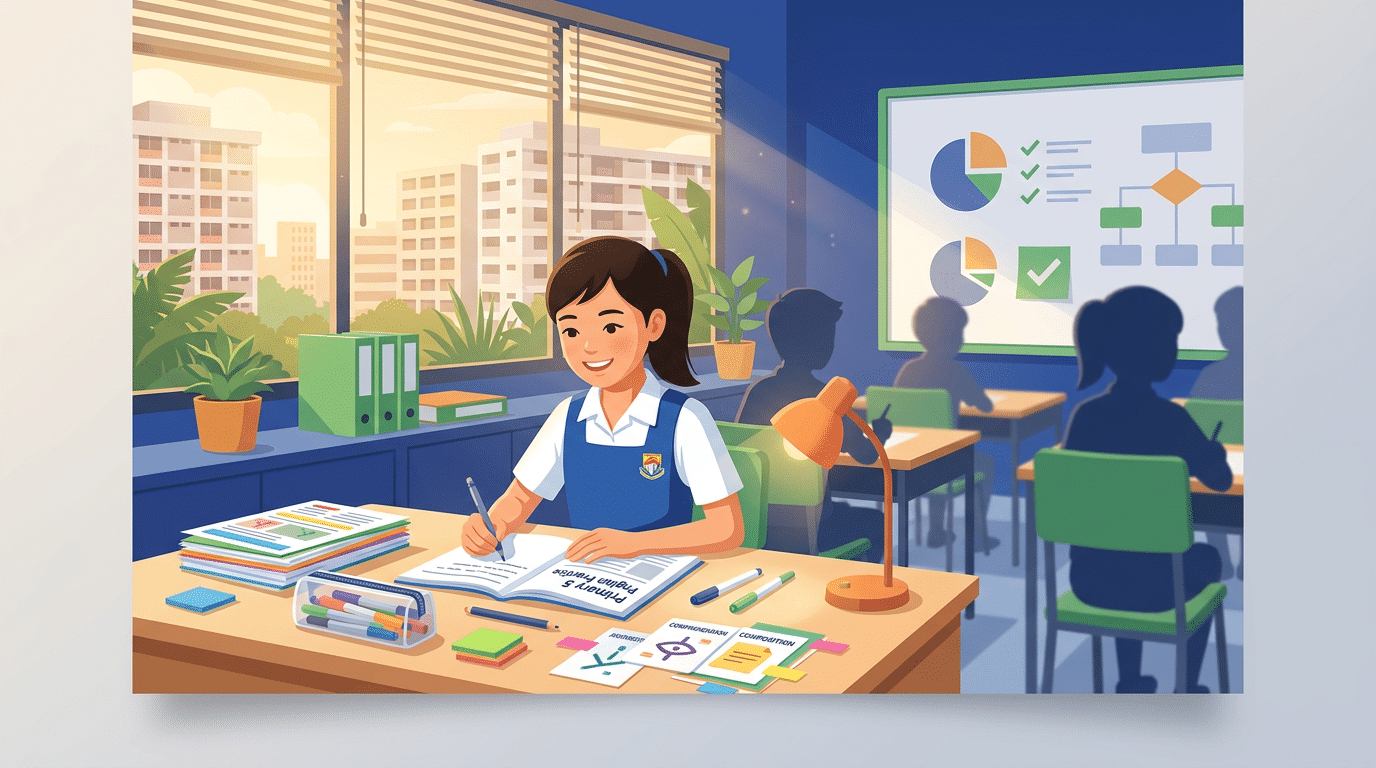
Academic block (9:00–11:30am): This is the core learning period, when children are most cognitively fresh. Sessions are typically small-group or semi-individualised, covering core subjects aligned with the MOE curriculum. This is where real academic work happens — not passive listening, but active problem-solving, guided practice, and concept reinforcement.
Break and outdoor or physical activity (11:30am–12:30pm): Lunch, followed by physical activity — indoor games, outdoor play, or structured sports. Movement is not filler; it genuinely supports attention and learning retention for the afternoon session.
Enrichment or project-based activities (12:30–2:30pm): Afternoons in quality programmes are reserved for enrichment — arts and crafts, STEM challenges, creative writing, cooking activities, or cultural projects. These sessions develop skills that academic worksheets simply cannot: creative thinking, collaboration, and self-expression.
Homework and independent reading (2:30–4:00pm): For children who have holiday assignments, this supervised block ensures the work gets done with adult guidance nearby. It’s also a good wind-down period before pick-up.
Wrap-up and pick-up (4:00–6:00pm): Free choice time, board games, or quiet activities while children wait for parents. This social, low-pressure period is often where some of the best peer bonding happens.
The Academic Component: More Than Just Homework Supervision
One of the most common misconceptions about student care holiday programmes is that the academic portion is simply a matter of handing out worksheets and making sure children complete them. In a high-quality programme, the academic block is far more intentional than that.
Experienced educators use the holiday period strategically. For students who struggled during the school term, the holidays offer a low-pressure environment to revisit challenging concepts without the anxiety of upcoming tests. For students who performed well, the holidays are an opportunity to deepen understanding and get ahead on the next term’s content. Both approaches require skilled facilitation — not just supervision.
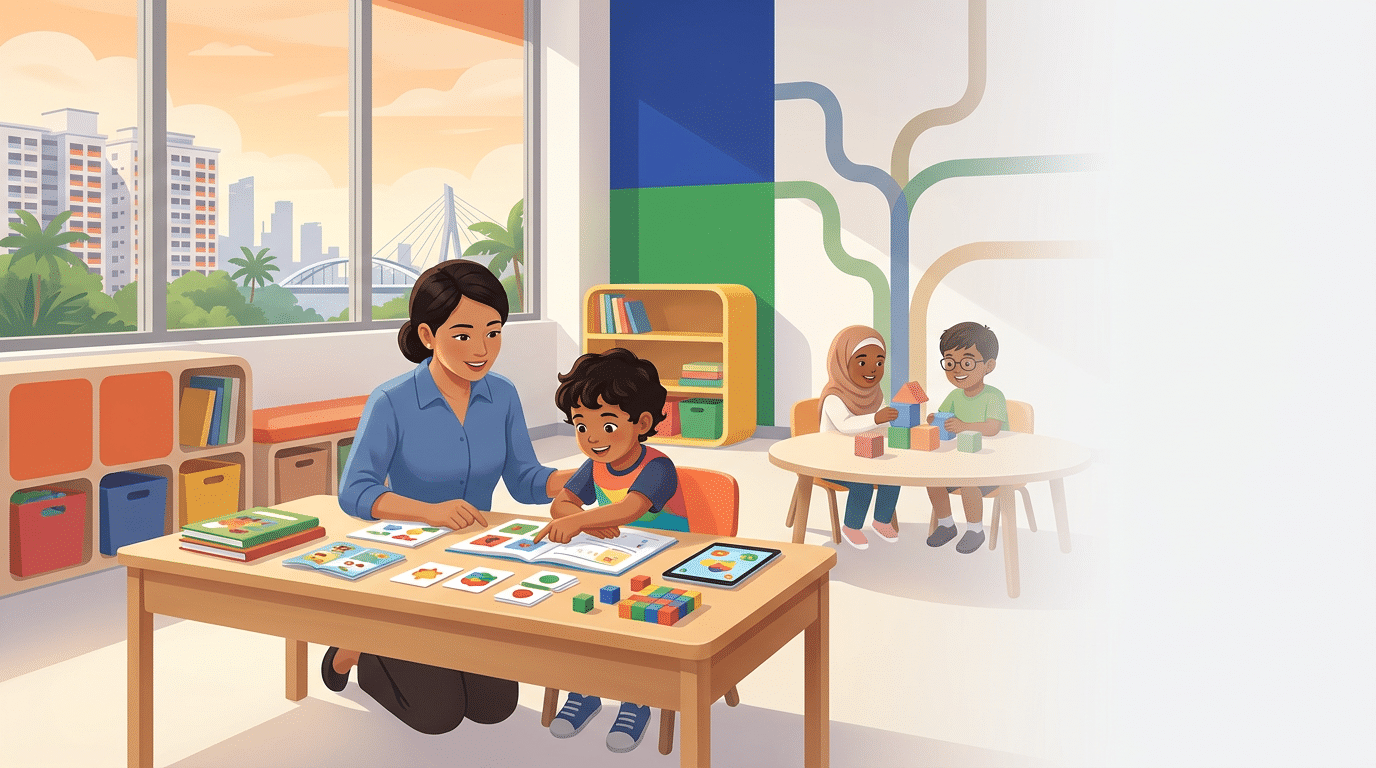
At EduFirst, our small class sizes of just 4 to 8 students mean that during holiday academic sessions, tutors can genuinely tailor instruction to each child’s level. A child who finds Primary 4 Mathematics challenging will receive different guidance from a child in the same session who is ready for extension work. This personalised approach is something that larger holiday camps simply cannot replicate. Whether your child needs support in English, Science, or Mathematics, structured holiday learning integrates seamlessly with our primary tuition and secondary tuition programmes, ensuring continuity across the school year.
Enrichment and Life Skills Activities
The enrichment component of a holiday programme is where children often surprise themselves. Free from the pressure of grades and exams, many children discover interests and abilities that never surface during regular school terms. This is one of the most underrated benefits of a well-designed holiday programme.
Enrichment activities in quality programmes typically include:
- Creative arts — Drawing, painting, collage, and craft projects that develop fine motor skills and creative expression
- STEM challenges — Simple engineering or science experiments that build curiosity and problem-solving habits
- Creative writing workshops — Story-building exercises that strengthen language skills in an enjoyable, low-stakes format
- Cooking or baking activities — Practical life skills with built-in maths (measuring, fractions) and science concepts
- Team games and problem-solving challenges — Activities designed to build collaboration and communication skills
These activities are not simply a way to keep children busy. When designed well, they reinforce academic concepts in applied, memorable contexts. A child who builds a bridge from cardboard and craft sticks is learning about structural integrity. A child who writes and illustrates a short holiday journal is practising composition and vocabulary. The best enrichment activities blur the line between learning and play in the most productive way possible.
Social and Emotional Growth During the Holidays
Parents often focus almost entirely on the academic and activity components of a holiday programme, which is understandable. But the social dimension deserves equal attention, particularly for children who are only children, shy by nature, or who have a small peer circle at school.
The holiday programme environment is uniquely valuable for social development because it’s lower-stakes than school. There are no cliques formed over years of classroom proximity, no social hierarchies tied to academic performance, and no pressure of formal assessments. Children interact across year levels and backgrounds, which naturally broadens their social experience and builds confidence in navigating new relationships.
Emotionally, the structured-yet-relaxed rhythm of a good holiday programme gives children something that pure holiday idleness often does not: a sense of accomplishment at the end of each day. Children who complete a STEM project, master a concept they previously struggled with, or simply make a new friend during a team game return home with a tangible sense that the day was well spent. Over the course of a two or three-week holiday, this consistency builds genuine confidence and a positive orientation toward learning.
Questions to Ask Before You Enrol
Not all holiday programmes deliver equal value. Before committing your child’s holiday weeks to any provider, ask these specific questions to assess whether the programme is genuinely well-structured:
- What is the student-to-educator ratio? Anything above 1:12 for academic sessions is a red flag. Smaller ratios mean more individualised attention.
- Can you share a sample daily schedule? A provider with a genuinely structured programme will have this ready. Vague answers suggest the day is less planned than marketed.
- How is the academic content differentiated? Children in the same age group can be at very different academic levels. Ask how the programme accommodates this.
- What subjects are covered, and do educators have relevant subject expertise? General childcare staff and trained subject tutors offer very different academic support.
- What is the screen time policy? Quality programmes are intentional about limiting passive screen consumption during the holiday day.
- How do you communicate with parents about progress? Look for providers who offer regular updates, not just emergency contact.
These questions will quickly reveal whether a programme is genuinely designed for children’s development or primarily designed to fill a supervision gap. Both serve a purpose — but it’s important to know which one you’re signing up for.
The EduFirst Difference During School Holidays
At EduFirst Learning Centre, we’ve been supporting Singapore students since 2010, and our approach to holiday learning reflects everything we’ve learned about what genuinely moves children forward academically and personally. Our 25 locations islandwide mean that quality, consistent holiday support is accessible to families across Singapore — whether you’re in the east, west, north, or central regions.
Our holiday academic sessions maintain the same small class sizes of 4 to 8 students that define our regular term programmes. This is not a marketing number — it’s a structural commitment that changes what’s possible inside a classroom. When a tutor is working with six children instead of twenty, they notice the child who’s quietly confused, they can reteach a concept on the spot, and they can challenge the child who’s ready to go further. That responsiveness is what separates genuine academic support from glorified babysitting.
For families interested in dedicated subject-specific support, our holiday sessions integrate naturally with our primary tuition and secondary tuition programmes. We also offer e-lessons for families who prefer flexible online options during the holiday period. And for younger children taking their first steps in structured learning, our pre-school programme provides age-appropriate foundations that set children up for a confident Primary 1 transition.
Make the Most of Every Holiday Week
School holidays are genuinely precious time — but they’re most valuable when children experience a thoughtful balance of learning, play, creativity, and connection. A quality student care holiday programme delivers all of this within a safe, structured environment that gives parents confidence and gives children a meaningful way to spend their days.
The key is asking the right questions before you enrol: What does the daily schedule actually look like? How are academic sessions run? Who are the educators, and what is the student ratio? The best providers will answer these questions clearly and confidently, because their programmes are genuinely designed around children’s needs — not just parent convenience.
Whether your child needs to catch up on a challenging subject, get ahead for the next term, or simply stay engaged and growing during a long school break, the right holiday programme makes a real, measurable difference. Choose one that takes the academic component as seriously as the fun — and your child will return to school in January or July not just rested, but genuinely ready.
Enquire About EduFirst’s Holiday Programmes
Ready to give your child a productive, engaging school holiday experience? EduFirst Learning Centre’s small-class academic sessions and structured enrichment are available across 25 locations islandwide. Speak to our team today to find the right programme for your child’s level and goals.