- Apr 23, 2026
PSLE English Oral Topics: Themes and How to Prepare

For many Primary 6 students in Singapore, the PSLE English Oral examination is one of the most nerve-wracking parts of the entire PSLE journey. Unlike written papers where students can take their time to think and erase, the oral exam demands confident, spontaneous communication — and that can feel daunting without the right preparation. Whether your child freezes up during conversations or simply doesn’t know what topics to expect, early and structured practice makes an enormous difference.
This guide breaks down the most common PSLE English Oral topics and themes, explains how the examination is structured, and offers practical strategies to help your child walk into the examination room feeling composed and well-prepared. From understanding the stimulus-based conversation to refining reading fluency, you’ll find everything you need to give your child a strong head start.
What Is the PSLE English Oral Examination?
The PSLE English Oral examination is a compulsory component of the Primary School Leaving Examination and is assessed by the Singapore Examinations and Assessment Board (SEAB). It contributes to the overall English Language grade, which carries significant weight in determining secondary school placement. The oral component tests students on two key skills: their ability to read a passage aloud with clarity and expression, and their ability to hold a meaningful, extended conversation based on a visual stimulus.
Beyond simply testing language ability, the oral exam evaluates how well students can organise their thoughts, express opinions, and engage in a two-way dialogue. These are real-world communication skills that serve students well beyond the examination hall. For parents, understanding the purpose and structure of this component is the first step toward helping your child prepare with confidence.
Understanding the Oral Examination Format
The PSLE English Oral examination consists of two distinct components, each targeting different aspects of spoken English. Understanding what each part requires helps students and parents focus their preparation more effectively.
- Reading Aloud (10 marks): Students are given a short passage to read aloud to the examiner. They have one minute to look through it before reading. Marks are awarded for pronunciation, articulation, expressiveness, and reading pace.
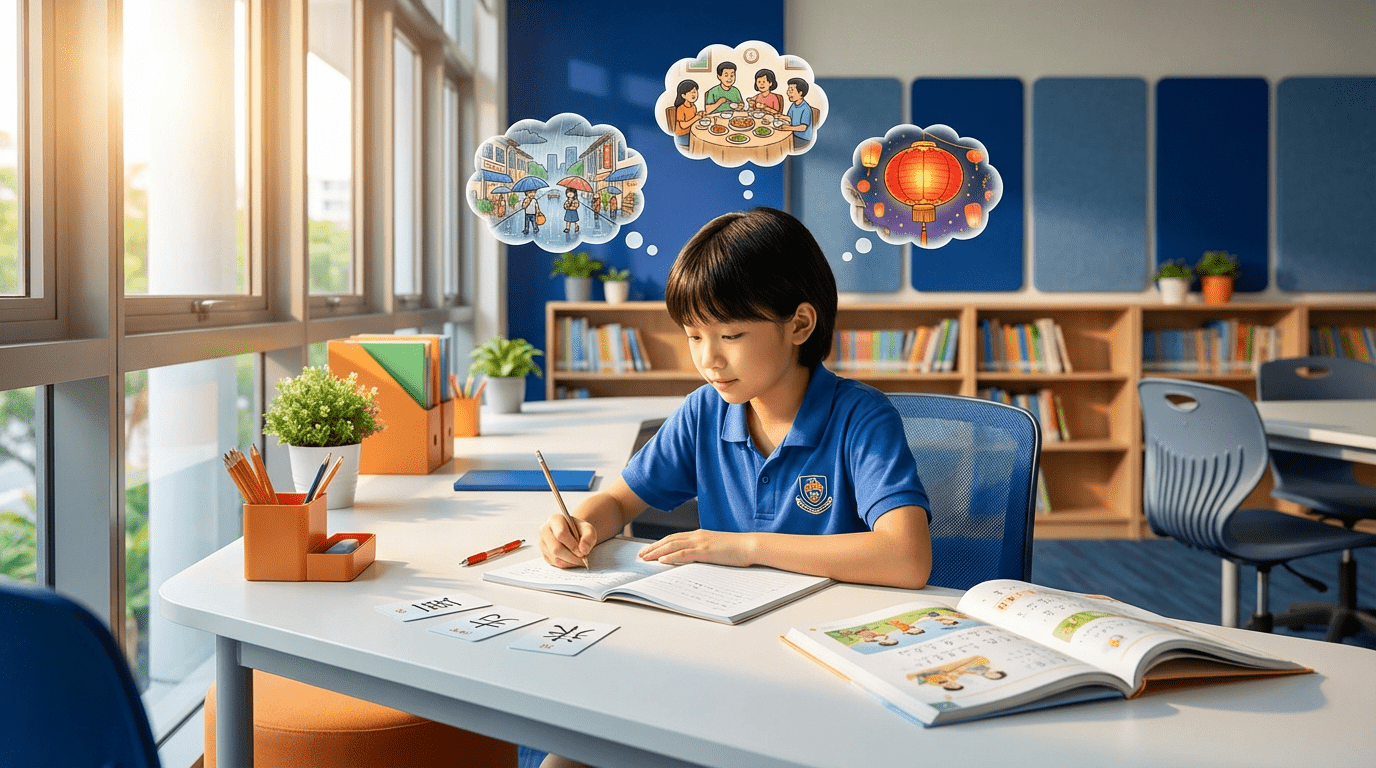
- Stimulus-Based Conversation (30 marks): Students are shown a visual stimulus — typically a photograph or an illustration — and are asked to describe it, share their thoughts, and respond to questions from the examiner. This section tests fluency, coherence, vocabulary, and the ability to sustain a conversation.
The entire oral examination typically lasts around 10 minutes per student. While that may seem short, consistent practice is what builds the automaticity and confidence students need to perform well under pressure.
Common PSLE English Oral Topics and Themes
One of the best ways to prepare for the stimulus-based conversation is to familiarise your child with the themes that frequently appear in PSLE English Oral examinations. While SEAB selects topics carefully to ensure they are accessible and age-appropriate, certain broad themes tend to recur across examination years. Building background knowledge and vocabulary around these areas gives students a clear advantage.
1. Community and Social Responsibility
Topics related to community spirit, neighbourliness, helping others, and civic responsibility are perennial favourites. Images might show volunteers cleaning up a park, residents helping an elderly neighbour, or a community garden project. Students are expected to discuss values like kindness, teamwork, and the importance of looking out for one another.
2. Health and Wellbeing
Physical health, mental wellness, healthy eating habits, and exercise are common threads in PSLE oral stimuli. Students might be shown an image of a family exercising together, a school canteen with healthy food options, or a campaign promoting mental health awareness. Examiners often follow up with questions about students’ own habits and opinions on healthy living.
3. Environment and Sustainability
Environmental consciousness is a growing theme in PSLE oral examinations, reflecting Singapore’s national focus on sustainability. Recycling, water conservation, reducing plastic waste, and caring for nature are all relevant topics. Students who have some familiarity with initiatives like Singapore’s Green Plan will be better equipped to speak confidently on this theme.
4. Technology and Screen Time
With digital literacy at the forefront of modern education, topics involving technology use among young people appear regularly. Images might depict children using devices, online learning, or discussions about balancing screen time with outdoor activities. Students should be prepared to give balanced opinions rather than one-sided answers.
5. Family and Relationships
Scenes depicting family activities, intergenerational bonding, and the value of spending quality time together are common. Questions may explore what students enjoy doing with their families and why strong family bonds matter. Personal anecdotes are encouraged here, as they make responses more authentic and engaging.
6. School Life and Learning
Topics centred on school experiences, co-curricular activities, friendship, and the importance of education are also well-represented. Students may be asked to discuss the role of sports, arts, or clubs in their development, or to share views on what makes a positive school environment.
What to Expect in the Stimulus-Based Conversation
The stimulus-based conversation unfolds in stages, and knowing what to expect helps students pace themselves appropriately. The examiner will first ask the student to describe what they see in the image. This is the descriptive phase, where students should demonstrate vocabulary range and observation skills without rushing. After that, the examiner transitions into more open-ended, opinion-based questions related to the theme of the image.
Students are assessed not just on what they say, but on how they say it. Fluency, coherence, and the ability to elaborate on answers are all important. A student who gives a single sentence in response to a question will score lower than one who develops their point with reasons and examples. Practising how to extend answers — using phrases like “I believe this is important because…” or “In my experience…” — is a key preparation strategy.
How to Prepare for the PSLE English Oral Examination
Effective preparation for the PSLE English Oral exam is less about memorising scripts and more about building genuine communicative fluency. Here are the most impactful strategies to incorporate into your child’s study routine:
- 1. Read Widely and Regularly – Encourage your child to read newspapers, age-appropriate magazines, and books on diverse topics. This builds the background knowledge and vocabulary needed to discuss unfamiliar themes confidently.
- 2. Practise with Real Stimulus Images – Use past PSLE oral practice papers and images to simulate the exam environment. Have your child describe an image and then answer follow-up questions. Record their responses so they can review their own fluency and expression.
- 3. Develop Opinion-Giving Skills – Teach your child to structure opinions clearly: state a position, give reasons, and support with an example. Practise this format regularly across different topics so it becomes second nature.
- 4. Build Vocabulary by Theme – Create word banks organised by topic (e.g., environment words, community words, health words). Reviewing these regularly ensures your child can draw on precise, relevant vocabulary during the exam.
- 5. Simulate Exam Conditions – As the exam approaches, conduct timed mock oral sessions at home. This reduces anxiety and helps your child get comfortable with the pacing and pressure of the actual examination.
Consistent daily practice, even for just 15 to 20 minutes, will yield far better results than cramming in the weeks before the exam. Starting early — ideally from Primary 5 — gives students the time they need to develop genuine confidence.
Tips for the Reading Aloud Component
Many students underestimate the reading aloud component, assuming it is straightforward. However, marks are lost when students read too quickly, mispronounce words, or fail to convey the tone and mood of the passage. The one-minute preparation time is precious and should be used wisely.
- Use the preparation time well: Identify unfamiliar words, note punctuation cues, and decide where to pause for effect.
- Read at a measured pace: Slowing down slightly allows for clearer articulation and gives the examiner time to assess pronunciation accurately.
- Pay attention to punctuation: Commas, full stops, and question marks are all cues for how to modulate voice and pacing.
- Practise with varied texts: Reading different types of passages (narratives, informational texts, dialogues) prepares students for whatever is presented on examination day.
Regular read-aloud practice at home — with a parent or sibling as the audience — helps build the habit of projecting voice and reading with expression rather than in a flat, mechanical tone.
Common Mistakes Students Make (and How to Fix Them)
Understanding what trips students up is just as important as knowing what to do right. Several patterns emerge consistently among students who underperform in the PSLE English Oral exam.
- Giving overly short answers: One-sentence responses do not demonstrate fluency. Train your child to always explain and elaborate.
- Sticking only to the image description: The conversation is meant to go beyond what is visible. Students should be ready to connect the image to broader ideas and personal experiences.
- Using Singlish or informal expressions: While natural in daily life, Singlish is not appropriate in the oral examination. Encourage standard English at home during practice sessions.
- Speaking too softly or too fast: Nervousness often manifests in mumbling or rushing. Deep breathing before speaking and conscious pacing can help.
- Freezing when asked an unfamiliar question: Teach your child that it is perfectly acceptable to take a brief pause to think before responding. Saying “That’s an interesting question. I think…” buys a moment to gather thoughts without appearing unprepared.
How EduFirst Helps Students Excel in English Oral
At EduFirst Learning Centre, we understand that the PSLE English Oral examination requires more than passive knowledge — it demands active, practised communication skills that must be built over time. Our Primary English tuition programme is designed with this in mind, giving students structured opportunities to practise speaking, receive feedback, and refine their oral delivery in a supportive setting.
With small class sizes of just 4 to 8 students, our tutors are able to give each child the individual attention they need to grow in confidence. Mock oral sessions, vocabulary building exercises, and guided discussions on age-appropriate topics are all part of how we prepare students for examination day. Our experienced teachers are familiar with the themes and formats that SEAB favours, and they tailor lessons to ensure students are never caught off guard.
If your child would benefit from more targeted support, our e-lessons are also available for families who prefer flexible, online learning options. Whichever format suits your child best, EduFirst is committed to helping every student communicate with clarity and confidence.
Final Thoughts
The PSLE English Oral examination rewards students who are well-read, well-practised, and genuinely comfortable expressing themselves in English. By familiarising your child with common themes, building strong vocabulary habits, and creating regular opportunities for spoken practice, you lay the foundation for a confident and compelling oral performance. The earlier you start, the more natural it all becomes — and that naturalness is exactly what examiners look for.
Remember, the goal is not to produce a rehearsed, robotic speaker, but a thoughtful communicator who can engage authentically with any topic placed in front of them. With the right guidance and consistent effort, your child can walk into the oral examination room not with dread, but with genuine readiness.
Want Expert Guidance for Your Child’s PSLE English Oral?
EduFirst Learning Centre has been helping Singapore students succeed since 2010. Our small-group Primary English tuition classes are crafted to build confident speakers and strong writers — with dedicated oral practice woven into every term.