- Oct 20, 2026
Special Educational Needs Support in Singapore Schools: The Full Landscape
For any parent whose child learns differently, the Singapore education system can feel both reassuring and overwhelming at the same time. There are structured programmes, dedicated schools, and trained professionals in place — but knowing where your child fits, which pathway to pursue, and how to access the right support at each stage requires navigating a genuinely complex landscape. The stakes feel high, and the decisions are rarely straightforward.
The encouraging reality is that Singapore has built one of the more comprehensive special educational needs (SEN) support frameworks in the region, with options that span from early intervention before a child turns one, through to vocational pathways and post-school employment support. Whether your child has been identified with dyslexia, autism spectrum disorder (ASD), ADHD, mild intellectual disability, hearing loss, or another learning difference, there is a structured pathway designed to help them grow. This guide walks through the full landscape — from what SEN actually means to how to choose the right school environment and what to look for in after-school support — so you can advocate for your child with clarity and confidence.
What Are Special Educational Needs?
Special Educational Needs is an umbrella term covering a range of conditions that affect how a child learns, communicates, or behaves in an educational setting. In Singapore, the Ministry of Education (MOE) recognises several categories, including dyslexia, autism spectrum disorder, attention deficit hyperactivity disorder (ADHD), mild intellectual disability, physical impairment, visual impairment, and hearing loss. These conditions each present very differently from child to child, which is precisely why individual assessment — rather than broad categorisation — sits at the heart of Singapore’s approach.
It is worth stating clearly: having SEN says nothing about a child’s intelligence or long-term potential. Many children with learning differences show exceptional strengths in creative thinking, spatial reasoning, empathy, or specific academic domains. What they need is not less expectation, but a different approach — teaching methods, environments, and support structures that match how they actually process and absorb information. Understanding this distinction early helps parents approach the system as advocates rather than supplicants.
Why Early Identification Makes All the Difference
Research consistently demonstrates that early identification of SEN leads to significantly better long-term outcomes in both academic development and social confidence. The earlier a child’s specific needs are understood, the earlier the right support can be put in place — during the developmental window when the brain is most responsive to intervention. In practice, this means that acting on early concerns, rather than adopting a wait-and-see approach, is one of the most impactful things a parent can do.
Parents are often the first to notice signs that warrant attention — a delay in speech, difficulty sustaining focus, challenges with social interaction, or persistent struggles with foundational literacy or numeracy. If you notice these signs, the recommended first step is to speak with your child’s paediatrician or a developmental paediatrician, who can conduct assessments and make onward referrals. Many childcare and kindergarten programmes in Singapore also include developmental screenings as part of their standard curriculum, and preschool teachers are trained to flag concerns. Acting early does not mean labelling your child — it means giving them access to the right tools at the moment they will have the greatest effect.
EIPIC: Singapore’s Early Intervention Programme Explained
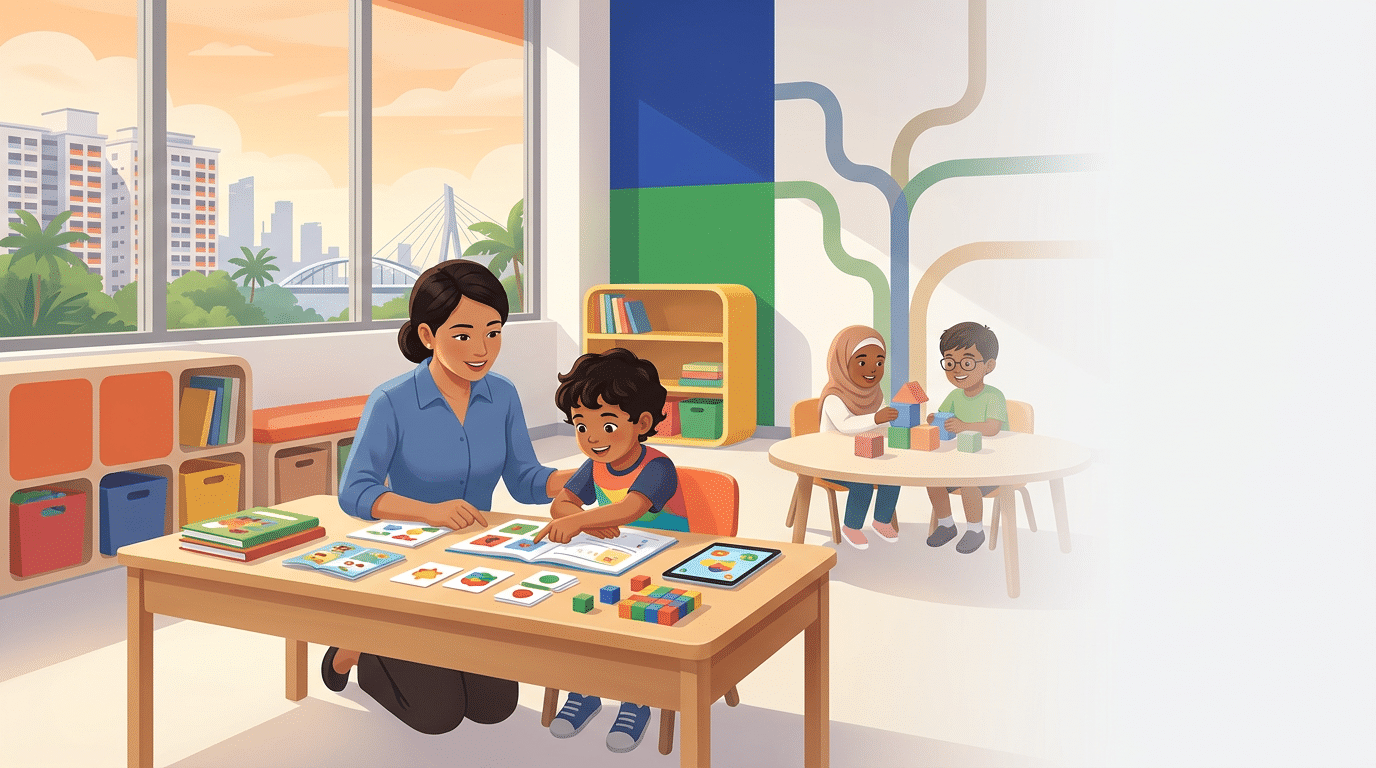
For children under six with developmental needs, Singapore’s primary government-subsidised programme is the Early Intervention Programme for Infants and Children (EIPIC), administered by the Early Childhood Development Agency (ECDA). EIPIC is not a single programme but a family of options calibrated to different ages and support levels, each designed to meet children at the stage where intervention will be most effective.
The three main EIPIC streams are:
- EIPIC Under-2s: For babies and toddlers up to 24 months, running 2–4 hours per week. The focus is on training parents and caregivers to carry out effective intervention strategies within the child’s daily routines at home.
- EIPIC @ Centre: The main programme for children aged 2–6 who require medium to high levels of support, typically running 5–12 hours per week of combined therapy and educational intervention, usually in small groups at a designated centre.
- DS-Plus (Development Support Plus): For children aged 2–6 who need lower levels of support and are already attending a preschool. An early intervention professional works with the child within their preschool setting, 2–4 hours per week.
To access EIPIC, your child needs to be assessed by a paediatrician — either through a polyclinic referral to the Department of Child Development at KKH or the Child Development Unit at NUH, or via a private paediatrician. The referral is then submitted to SG Enable, who will contact you within 10 working days to discuss centre options. Importantly, a formal diagnosis is not required to qualify — a paediatrician’s assessment that your child is at risk of a developmental, sensory, intellectual, or physical disability is sufficient to open the door. For Singapore Citizens, means-tested subsidies bring monthly fees down to approximately $5–$430 per month, making the programme accessible across a wide range of household incomes.
Mainstream Schools vs. SPED Schools: Understanding Your Options
One of the most consequential decisions parents of children with SEN face is whether to enrol their child in a mainstream MOE school with structured support, or in a dedicated Special Education (SPED) school. Both are equally valid pathways — co-funded by MOE, part of the national education system, and capable of delivering meaningful outcomes. The right choice depends entirely on the child’s individual profile: specifically, whether they have the cognitive abilities and adaptive skills to access the national curriculum in a mainstream setting, even with additional support.
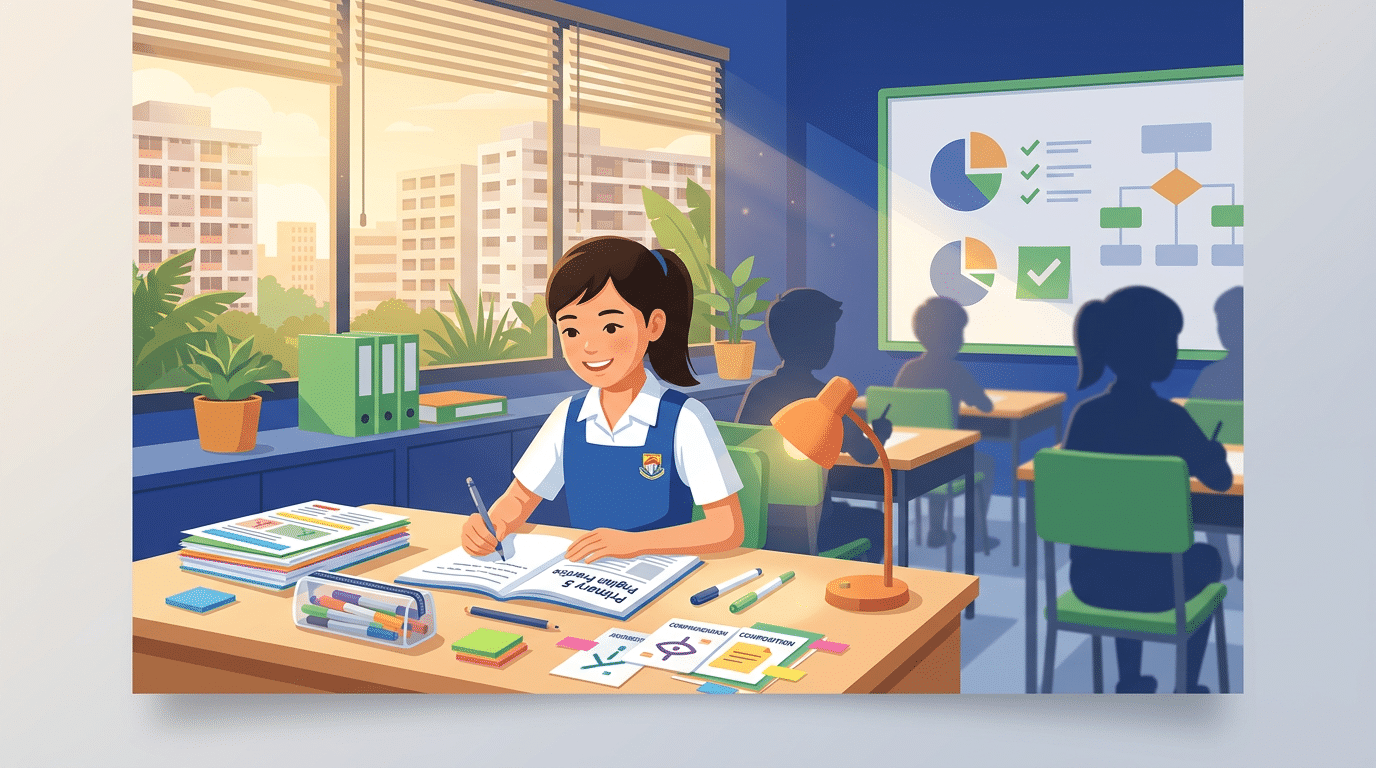
Mainstream schools are appropriate for children with milder SEN who can engage with the national curriculum given the right accommodations and specialist support. MOE has invested significantly in the SEN infrastructure of mainstream schools, with multiple tiered programmes, trained staff, and specialist resources now embedded across both primary and secondary levels.
SPED schools are designed for students with more significant support needs — those who require a fully customised curriculum, smaller class ratios, and a higher level of therapeutic integration throughout the school day. These schools are run by social service agencies and co-funded by MOE, which keeps fees affordable for families. Critically, the transition between pathways is not permanent. Some students who begin their education in a SPED school go on to transition into mainstream secondary education as their skills and confidence develop, while others find that the specialised environment continues to serve them best throughout their schooling years.
SEN Support Programmes in Mainstream Primary and Secondary Schools
For children in mainstream schools, MOE has established a tiered support framework that addresses literacy, numeracy, behavioural, and social-emotional needs. At the primary level, the key structured programmes include:
- Learning Support Programme (LSP): Additional English language and literacy support for Primary 1 and 2 students who need extra help building foundational reading and writing skills.
- Learning Support for Mathematics (LSM): Targeted numeracy support for Primary 1 to 4 students who are struggling with foundational mathematics concepts.
- School-based Dyslexia Remediation (SDR): A structured, two-year intervention programme for Primary 3 and 4 students diagnosed with dyslexia, delivered within the school setting.
- TRANSIT Programme: A self-management skills programme being rolled out progressively to all primary schools by 2026, helping students with SEN develop classroom work habits, social communication, and emotional regulation skills.
- Circle of Friends: A peer support intervention designed to support students with social and behavioural difficulties by fostering inclusion and connection within the classroom community.
At the secondary level, Subject-Based Banding (SBB) allows students to take different subjects at different levels, giving those with uneven learning profiles significantly more flexibility than the traditional streaming model. Secondary schools also use transition information shared by primary schools to plan targeted interventions, allocate assistive technology, and coordinate appropriate class placements from the outset.
Beyond formal programmes, every mainstream school has two layers of SEN-trained staff. Each primary and secondary school has approximately 5–10 Teachers Trained in Special Needs (TSNs) — classroom educators who have undergone additional SEN training — as well as roughly 2 dedicated SEN Officers in each primary school and at least 1 in each secondary school, who provide in-class and pull-out support for students with identified needs. Parents are encouraged to connect with these professionals early and maintain open, ongoing communication throughout the school year.
For families seeking additional academic reinforcement beyond the school day, EduFirst’s primary tuition programme offers small-group classes of just 4–8 students, providing the kind of individual attention and structured routine that benefits all learners — including those who process information at a different pace. Similarly, secondary tuition at EduFirst is designed to meet students where they are, with flexible approaches that complement rather than replicate what happens during school hours.
SPED Schools in Singapore: Who Are They For?
Singapore currently has 25 SPED schools catering to students across a range of needs, conditions, and age groups. These schools follow curricula aligned with national frameworks but customised to each student’s learning profile — covering not just academic skills, but life skills, vocational readiness, and therapeutic support as an integrated part of the school day. SPED schools are not a compromise on quality education; they are a different delivery of it, purpose-built for students whose needs cannot be fully met in a mainstream environment.
SPED schools are broadly organised by the primary condition they serve:
- ASD without intellectual impairment: Pathlight School (Ang Mo Kio and Tampines campuses), Anglo-Chinese School (Academy), and St. Andrew’s Mission School offer the national curriculum integrated with life skills support for students with autism who have the cognitive ability to access mainstream academic content.
- ASD with intellectual impairment: Schools including Eden School, St. Andrew’s Autism School, AWWA School, and several MINDS campuses serve students with autism who also have intellectual disabilities and require a more customised curriculum.
- Mild intellectual disability (MID): APSN schools (Chaoyang, Tanglin, Katong, Delta Senior) and Metta School provide structured academic and vocational support for students with mild learning challenges.
- Moderate to severe intellectual disability (MSID): MINDS schools across Bedok, Queenstown, Sengkang, and Woodlands provide holistic support for students with higher-level intellectual disabilities.
- Sensory impairment: Lighthouse School (Toa Payoh) supports students with visual impairment, while Canossa Catholic Primary School serves as a designated mainstream school for students with hearing loss from 2025 onwards.
Admission to a SPED school typically requires an assessment by a registered psychologist or relevant specialist, followed by a referral through MOE or the relevant social service agency. Parents can also approach SPED schools directly to arrange an assessment visit. In a positive development for families, nine SPED schools serving students with ASD and multiple disabilities reduced their maximum monthly fees for Singaporean students to $90 per month from mid-2025, significantly easing the financial burden for affected families.
How to Choose the Right School for Your Child
Choosing the right school environment for a child with SEN rarely follows a simple checklist, but approaching the decision systematically makes it considerably less overwhelming. The essential starting point is a psychoeducational assessment from a registered psychologist. This report provides concrete data on your child’s learning profile — their cognitive strengths, areas of difficulty, and the level of support they require — and is the document that schools, programmes, and formal accommodations will rely on. Committing to this assessment early is important, as waiting lists at public hospitals can be several months long.
When evaluating specific schools, go beyond the marketing materials and ask targeted questions. How many SEN Officers and TSNs does the school employ, and what is their typical caseload? Does the school have an SEN coordinator who is accessible to parents? What is the school’s philosophy around differentiated learning and inclusion — not just in policy, but in practice? Are there quiet spaces or sensory-sensitive environments available for students who need them? Visiting the school during an open house, rather than a formal tour, will give you a far more authentic sense of the day-to-day culture and how staff interact with students.
It is equally important to consider your child’s social and emotional needs alongside their academic ones. A school that accommodates your child academically but does not foster a supportive peer culture may still cause unnecessary stress. Conversely, an environment where your child feels genuinely seen, safe, and celebrated — even if academic progress is incremental — can be transformative for confidence and long-term development. The goal is not the most academically prestigious placement; it is the most appropriately matched one.
After-School Support: Student Care and Tuition for Children with SEN
School hours are only one part of a child’s learning day, and for children with SEN, the quality of after-school support matters just as much as what happens during school time. Many families rely on student care centres and supplementary tuition not just for supervision or academic revision, but as a consistent extension of the structured, supportive environment their child needs. When choosing after-school arrangements for a child with learning differences, the same principles that guide school selection apply: small group sizes, trained staff, structured routines, and a culture that values process over performance.
For parents considering supplementary tuition, the classroom environment makes a significant difference. Large tutorial classes that move at a single pace can replicate the very conditions a child with SEN finds most difficult. A smaller setting — where an educator can genuinely monitor understanding, adjust pacing, and provide real-time support — is far better suited to how many children with learning differences absorb and consolidate material. EduFirst’s approach of capping classes at 4–8 students means each child receives meaningful individual attention, which is particularly valuable for students who need a little more time or a slightly different explanation to click. Whether your child is navigating primary school subjects through primary-level tuition or working through the demands of secondary school via secondary tuition, the smaller class format ensures no student falls through the cracks.
For younger children still in the early years, EduFirst’s pre-school programme provides a nurturing, structured foundation that can support school readiness for children at varying developmental stages. Families who need flexibility — whether due to geography, scheduling, or a child who learns better outside a centre environment — can also explore EduFirst’s e-lessons, which bring the same small-group, individualised approach online.
Practical Tips for Parents Navigating SEN in Singapore
Advocating effectively within Singapore’s education system requires preparation, persistence, and a willingness to build genuine partnerships with the educators in your child’s life. The parents who tend to get the best outcomes for their children are those who come to every conversation informed, documented, and collaborative rather than adversarial. Here are the strategies that experienced SEN parents in Singapore consistently recommend:
- Commission a psychoeducational assessment early. Waiting lists at public hospitals can be several months long. Act as soon as you have concerns — do not wait for formal school identification.
- Request a formal Individual Education Plan (IEP). Both SPED schools and some mainstream schools develop IEPs that outline specific learning goals and support strategies. If your child’s school does not initiate one, you can request it directly.
- Document everything from day one. Keep records of all assessments, school communications, intervention plans, and your child’s progress. This paper trail is essential when transitioning between schools, escalating concerns, or applying for exam access arrangements.
- Join a parent support network. Organisations like the Autism Resource Centre (ARC), Dyslexia Association of Singapore (DAS), and MINDS all have active parent communities offering peer support, practical advice, and lived experience that no official guide can fully replicate.
- Explore access arrangements for national examinations. MOE provides formal accommodations for students with SEN sitting national exams — including extended time, larger fonts, and reader/writer support. These are accessed through the school, with documentation from a registered professional.
- Look after yourself, too. Parenting a child with SEN can be emotionally demanding and occasionally isolating. Accessing support through social service agencies, counsellors, or peer communities is not a sign of weakness — it strengthens your capacity to show up consistently for your child.
Singapore’s SEN landscape continues to evolve, with MOE regularly updating programmes, expanding SPED school capacity, and increasing funding to improve quality and affordability. Staying informed through official MOE resources and trusted parent communities means you will always be in the best position to advocate effectively at each new stage of your child’s education.
Every Child Deserves the Right Support
Navigating special educational needs in Singapore is genuinely complex — but it is a journey that is far less daunting when you understand the full picture. From early intervention through EIPIC before a child’s first birthday, to structured programmes in mainstream primary and secondary schools, to dedicated SPED schools with holistic curricula, Singapore’s education ecosystem offers more pathways than many parents initially realise. The key is understanding your child’s unique profile, asking the right questions, and building a strong support network around them at every stage.
What ultimately matters most is not which school your child attends, but whether that environment genuinely sees them, supports them at their level, and gives them the tools and confidence to grow. With the right school, the right after-school support, and informed, persistent advocacy, children with SEN in Singapore can — and consistently do — thrive.
Looking for Personalised Academic Support for Your Child?
At EduFirst Learning Centre, we believe every child learns best when they receive genuine individual attention. With small classes of just 4–8 students across 25 locations islandwide, our experienced educators take the time to understand how each child learns — and adapt their approach accordingly. Whether your child needs support at the primary, secondary, or pre-school level, we are here to help them build both skills and confidence.