- May 2, 2026
What Is the Normal Academic Stream in Singapore? A Parent’s Complete Guide
If your child has been placed in the Normal Academic (NA) stream after their Primary School Leaving Examination (PSLE), you may find yourself with a lot of questions. What does this stream actually involve? What subjects will your child study? And most importantly, what doors does it open for their future?
The Normal Academic stream is one of Singapore’s secondary school education pathways, and it is far more versatile and opportunity-rich than many parents initially realise. Understanding how it works — from daily lessons to major examinations and post-secondary options — can help you better support your child through these important years. This guide breaks down everything you need to know about the Normal Academic stream in Singapore, including how students are placed, what the curriculum looks like, and the many pathways available after the N-Level examinations.
What Is the Normal Academic Stream?
The Normal Academic (NA) stream is one of three secondary school course offerings under Singapore’s education system, alongside the Express stream and the Normal Technical (NT) stream. It is designed for students who are academically inclined but benefit from a slightly more gradual pace of learning compared to the Express stream. Rather than completing secondary school in four years, Normal Academic students typically take five years to complete their secondary education, sitting for the Normal-Level (N-Level) examinations at the end of Secondary 4 before progressing further.
Importantly, the Normal Academic stream is not a ceiling — it is a foundation. Students in this stream follow a curriculum that equips them with strong literacy and numeracy skills, and the pathway provides multiple routes into further education, vocational training, and even university. The stream was designed to ensure that every student, regardless of their PSLE score, continues to receive a rigorous and meaningful education that prepares them for adult life in Singapore.
How Do Students Enter the Normal Academic Stream?
Placement into the Normal Academic stream is determined by a student’s PSLE score, specifically the PSLE Achievement Level (AL) score under the revised scoring system introduced in 2021. Students who score within a certain AL band are eligible for the Normal Academic stream, while those with higher scores are placed in the Express stream and those with lower scores may be placed in the Normal Technical stream.
Under the current system, PSLE AL scores range from 4 (best) to 32, with students achieving AL scores in the mid-to-upper range typically qualifying for the Normal Academic stream. The exact cutoffs can vary slightly depending on the cohort and school, so it is always advisable to check the Ministry of Education’s (MOE) latest secondary school posting guidelines. Schools also have some flexibility in accepting students slightly outside the standard band, especially if a particular school is a good fit for the student’s interests and strengths.
It is worth noting that being placed in the NA stream after PSLE is not a permanent label. Singapore’s education system has built-in flexibility, allowing motivated students to move between streams based on their Secondary 1 performance through the Subject-Based Banding (SBB) framework and, more recently, the Full Subject-Based Banding (Full SBB) initiative that is being progressively rolled out across all secondary schools.
Normal Academic vs. Express: What Is the Difference?
Parents often want to understand how the Normal Academic stream compares to the Express stream. The most immediate difference is the duration of secondary school. Express students complete secondary school in four years and sit for the O-Level examinations at Secondary 4. Normal Academic students, on the other hand, typically spend four years working toward the N-Level examinations, and those who qualify can proceed to Secondary 5 to sit for the O-Level examinations.
The curriculum content also differs in pacing and depth. While both streams cover core subjects such as English, Mathematics, Mother Tongue, and a selection of humanities and sciences, the Express stream covers these at a faster pace and greater depth from the outset. The NA stream takes a more measured approach, allowing students more time to consolidate their understanding before tackling more advanced concepts. This is not a disadvantage — for many students, the additional time and scaffolding makes the difference between surface-level knowledge and genuine understanding.
Under Singapore’s Full Subject-Based Banding initiative, the distinction between streams is gradually becoming less rigid. Secondary schools are moving toward a model where students take individual subjects at different levels — G1, G2, or G3 — based on their ability in each subject, rather than being locked into a single stream for all subjects. This means an NA student who excels in Mathematics, for example, may take Maths at the G3 (O-Level equivalent) level while taking other subjects at G2 (N-Level equivalent).
What Do Normal Academic Students Study?
The Normal Academic curriculum is broad and balanced, covering a range of academic disciplines across four years of secondary school. Here is an overview of the key subject areas:
- English Language: Compulsory for all students, with a focus on reading, writing, listening, and oral communication skills.
- Mother Tongue Language: Students study their respective Mother Tongue — Chinese, Malay, or Tamil — at either the standard or foundation level.
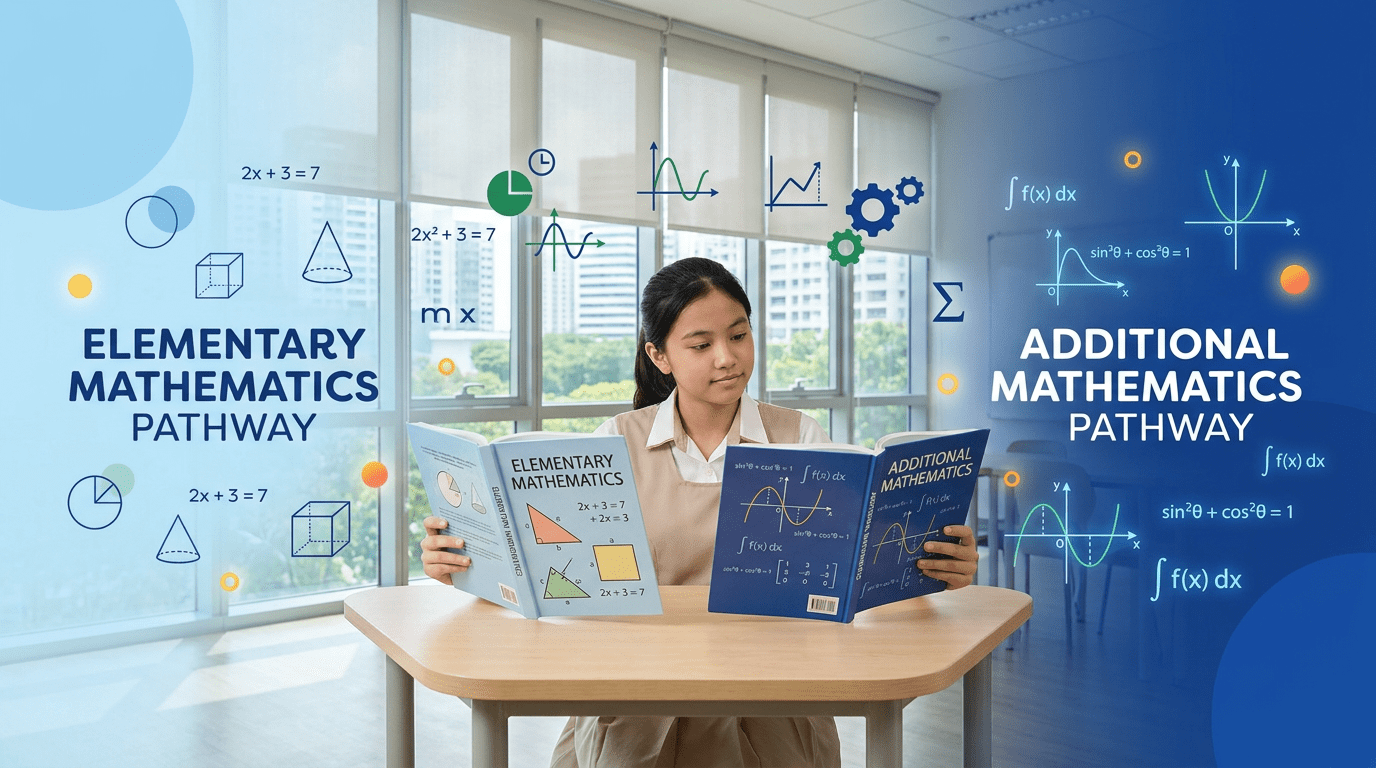
- Mathematics: Core Maths is compulsory, with Additional Mathematics available as an elective for stronger students.
- Humanities: Students choose from subjects such as Social Studies (compulsory), Geography, History, and Literature.
- Sciences: Biology, Chemistry, and Physics are available, though not all students take all three.
- Arts and Electives: Schools may offer additional subjects such as Design and Technology, Food and Consumer Education, Art, and Music.
The curriculum is designed to give Normal Academic students a well-rounded academic experience that builds on the foundation laid during primary school. For students preparing for these subjects, early and consistent support through structured tuition can make a meaningful difference in building confidence and subject mastery. EduFirst Learning Centre’s secondary tuition programmes are specifically tailored to help NA students consolidate their understanding and perform to the best of their ability across these subjects.
The N-Level Examinations Explained
At the end of Secondary 4, Normal Academic students sit for the Singapore-Cambridge Normal Level (N-Level) examinations, administered by the Singapore Examinations and Assessment Board (SEAB). These are nationally recognised examinations that assess a student’s proficiency across their chosen subjects and serve as the primary qualification for the majority of post-secondary pathways available to NA students.
The N-Level examinations test students in English Language, Mother Tongue Language, Mathematics, and their chosen electives. Results are graded on a scale from 1 (best) to 5, with a U (Ungraded) for very weak performance. Students who perform strongly at the N-Levels — typically achieving a score of 19 points or fewer across their best five subjects — may qualify for promotion to Secondary 5, where they can sit for the O-Level examinations the following year.
Preparing well for the N-Levels requires consistent effort from as early as Secondary 1. Students who build strong study habits, seek help when needed, and practise past-year papers consistently are far better positioned to achieve results that open up the widest range of post-secondary options. This is one reason why many NA families choose to invest in supplementary support through trusted tuition providers during the secondary school years.
Progression Pathways After Normal Academic
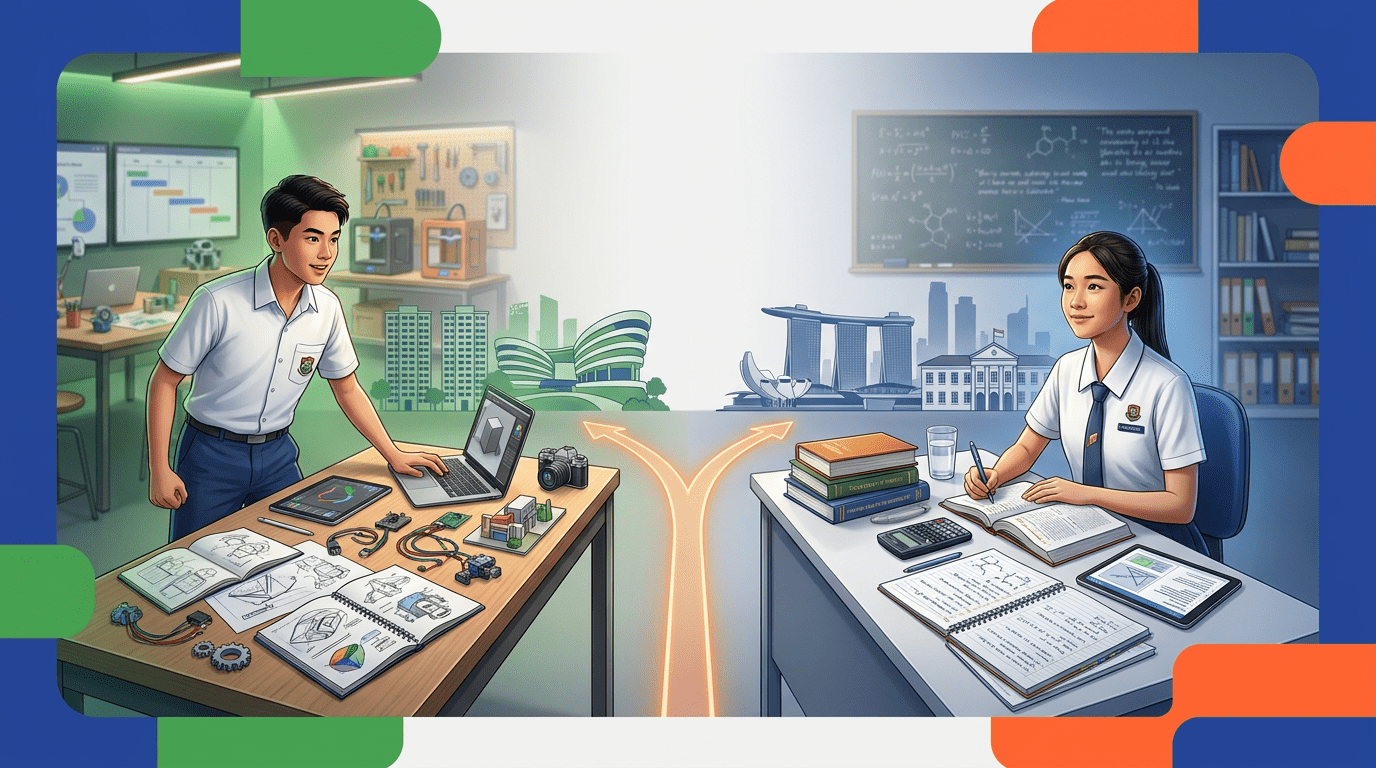
One of the biggest misconceptions about the Normal Academic stream is that it leads to limited opportunities. In reality, NA students have access to a variety of meaningful post-secondary pathways, and many go on to build successful careers and academic accomplishments. Here are the main routes available:
- Secondary 5 and O-Levels: Students who meet the N-Level qualifying criteria can proceed to Secondary 5 and sit for the O-Level examinations, which open doors to Junior Colleges (JC), Millennia Institute (MI), and polytechnics.
- Institute of Technical Education (ITE): Students who do not proceed to Secondary 5 can apply to ITE to pursue a full-time National ITE Certificate (Nitec) or Higher Nitec programme, leading to vocational qualifications and employment.
- Polytechnic Foundation Programme (PFP): High-performing NA students who achieve outstanding N-Level results may qualify for the Polytechnic Foundation Programme, a one-year bridging programme that leads directly into a polytechnic diploma course — without needing to complete Secondary 5 or sit for the O-Levels.
- Direct-Entry-Scheme to Polytechnic Programme (DPP): This programme allows NA students to enter a polytechnic course after completing their N-Levels, taking a two-year preparatory programme that leads into a polytechnic diploma.
The availability of the PFP and DPP in particular reflects Singapore’s commitment to providing multiple pathways for NA students to achieve post-secondary qualifications. From polytechnic diplomas, students can proceed to local universities, making the route from Normal Academic stream to university degree absolutely achievable with determination and the right support.
How to Support Your Child in the Normal Academic Stream
Parents play a crucial role in helping their child thrive in the Normal Academic stream. The secondary school years bring new academic challenges, greater independence, and — for many students — the first real experience of studying for high-stakes examinations. Providing the right environment, encouragement, and academic support at home can make a significant difference to your child’s confidence and outcomes.
Start Strong in Secondary 1
The transition from primary to secondary school is a major adjustment. Secondary 1 is the time to establish good study habits, get to know the new curriculum, and address any subject weaknesses before they compound. Students who struggle with foundational concepts in English, Maths, or Science at this stage can find later years increasingly difficult. Enrolling your child in secondary tuition early — even just for one or two key subjects — can provide the scaffolding they need to start confidently.
Choose Small-Group Tuition for Personalised Attention
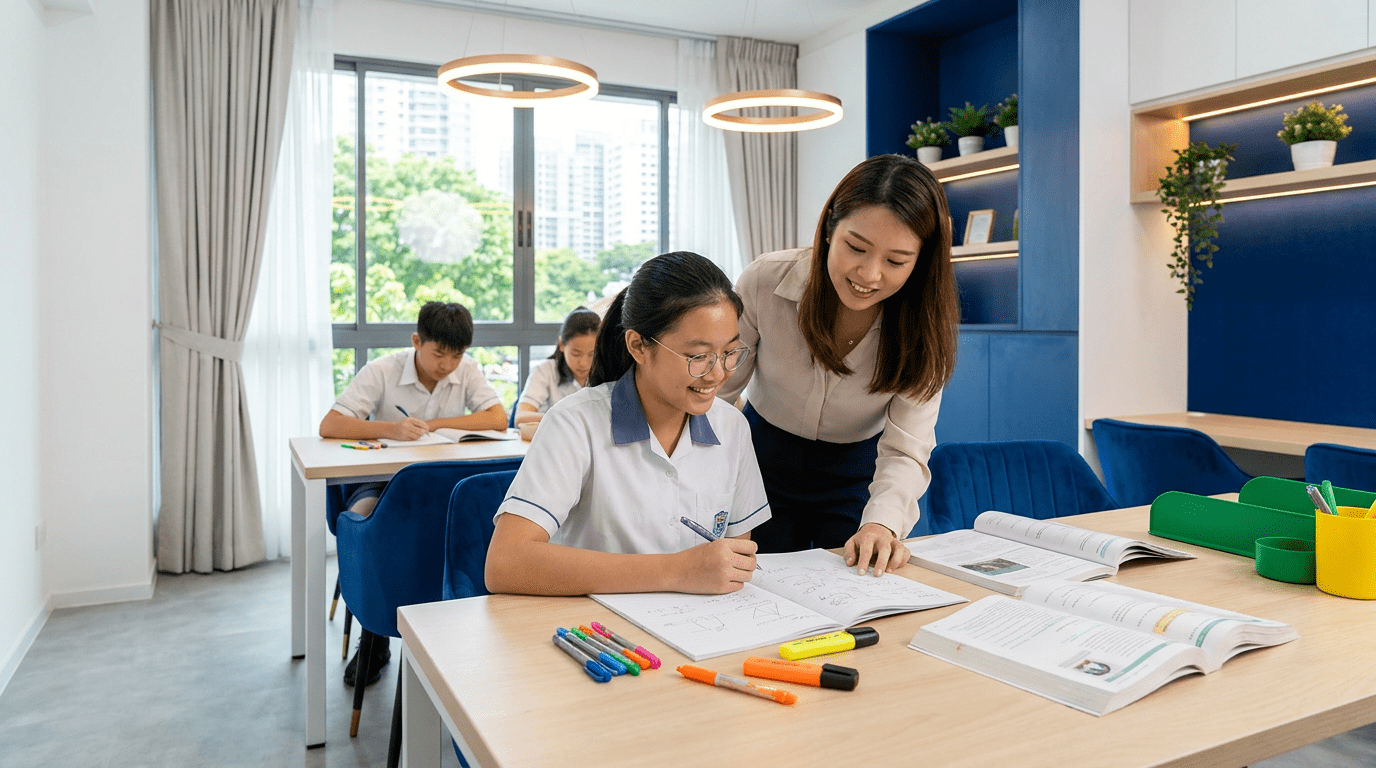
One of the most effective forms of academic support for Normal Academic students is tuition in small group settings. Unlike large tuition centres where students may feel lost or overlooked, small class environments allow tutors to identify each student’s specific gaps, tailor explanations, and provide timely feedback. At EduFirst Learning Centre, classes are kept to just 4 to 8 students, ensuring that every child receives the individual attention they need to genuinely understand the material — not just memorise it. You can explore available programmes through EduFirst’s secondary tuition page.
Consider the Transition from Primary to Secondary
If your child is still in primary school and you are planning ahead, building a strong academic foundation during the primary years can positively influence their PSLE outcome and readiness for secondary school, regardless of which stream they enter. EduFirst’s primary tuition programmes are designed to nurture academic confidence and strong subject fundamentals from an early age.
Keep Pathways Open Through Subject-Based Banding
Under Full SBB, your child may have the opportunity to take certain subjects at a higher level (G3) if their performance warrants it. Encourage your child to aim high in subjects they enjoy and excel in — performing well at the G3 level in one or more subjects can expand their post-secondary options significantly. Speak with the school’s subject teachers and form teacher regularly to stay informed about your child’s progress and any opportunities to take on higher-level subjects.
Final Thoughts
The Normal Academic stream in Singapore is a structured, well-supported educational pathway that gives students the time, resources, and multiple stepping stones they need to progress into a wide range of post-secondary opportunities. Whether your child goes on to complete their O-Levels, enter a polytechnic through the PFP, or build a skilled career through ITE, the NA stream equips them with meaningful academic and life skills along the way.
What matters most is not which stream your child enters, but the support, encouragement, and consistent effort they bring to these years. With the right guidance at home and the right academic support in the classroom and beyond, Normal Academic students can and do achieve remarkable things. If you are looking for a trusted tuition partner to help your child navigate secondary school with confidence, EduFirst Learning Centre has been supporting Singapore families across all streams since 2010 — with small classes, experienced educators, and programmes designed around every child’s individual needs.
Give Your Child the Support They Deserve
Whether your child is just starting Secondary 1 or gearing up for the N-Level examinations, EduFirst’s experienced tutors and small-group classes (4–8 students) are here to help them build confidence and achieve their best results. With 25 locations across Singapore and flexible e-learning options, finding the right fit for your family is easy.