- May 3, 2026
Best Primary Schools in Singapore: Factors Beyond Rankings
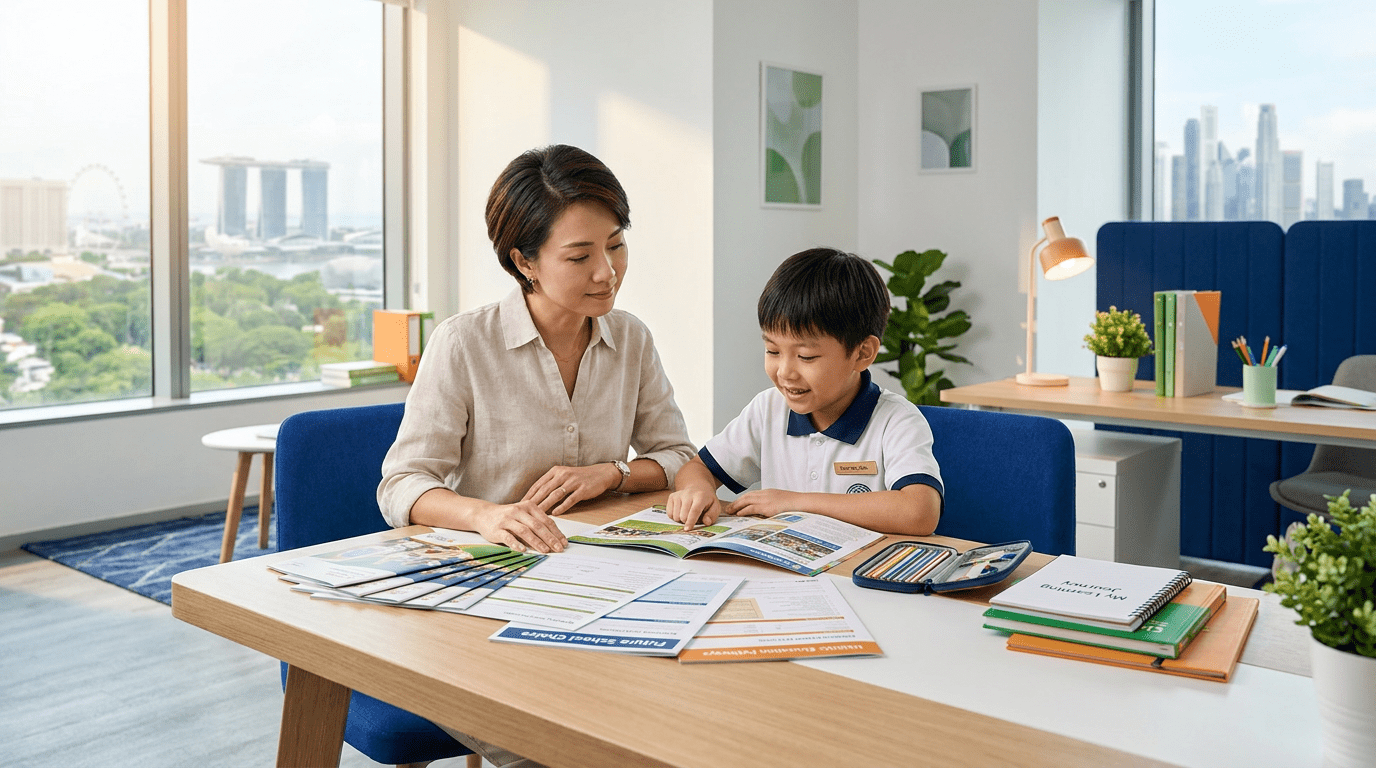
Every year, thousands of Singaporean parents find themselves poring over school league tables, PSLE aggregate scores, and annual reports — all in the hope of identifying the best primary school in Singapore for their child. It is completely understandable. Education is one of the most important investments a family can make, and in a competitive landscape like Singapore’s, getting it right feels critical from the very start.
But here’s something many seasoned educators and parents eventually come to realise: a school’s position on a ranking list captures only a thin slice of what truly makes it the right fit for your child. Aggregate scores don’t measure whether a child feels safe, inspired, or genuinely excited to learn. They don’t reveal whether a school’s culture aligns with your family’s values, or whether its teaching style suits the way your child learns best.
This guide is designed to help you look beyond the numbers. We’ll walk through the factors that matter most when choosing a primary school in Singapore — the ones that shape not just academic results, but a child’s confidence, character, and love of learning. Whether you’re preparing for the Primary 1 Registration Exercise or reconsidering your approach, these insights will help you make a more informed, and more personal, decision.
Why Rankings Don’t Tell the Whole Story
Singapore’s education system is world-renowned, and the Ministry of Education (MOE) has made significant strides in shifting the national conversation away from pure academic competition. The removal of mid-year examinations for Primary 1 to 4 students, and the broader “Learn for Life” movement, reflects a growing recognition that childhood development cannot be reduced to a single score. Yet, the cultural weight placed on school prestige remains strong, and many parents still gravitate toward schools with historically high PSLE results.
The problem with this approach is that rankings are backward-looking. They reflect the performance of previous cohorts under previous teachers, leadership, and conditions — none of which may accurately predict your child’s experience. A school that ranks highly may have a highly competitive internal culture that suits some children brilliantly but leaves others feeling anxious or overlooked. Conversely, a school that doesn’t appear in the top tier may have exceptional teachers, a nurturing environment, and programmes that draw out precisely the strengths your child possesses.
Choosing a school based solely on prestige is a little like choosing a restaurant based only on the Michelin star, without considering whether the cuisine matches your family’s taste. The real question is not “Which school is the best?” but rather, “Which school is the best fit for my child?”
School Culture and Values
Every school in Singapore has its own distinct personality — a set of values, traditions, and unspoken norms that shape the daily experience of its students. Some schools emphasise discipline and structured academic rigour. Others prioritise creativity, character development, or student-led learning. Understanding a school’s culture before enrolling your child can make a significant difference in how comfortably and confidently they settle in.
One of the best ways to gauge a school’s culture is to attend its open house or orientation events. Pay close attention to how staff interact with students and parents. Are teachers warm and approachable, or more formal and distant? Do students appear engaged and happy, or tense and hurried? Speaking candidly with current parents — rather than reading official promotional material — often yields the most honest insights into day-to-day school life.
It’s also worth considering how a school handles pastoral care and student wellbeing. Does it have a dedicated school counsellor? How does leadership address bullying or emotional difficulties? A school that invests in social-emotional learning tends to produce students who are more resilient, self-aware, and better equipped for the challenges that lie ahead — not just academically, but in life.
Teaching Approach and Learning Environment
Children learn in different ways. Some thrive with structured, teacher-led instruction. Others need more hands-on, exploratory learning to truly absorb new concepts. When visiting potential schools, try to understand the dominant teaching philosophy and whether it aligns with your child’s learning style.
Class size is one particularly important variable. Smaller class sizes generally allow teachers to give more individualised attention, identify learning gaps earlier, and tailor instruction more effectively. In Singapore’s primary school context, most national school classes range from 30 to 40 students, which can make it challenging for teachers to cater to every child’s pace and style. This is one of the reasons why supplementary support through programmes like primary tuition has become an important part of many students’ educational journeys — offering the personalised attention that larger classroom settings may not always be able to provide.
Ask whether the school uses differentiated instruction strategies, particularly for students who are either advanced or need extra support. A school that recognises and accommodates learning differences — rather than applying a one-size-fits-all approach — is more likely to help your child reach their full potential, regardless of where they begin.
CCAs, Special Programmes, and Enrichment Opportunities
Academic results are important, but they are not the sum total of a child’s development. Co-Curricular Activities (CCAs) and enrichment programmes play a vital role in building teamwork, resilience, leadership, and passion. When evaluating primary schools, look carefully at the range and quality of CCAs on offer, as well as any niche programmes that might align with your child’s interests and talents.
Some schools carry MOE-approved niche programmes such as the Music Elective Programme, higher-order Gifted Education Programme (GEP) feeder preparation, environmental science, or sports excellence tracks. If your child shows a particular aptitude or passion — whether for music, coding, drama, or sport — a school with a strong programme in that area could be genuinely transformative for their confidence and engagement.
Beyond structured programmes, it’s worth asking about student leadership opportunities, Values-in-Action (VIA) community service activities, and how the school celebrates achievement beyond academic results. A well-rounded school acknowledges that a child who wins a national art competition or leads a charity drive has also achieved something remarkable and worth celebrating.
Location, Commute, and Practical Considerations
It may seem mundane compared to the loftier considerations above, but the practicalities of school location matter enormously — especially for young children. A long, exhausting commute at the start and end of every school day can take a real toll on a Primary 1 or 2 student who is already adjusting to a full day of structured learning. Fatigue affects concentration, mood, and the ability to engage with homework and other activities in the afternoon.
Singapore’s Primary 1 Registration Exercise prioritises families living within 1 km and 2 km of the school for good reason. Proximity is a genuine advantage, both logistically and for community-building. Children who live near their school are more likely to befriend neighbours who attend the same school, which supports social development and makes playdates and study groups much easier to arrange.
Consider also the availability of student care options near the school. Many families with working parents rely on student care programmes to bridge the gap between school hours and the end of the working day. A school situated near quality student care facilities — or one that has a student care centre on-site — can significantly ease the daily logistics for busy families.
Parental Involvement and Community
Research consistently shows that children perform better academically and socially when their parents are actively involved in their education. The primary school years are a particularly important window for building this engagement. Schools that actively encourage parental participation — through Parent Support Groups (PSGs), volunteer programmes, and regular communication — tend to foster stronger home-school partnerships that benefit every child in the community.
When evaluating schools, find out how welcoming and communicative the school is toward parents. Does the school send regular updates about curriculum and student progress? Are parents invited to meaningful events beyond just prize-giving ceremonies? Does the school leadership have an open-door policy? These seemingly small details speak volumes about a school’s genuine commitment to partnership with families.
It is also worth connecting with the existing parent community, whether through school open houses, neighbourhood groups, or online parent forums specific to that school. The parents of a school’s current students are often your most reliable source of honest, on-the-ground information about what life is really like inside those gates.
Supporting Your Child Through Primary School
Choosing the right school is the first step, but supporting your child’s growth and learning throughout their primary years is an ongoing journey. Singapore’s primary curriculum is rigorous, and children are expected to develop strong foundations in English, Mathematics, and Mother Tongue — all of which lay the groundwork for the PSLE and secondary school education ahead. Many parents find that structured academic support helps their child stay confident and on track, particularly during key transitions and examination periods.
At EduFirst Learning Centre, we work alongside primary school students across Singapore through our primary tuition programmes, designed specifically to complement and reinforce what students are learning in school. With small class sizes of just 4 to 8 students, our approach ensures every child receives genuine individual attention — something that is often difficult to achieve in larger classroom settings. Our experienced tutors identify each student’s specific learning gaps and work at a pace that builds real understanding, not just surface-level memorisation.
For families who prefer flexible learning arrangements, our e-lessons offer a convenient and equally effective alternative, allowing students to access quality tuition from the comfort of home. And for those thinking about academic readiness even before primary school begins, our pre-school programmes help lay the cognitive and language foundations that give young learners a confident head start.
Making the Right Choice for Your Child
The best primary school in Singapore is not necessarily the one that tops a ranking list — it is the one that sees, understands, and nurtures your specific child. A school’s true value lies in its culture, its teachers, its community, and its ability to help your child develop not just academically, but as a curious, confident, and kind human being. These qualities don’t always appear in a spreadsheet, but they make an enormous difference in how a child experiences their earliest years of formal education.
Take the time to visit schools in person, speak with other parents, and honestly reflect on what kind of environment your child is most likely to thrive in. Trust your instincts alongside the data. And remember that no school choice — however thoughtful — eliminates the need for ongoing support, encouragement, and engagement at home. The school you choose sets the stage, but it is the daily conversations, the quiet encouragement, and the support system around your child that truly shapes who they become.
Give Your Child a Stronger Start
Whether your child is preparing to begin Primary 1 or is already navigating the demands of the primary curriculum, EduFirst Learning Centre is here to help. With over 25 locations across Singapore and small class sizes of just 4 to 8 students, our personalised approach ensures your child gets the attention and support they deserve.
Find out how our primary tuition programmes can support your child’s learning journey today.