- Oct 13, 2026
Free Exam Papers in Singapore: Where to Find Them and How to Use Them Well

Every year, thousands of Singapore parents and students search for the same thing: free exam papers they can use to prepare for the PSLE, O-Levels, and school-based assessments. The good news is that there is no shortage of them online. The harder question — one that most guides skip past — is not where to find these papers, but how to use them in a way that actually improves results. Downloading a stack of PDFs and working through them one after another is not a study strategy; it is busy work. This article covers the best places to access free exam papers in Singapore, and more importantly, gives you a practical, proven approach to turning those papers into genuine academic progress — whether your child is in Primary 3 or sitting for their O-Levels.
Why Free Exam Papers Are Worth Your Time
Past exam papers are one of the most effective revision tools available to Singapore students, and the case for using them goes beyond simple familiarity. Practising with real exam papers helps students understand how questions are structured, which topics are commonly tested, and how marks are allocated — details that are impossible to glean from a textbook alone. When students work through papers from multiple schools, they also build the flexibility to handle questions phrased in unfamiliar ways, which is exactly what high-stakes national exams demand.
There is also a psychological benefit that is easy to overlook. Students who have sat through many practice papers walk into the exam hall with a sense of familiarity rather than dread. They know roughly how long each section takes, which parts trip them up, and how to pace themselves — all of which reduces exam anxiety and supports clearer thinking under pressure. For primary school students preparing for the PSLE, that confidence can make a meaningful difference on exam day.
Where to Find Free Exam Papers in Singapore
There is a healthy ecosystem of websites dedicated to hosting free exam papers for Singapore students at every level. The quality and coverage varies across platforms, so it helps to know which ones are most reliable for your child’s level and subjects.
Resources for Primary School Students
For Primary 1 through Primary 6, several platforms offer well-organised collections of past papers sorted by level, subject, and assessment type. Here are the most widely used:
- SgTestPaper.com — Offers a comprehensive collection of free test papers for primary students, organised by school and subject and including answer keys and marking schemes.
- SGExamHub.com — A free library of primary school exam papers covering P2 to P6 in English, Maths, Science, Chinese and Higher Chinese, with no sign-up required.
- SgPrimaryExam.com — Focuses specifically on primary levels and provides past year papers from top schools in convenient PDF format.
- TestPapers.com.sg — A long-running forum-style platform with a broad archive of papers from CA1, SA1, CA2, and SA2 assessments from popular and top-tier schools.
- TestPapersFree.com — Covers primary through JC levels, with a good spread of subjects including Higher Chinese and Tamil.
Most of these platforms carry papers going back several years, which gives students access to a wide variety of question styles. However, always check that the papers you are using align with the current MOE syllabus — older papers, particularly those from before major curriculum revisions, may include question types that are no longer examined.
Resources for Secondary School Students
Secondary students — especially those preparing for N-Levels and O-Levels — have a slightly different set of needs. School prelim papers from top schools are particularly valuable because they are designed to mirror the difficulty and format of national exams. For secondary school students, the following platforms are most useful:
- SGTestPaper.com — Also covers secondary levels, with papers organised by subject and school for easy navigation.
- TestPapersFree.com — Includes O-Level and N-Level prelim papers alongside primary resources.
- SingaporeHomeTutors.com/free-exam-papers — Provides free secondary exam papers sorted by level, from Sec 1 through to JC.
- The Ten-Year Series (TYS) — Available in bookstores, TYS books compile national exam papers from the past decade and remain a gold-standard resource for O-Level and A-Level preparation.
When sourcing papers for secondary students, try to draw from more than one school. Each school has its own question-setting tendencies, and exposure to papers from multiple institutions builds the flexibility needed to handle unexpected question formats in the actual national exam.
How to Use Exam Papers Effectively
Finding papers is the easy part. The real value comes from how students work through them. A student who completes eight papers thoughtfully — marking carefully, analysing errors, and revisiting weak areas — will outperform a student who rushes through twenty papers without reflecting on what went wrong. The framework below gives both primary and secondary students a structured approach that maximises learning from every paper attempted.
Follow a Phase-Based Approach
One of the most common mistakes is starting full exam papers before the student has a solid grasp of the entire syllabus. Attempting a paper with significant content gaps does not build skills — it just generates discouragement. A more productive approach works in stages:
- Complete the syllabus first — Before attempting any full paper, ensure the student has covered all topics for their level. During this phase, topical worksheets (questions grouped by chapter or concept) are far more effective than complete exam papers.
- Topical practice without time pressure — Once all topics are covered, use past paper questions sorted by topic to target weaker areas. The goal at this stage is accuracy and conceptual clarity, not speed.
- Full papers under timed conditions — As the exam approaches, move to complete papers done under realistic exam conditions. This builds pacing, stamina, and the ability to make strategic decisions mid-paper (such as when to skip a question and return to it).
- Error-targeted revision — After each timed paper, spend at least as long reviewing it as you did completing it. Classify every lost mark, understand why the correct answer is correct, and attempt the same questions again after a few days.
This staged approach ensures that exam papers serve as a learning tool at every step — not just a measure of where the student currently stands.
Practise Under Exam Conditions
When it comes to full-paper practice, replicating the actual exam environment matters more than most students and parents realise. Sit at a proper desk, set a timer to the exact duration of the paper, and remove all distractions including phones. This kind of deliberate simulation does two important things: it trains the student’s internal clock so that pacing becomes instinctive, and it builds the mental stamina required to stay focused for the full duration of a real exam. Comfort with the exam format itself — knowing what to expect and how long each section should take — significantly reduces anxiety on the day itself.
Review and Analyse Your Mistakes
Reviewing a paper properly means going beyond checking whether an answer is right or wrong. For each question where marks were lost, students should identify why the mistake occurred. Most errors fall into one of four categories:
- Conceptual errors — The student does not know or has misunderstood the underlying concept. These require re-learning, not just more practice.
- Careless errors — The student knew the method but made a computational or reading mistake. These are addressed through checking habits and greater attention to detail.
- Phrasing or technique errors — The student had the right idea but expressed it in a way that the marking scheme does not reward. This is especially common in Science and English open-ended questions.
- Time management errors — The student ran out of time before reaching questions they could have answered. These are addressed through timed practice and learning to prioritise easier marks first.
Keeping a simple error log — a notebook where recurring mistakes are recorded alongside their correct solutions — helps students identify patterns over time. This turns each paper into a personalised revision tool rather than a one-off exercise. Always check the marking scheme as well, not just the answer key; understanding how marks are awarded reveals what examiners actually look for, which is often more precise than students assume.
Common Mistakes to Avoid When Using Exam Papers
Even well-intentioned students can fall into habits that reduce the effectiveness of past paper practice. Knowing what to avoid is just as important as knowing what to do.
- Prioritising quantity over quality. Completing fifteen papers with shallow reviewing is significantly less effective than completing eight papers with thorough error analysis after each one. The learning happens during the review, not the attempt.
- Only practising comfortable topics. Students naturally gravitate towards subjects and topic areas they are already confident in. Deliberately targeting weak topics — even when it feels frustrating — is where the most meaningful improvement comes from.
- Marking loosely. Giving yourself a mark because your answer was “close enough” to the marking scheme teaches nothing. Strict self-marking, as if you were the examiner, gives an honest picture of where you actually stand.
- Using papers that no longer match the current syllabus. Singapore’s MOE periodically updates subject syllabuses. Using papers from before a major revision can mean practising question types that are no longer relevant — or worse, missing formats that are now standard.
- Skipping the review stage entirely. Completing a paper, glancing at the score, and moving straight to the next one is arguably the most common and damaging mistake. Every wrong answer is a lesson waiting to be learned; discarding it wastes the most valuable part of the exercise.
When Exam Papers Are Not Enough
Free exam papers are a powerful resource, but they work best when they are part of a broader, well-structured learning plan. By themselves, papers cannot teach a student how to approach a topic they have never properly understood, explain why a particular method works, or provide the kind of targeted feedback that helps a student break through a persistent stumbling block. This is where consistent guidance from a teacher or tutor makes a genuine difference.
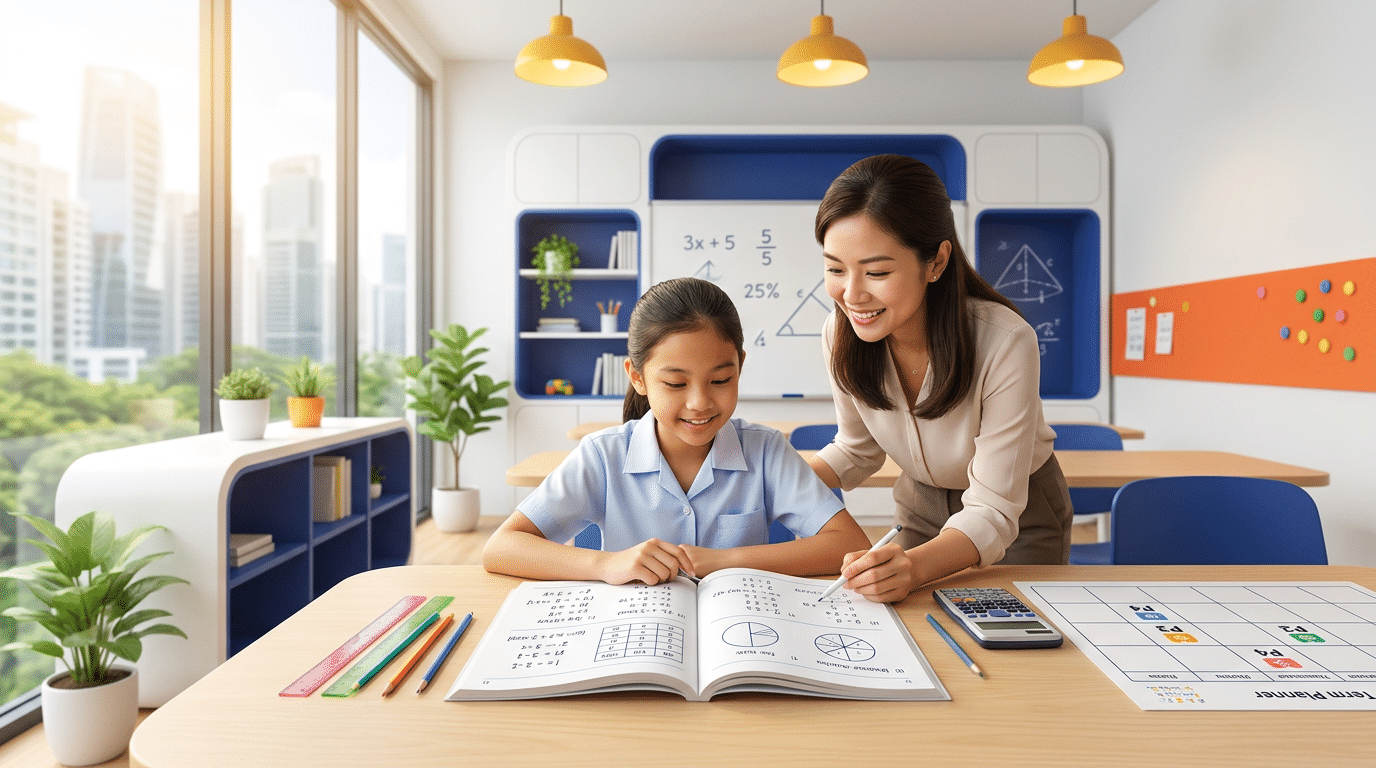
At EduFirst Learning Centre, our classes are deliberately kept small — just 4 to 8 students — so that every student receives the individual attention they need to make real progress. Our tutors do not just assign papers and check scores; they work with students to understand where gaps exist, build foundational understanding, and develop the exam techniques that turn correct thinking into correct marks. Whether your child is in primary school preparing for the PSLE or navigating the demands of secondary school, structured tuition alongside consistent paper practice is one of the most effective combinations available.
For students who prefer flexibility, our e-lessons offer the same quality of instruction in an online format — ideal for revision periods when schedules are tight. And for younger learners still building their foundational skills, our pre-school programme lays the groundwork that makes all later learning — including exam preparation — significantly more manageable.
Free exam papers are a valuable starting point. But the students who make the most of them are those who also have someone in their corner who can explain, guide, and course-correct along the way. That combination of independent practice and expert support is what turns consistent effort into consistent results.
Making the Most of Every Paper
Singapore has no shortage of free exam papers — and now, you know exactly where to find them and how to use them well. The key is to treat each paper not as a test to be passed or failed, but as a detailed map of your child’s current understanding. Used systematically, with proper review and a clear progression from topical practice to full timed papers, these resources can make a significant difference to exam results at every level. Start early, practise consistently, and always spend as much time reviewing as you do attempting — that is where the real learning happens.
Ready to Take Your Child’s Preparation Further?
EduFirst Learning Centre offers personalised tuition for primary and secondary students across 25 locations in Singapore, with small class sizes of just 4–8 students to ensure every child gets the attention they deserve. Let us help your child build the skills and confidence they need to excel.