- Oct 18, 2026
School Counsellors in Singapore: What They Do and When to Approach One
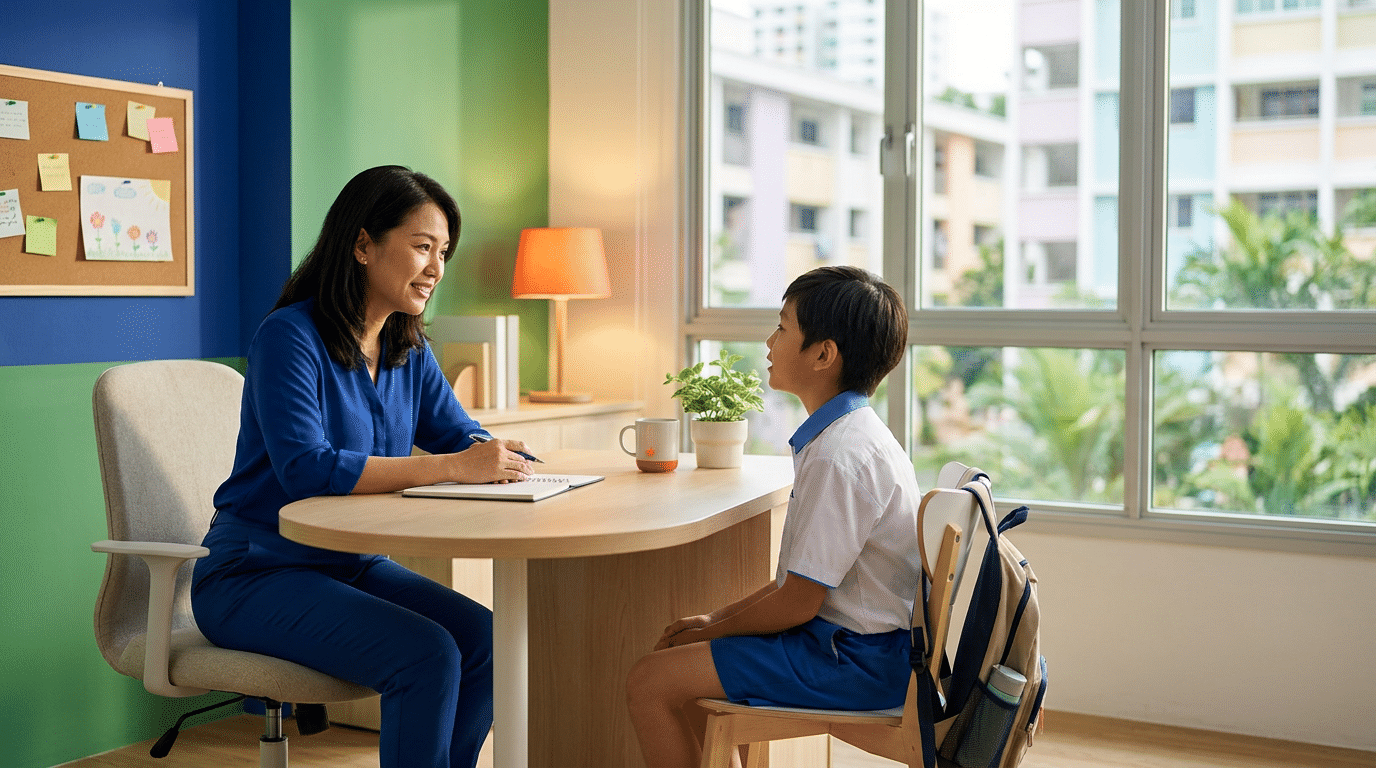
Singapore’s education system is among the most rigorous in the world — and with that rigour comes real pressure. Studies show that 76% of students in Singapore report feeling very anxious for a test even when well-prepared, compared to a global average of 55%. One in three youth aged 10 to 18 have reported internalising symptoms such as depression, anxiety, and stress, largely tied to academic pressures. Yet many parents and students still aren’t sure what a school counsellor actually does, or when it makes sense to reach out to one.
This guide is written specifically for Singapore parents and students. We’ll walk through the role of a school counsellor in clear, practical terms — how the MOE support structure works, what kind of help counsellors provide, the signs that your child may benefit from speaking to one, and how the process typically works. Whether you’re a worried parent, a student feeling overwhelmed, or simply curious about the support available in schools, this article will give you the answers you need.
What Is a School Counsellor in Singapore?
A school counsellor is a trained mental health and guidance professional employed within a school to support students’ emotional, social, and psychological well-being. In the Singapore context, school counsellors are part of the Ministry of Education’s (MOE) allied educator framework, working alongside teachers and school leaders to create a safe, supportive environment for every student. Their primary role, as defined by MOE, is to work with staff, students, parents, external professionals, and community agencies to provide quality counselling support for students’ mental health and social-emotional development.
It’s worth distinguishing a school counsellor from a classroom teacher or even a form teacher. While teachers are the first point of contact for most student concerns, a school counsellor has dedicated training in counselling theories, mental health intervention, and crisis support. They are not disciplinary figures — their role is to help, not to judge or report to the school’s discipline team. Many students hesitate to seek help precisely because they conflate the two, but understanding this distinction can make all the difference.
How the MOE Student Support Structure Works
MOE has put in place a tiered support system designed to meet students where they are, ensuring that help is proportionate to need. Understanding these three levels helps parents know exactly what kind of support their child can access and when escalation might be appropriate.
- Level 1 — Teacher Support: All students are encouraged to speak with their teachers first. Teachers provide the first line of emotional and pastoral support, and many schools have form teachers or mentors who check in regularly with their classes.
- Level 2 — School Counsellor Referral: Students who need more specialised attention are referred to a school counsellor or teacher-counsellor. Referrals can come from teachers, parents, or students themselves. At this level, the counsellor provides individual or group counselling and works with the student on specific challenges.
- Level 3 — External Specialist Referral: For students who require more intensive intervention, the school counsellor can refer them to external mental health professionals. This includes the Response, Early Intervention and Assessment in Community Mental Health (REACH) teams or other social service agencies.
This graduated structure means your child does not need to be in crisis to receive support. The system is designed for early identification and proactive care — catching difficulties before they become serious problems.
What School Counsellors Actually Do
School counsellors wear many hats, and their day-to-day work goes well beyond simply sitting and listening. Here is a realistic picture of the support they provide:
Emotional and Mental Health Support
Counselling involves providing a safe environment for students to share their challenges and work through social, emotional, behavioural, and mental health issues with a trained professional. A school counsellor helps students learn strategies to manage and cope with their emotions or situations, enabling them to make choices for positive change and growth. This might involve teaching coping techniques like mindfulness, breathing exercises, or cognitive reframing — practical tools that students can carry into adulthood.
Academic Guidance and Stress Management
Singapore’s academic environment is uniquely demanding. Research from NTU’s National Institute of Education found that 90% of secondary school students reported stressful experiences related to their academic work. School counsellors are well-equipped to address this — helping students identify their learning styles, set realistic goals, and develop healthier relationships with academic performance. They can also teach practical exam anxiety strategies, facilitate communication with subject teachers, and connect students with additional learning support where needed.
Social Skills and Relationship Support
Navigating friendships, peer pressure, and school social dynamics can be just as stressful as academics for many students. Counsellors help students develop conflict resolution skills, build empathy, handle bullying situations, and cultivate healthier peer relationships. They can also facilitate group sessions where students dealing with similar concerns can find mutual support — reducing the isolation that often accompanies social difficulties.
Preventive and Psycho-educational Programmes
Beyond one-on-one sessions, school counsellors also design and run group psycho-educational programmes for larger cohorts of students. These might address topics like healthy coping strategies, mental health awareness, managing transitions (such as moving from primary to secondary school), or digital wellness. This preventive dimension of the role means that counsellors are not only responding to crises — they are actively building the school community’s resilience.
Coordination with Parents and External Professionals
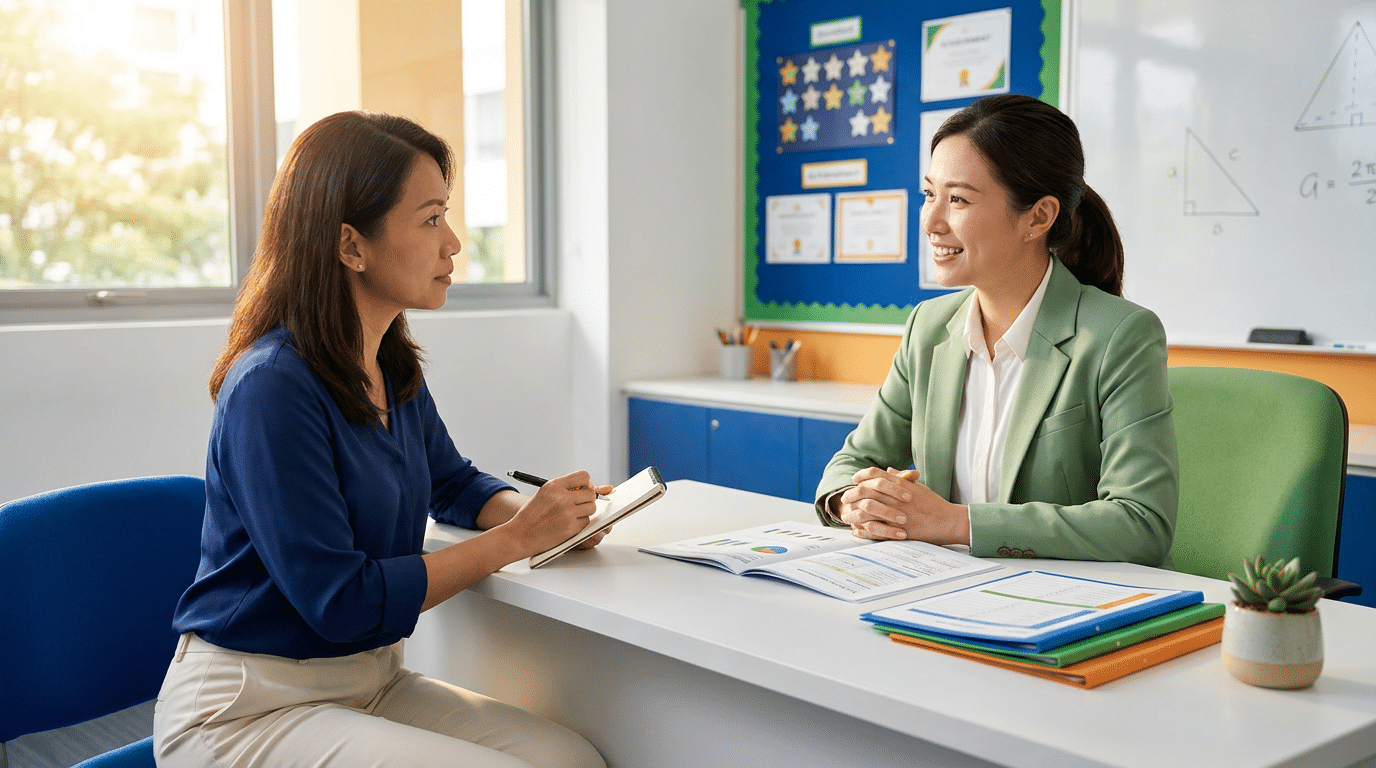
School counsellors do not work in isolation. They serve as a bridge between the student, their family, their teachers, and — when necessary — external specialists. When a student’s needs go beyond what the school can provide, the counsellor manages the referral process, coordinates with community agencies, and ensures a smooth transition back to school once the student has received external support. Parents can and should expect to be kept informed (within confidentiality boundaries) as part of this process.
When Should Your Child See a School Counsellor?
This is the question most parents struggle with. It can be hard to tell the difference between a rough patch and something that warrants professional attention. A useful benchmark is to look at patterns rather than isolated incidents — one difficult exam result or an argument with a classmate does not by itself signal a mental health concern. The key signals to watch for are when difficulties persist, cause significant distress, or begin to interfere with daily functioning at school or home.
The following situations are widely recognised as good reasons to encourage a student to speak with a school counsellor:
- Persistent academic anxiety: Feeling overwhelmed or paralysed by exams, assignments, or the fear of failure — especially if this has become a regular pattern rather than pre-exam nerves.
- Sudden or sustained changes in behaviour: Notable withdrawal from friends, hobbies, or activities they previously enjoyed, or an uncharacteristic drop in motivation or school engagement.
- Physical complaints without a clear medical cause: Frequent headaches, stomachaches, or fatigue — especially on school days — can sometimes be the body’s way of signalling emotional distress.
- Ongoing peer or social difficulties: Bullying (whether as a target or perpetrator), friendship breakdown, or difficulty fitting in that persists over weeks or months.
- Family stress spilling into school life: Parental conflict, family financial pressures, or major life changes (such as a bereavement or parental separation) that are visibly affecting the child’s concentration, mood, or behaviour.
- Signs of persistent low mood or irritability: Feeling sad, hopeless, or unusually irritable most days — distinct from a temporary bad mood.
- The student expresses a desire to talk to someone: If your child mentions they want to speak to the counsellor, take that seriously. The willingness to seek help is a healthy instinct and should be supported, not dismissed.
It is also worth noting that you do not need a clear diagnosis or a serious crisis to seek support. Counselling sessions are also appropriate for students navigating normal but challenging life transitions — moving schools, adjusting to secondary school, or figuring out subject choices and future pathways. Early, proactive help-seeking is exactly what the system is designed to support.
What About Confidentiality?
One of the most common reasons students resist seeing a school counsellor is the fear that what they say will be shared with their parents, teachers, or school leaders — and that this might affect their co-curricular leadership opportunities or their relationship with their class. This concern is understandable, but the reality is more reassuring than many students realise.
According to MOE, observing confidentiality is key for school counsellors to maintain trust with their students. Before any counselling begins, the counsellor will inform the student of the limits of confidentiality. In practice, this means that what a student shares stays within the counselling relationship — unless there is a concern about safety. School counsellors may need to communicate with parents and school leaders if there are concerns about harm to the student or others. MOE has also confirmed that seeking counselling does not impact a student’s school-based leadership opportunities.
When information does need to be shared, it is done on a need-to-know basis, and school leaders are guided to maintain the confidentiality of student cases. The goal is always to support the student, not to place them at a disadvantage. Knowing this, students should feel safe to speak openly in a counselling session.
How to Access the School Counsellor
Accessing support is more straightforward than many families expect. There are several routes, and none of them require a formal diagnosis or a serious crisis as a prerequisite.
- Self-referral: Students can approach the school counsellor directly — either by visiting the counselling room, emailing the counsellor, or messaging via the school’s preferred platform. Many schools actively encourage students to reach out without needing a teacher to refer them first.
- Teacher or form teacher referral: If a teacher notices a student struggling, they can refer the student to the school counsellor. Parents can also speak with the class teacher and request a referral.
- Parent-initiated referral: Parents who feel their child requires support are welcome to contact the school’s counselling office directly to request an appointment.
Sessions typically last between 30 and 45 minutes and are conducted in a private, confidential space. Students may be seen weekly or less frequently depending on their needs, and the counsellor will work with the student to set goals for each series of sessions. If the school counsellor determines that more intensive external support is needed, they will manage the referral process and keep the family informed throughout.
Beyond Counselling: Supporting Your Child’s Academic Journey
A school counsellor is an invaluable resource for your child’s emotional and social development — but academic support is a separate and equally important dimension of student success. Many students who struggle with exam anxiety, motivation, or a loss of confidence in a subject benefit from both emotional guidance and structured academic support working in parallel.
At EduFirst Learning Centre, we understand that every student’s needs are different. Our small class sizes of just 4 to 8 students mean that our tutors can give each child the individualised attention they deserve, building both academic confidence and a genuine love of learning. Whether your child needs support at the primary level — perhaps navigating the pressures of PSLE preparation — or is finding the step up to secondary school a challenge, EduFirst’s experienced educators are here to help.
For younger learners, our pre-school programme lays a strong foundation before formal schooling even begins. And for families with schedule constraints, our e-lessons offer flexible, high-quality tuition that fits around your child’s life. When emotional and academic support work hand in hand, students don’t just cope — they thrive.
Final Thoughts
School counsellors in Singapore play a vital, often underappreciated role in student well-being. They are trained professionals embedded within the school system precisely to catch difficulties early — whether emotional, social, behavioural, or academic — and to connect students with the right support at the right time. The stigma around seeking help is gradually easing, and both MOE and individual schools have taken concrete steps to make counselling more accessible and to reassure students about confidentiality.
If your child is showing signs of persistent stress, social difficulties, or a dip in their usual engagement with school, don’t wait for things to escalate. Encouraging your child to speak with their school counsellor is not a sign of failure — it is one of the most proactive and caring things a parent or student can do. And remember: emotional well-being and academic success are not separate goals. They reinforce each other, and building both is the foundation of a healthy, happy school life.
Give Your Child the Academic Support They Deserve
EduFirst Learning Centre has been helping Singapore students build confidence and achieve their best since 2010 — across 25 locations islandwide, with small classes designed for every individual learner.